Shampoo Bar Recipe (Cold Process Soap for Hair)
A high-lather, castor-rich soap bar for washing hair, with an honest note on why some people follow it with an acidic rinse.
This page has affiliate links. We earn a small commission at no cost to you. Disclosure
Formula not yet verified. These numbers haven't been re-run by a second maker. Don't make this batch until this notice is gone.
- Yield
- 10 bars
- Method
- Cold process
- Difficulty
- Intermediate
- Cure
- 6 weeks
- Superfat
- 5%
- Lye conc.
- 33%
On this page
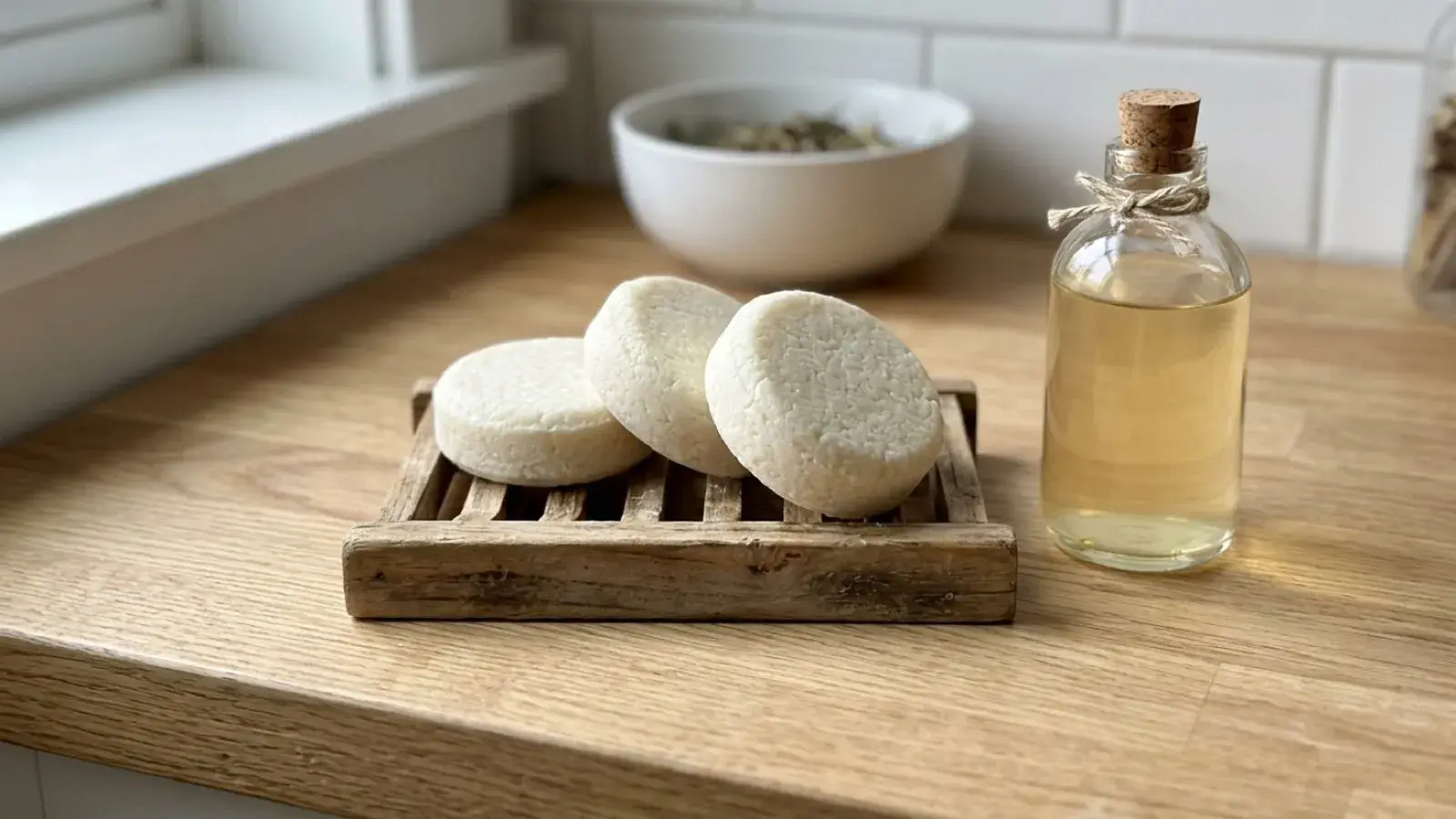
This shampoo bar recipe is a true soap made for washing hair: a castor-rich, high-lather cold process bar shaped to rub straight onto a wet scalp. It uses 15% castor oil, about twice what you’d put in a body bar, because a dense, lasting lather matters more on hair than on skin.
Be clear-eyed about what it is. Soap is alkaline, and many bars sold as “shampoo bars” are not soap at all but syndet bars built from synthetic surfactants. A soap shampoo bar suits some people’s hair and water and doesn’t suit others, especially in hard water. Many people who use one follow it with a diluted acidic rinse, like apple cider vinegar in water, because they like the feel afterwards. That’s a preference, not a fix, and we make no claims about hair or scalp health.
The technique to watch is trace. High castor plus rosemary essential oil can thicken quickly, so add the scent at light trace and stir it in by hand.
Trying it before you commit
If you’ve never used a soap-based shampoo, make a small batch first. The ingredients table scales down to 500 g of oils, which makes four or five round bars. Use one for a couple of weeks, with and without a rinse, before deciding whether to make a full loaf.
Why this recipe works
- Castor, 15%. Higher than in a body bar. On wet hair, castor helps the lather stay thick and creamy instead of breaking into big bubbles that vanish. The bar can feel a little tacky at first; the cure takes most of that away.
- Coconut, 30%. Fast, plentiful lather that spreads through hair easily. Thirty percent is the top of the comfortable range for most skin.
- Olive, 35%. A mild, conditioning base that also slows trace, which helps when you are pouring into individual molds.
- Shea and avocado, 20%. Hardness and a creamy feel so the bar survives a wet shower shelf.
Ingredients
| Oil | % | Grams | Ounces |
|---|---|---|---|
| Olive oil | 35% | 350 g | 12.35 oz |
| Coconut oil (76°) | 30% | 300 g | 10.58 oz |
| Castor oil | 15% | 150 g | 5.29 oz |
| Shea butter | 10% | 100 g | 3.53 oz |
| Avocado oil | 10% | 100 g | 3.53 oz |
| Lye solution | |||
| Sodium hydroxide (NaOH) 5% superfat | 140 g | 4.94 oz | |
| Distilled water 33% lye concentration | 284 g | 10.03 oz | |
| Additives | |||
| Lavender essential oil 2% of oil weight | 2% | 20.0 g | 0.71 oz |
| Rosemary essential oil 1.5% of oil weight | 1.5% | 15.0 g | 0.53 oz |
Equipment
Instructions
Step 1: Make the lye solution
Goggles and gloves on. Add the lye to the distilled water, never the reverse, and stir until clear. Let it cool to about 100°F (38°C).
Step 2: Melt and combine the oils
Melt the coconut and shea, then add the olive, avocado and castor. Bring the oils to roughly 100–110°F (38–43°C) so the shea stays fully melted. Weigh the essential oils into a small glass container and set aside.
Step 3: Blend to light trace and add the scent
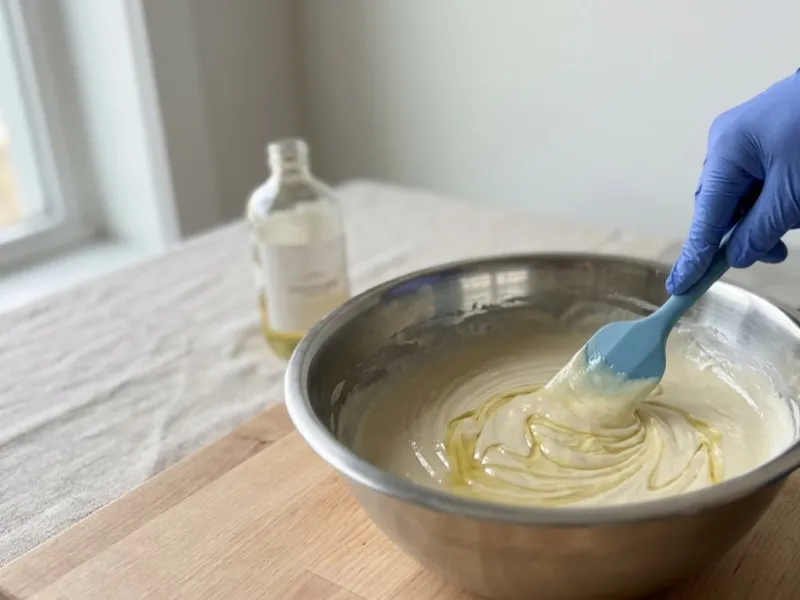
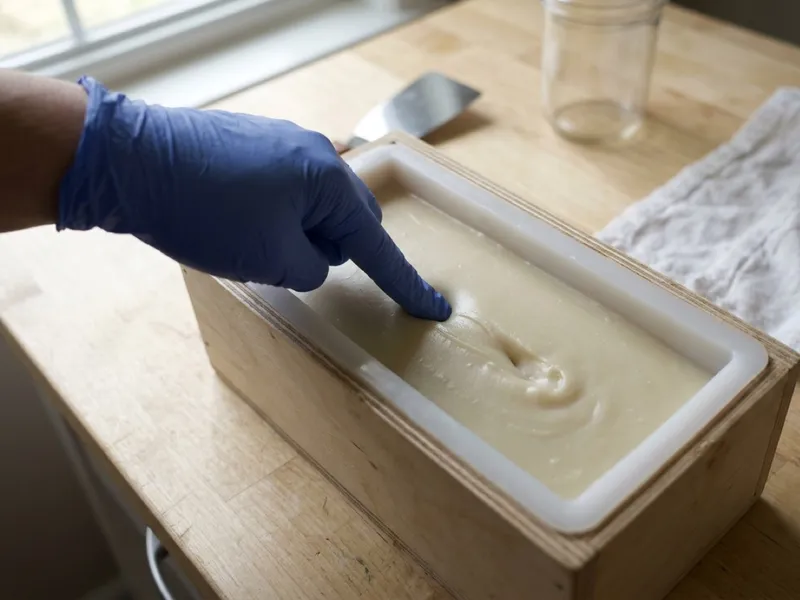
Pour the lye solution into the oils and stick blend in bursts to light trace, when a drizzle leaves a faint trail. Stir in the essential oils by hand, then give it two or three short pulses to mix through.
Step 4: Pour into palm-sized molds
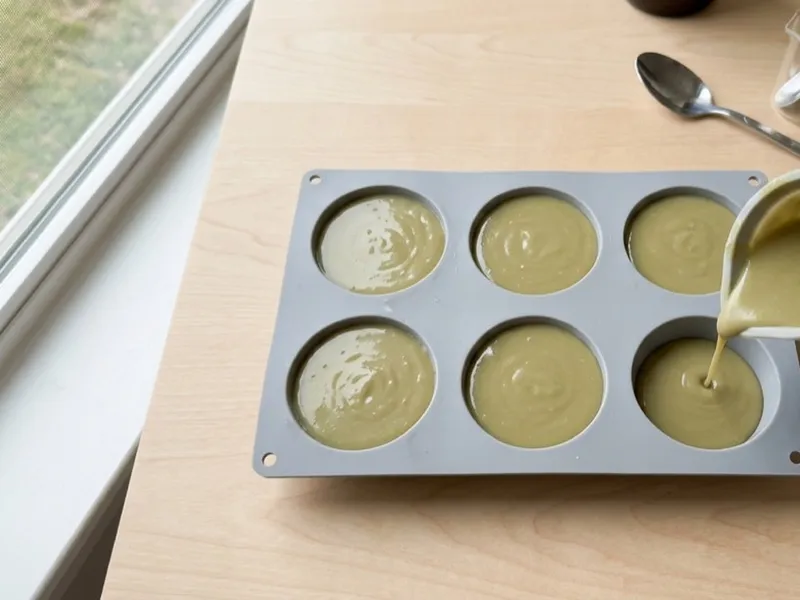
Pour into round cavity molds or a loaf. Rounds are easier to rub across wet hair and don't have corners that break off. Tap the molds to release air.
Step 5: Keep warm, unmold after 48 hours
Cover loosely and leave at room temperature. Castor-rich soaps can stay slightly soft, so wait 48 hours before unmolding. If a loaf still dents easily, give it another day.
Step 6: Cure for 6 weeks
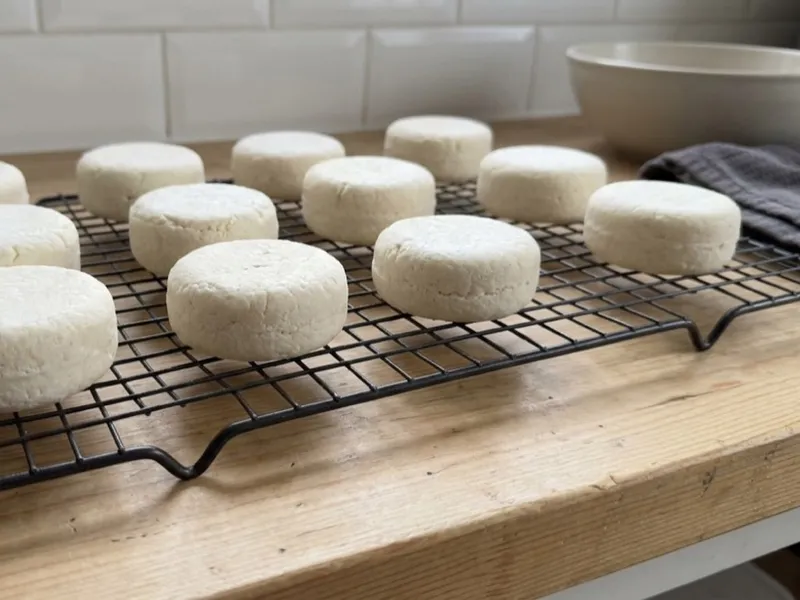
Cure on a rack with airflow for 6 weeks, turning once a week. Fully cured bars are harder, last longer in the shower, and lose most of the initial tacky feel.
Step 7: Using it
Wet hair thoroughly. Rub the bar directly on the scalp a few times, or lather it in your hands first, then work the lather through. Rinse very well. Store the bar on a draining dish away from the shower stream.
Variations
Unscented
Leave out both essential oils. Many people prefer an unscented shampoo bar, especially if they also use a scented conditioner.
Peppermint
Replace the rosemary with peppermint at 1% of oil weight (10 g per 1000 g). Keep it low; peppermint can feel tingly at higher rates.
Beer liquid
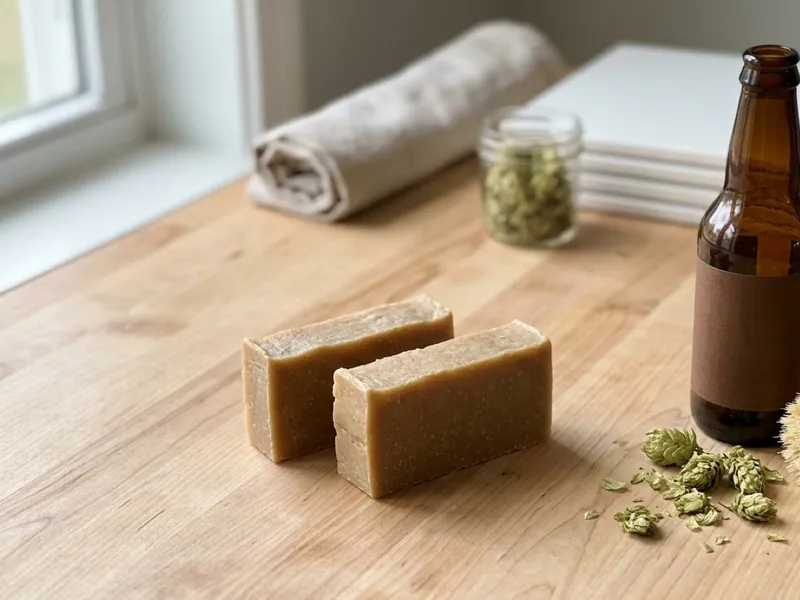
Swap the water for flat, boiled and chilled beer, adding the lye slowly over ice. Beer adds sugar that heats the batch.
If something goes wrong
- Hair feels waxy or coated
- Often a hard-water reaction with true soap, not a formula fault. Many people find an acidic rinse helps; some decide soap shampoo isn't for their water.
- Bars still soft after 2 days
- High castor slows hardening. Give it more time, and next batch try 33% lye concentration or less castor. Soft soap that won't harden
- Batter thickened before scent went in
- Rosemary and some other essential oils can speed trace. Add scent at the thinnest trace and stir by hand. Soap seized
FAQ
Is a shampoo bar the same as soap?
This one is. It's true soap made with lye. Many commercial shampoo bars are syndet bars, made from synthetic surfactants, which behave more like bottled shampoo. The two feel different on hair.
Why do people use a vinegar rinse after a shampoo bar?
True soap is alkaline, typically around pH 9–10. Some people follow a soap shampoo with a diluted acidic rinse, such as about 1 tablespoon of apple cider vinegar in a cup of water, because they prefer how their hair feels after. Keep it out of your eyes and rinse with water afterwards if you like.
Will a soap shampoo bar work in hard water?
Soap reacts with minerals in hard water and can leave residue on hair. Results vary a lot by water and hair type; an acidic rinse helps some people, while others prefer a syndet bar.
Can I use this bar on my body too?
Yes. It's a soap with a higher-than-usual castor content and works as a body bar.
How long does a shampoo bar last?
It depends on hair length and how dry it stays between uses. Keeping it off the shower floor and on a draining dish helps it last noticeably longer.
Comments
No comments yet. Made this recipe? Be the first to say how it went.