Solid Dish Soap Recipe (Hard Coconut Dish Block)
A hard, low-superfat coconut bar for washing dishes with a brush or sponge. It lasts for weeks if it can dry between uses.
This page has affiliate links. We earn a small commission at no cost to you. Disclosure
Formula not yet verified. These numbers haven't been re-run by a second maker. Don't make this batch until this notice is gone.
- Yield
- 10 bars
- Method
- Cold process
- Difficulty
- Beginner
- Cure
- 4 weeks
- Superfat
- 2%
- Lye conc.
- 33%
On this page
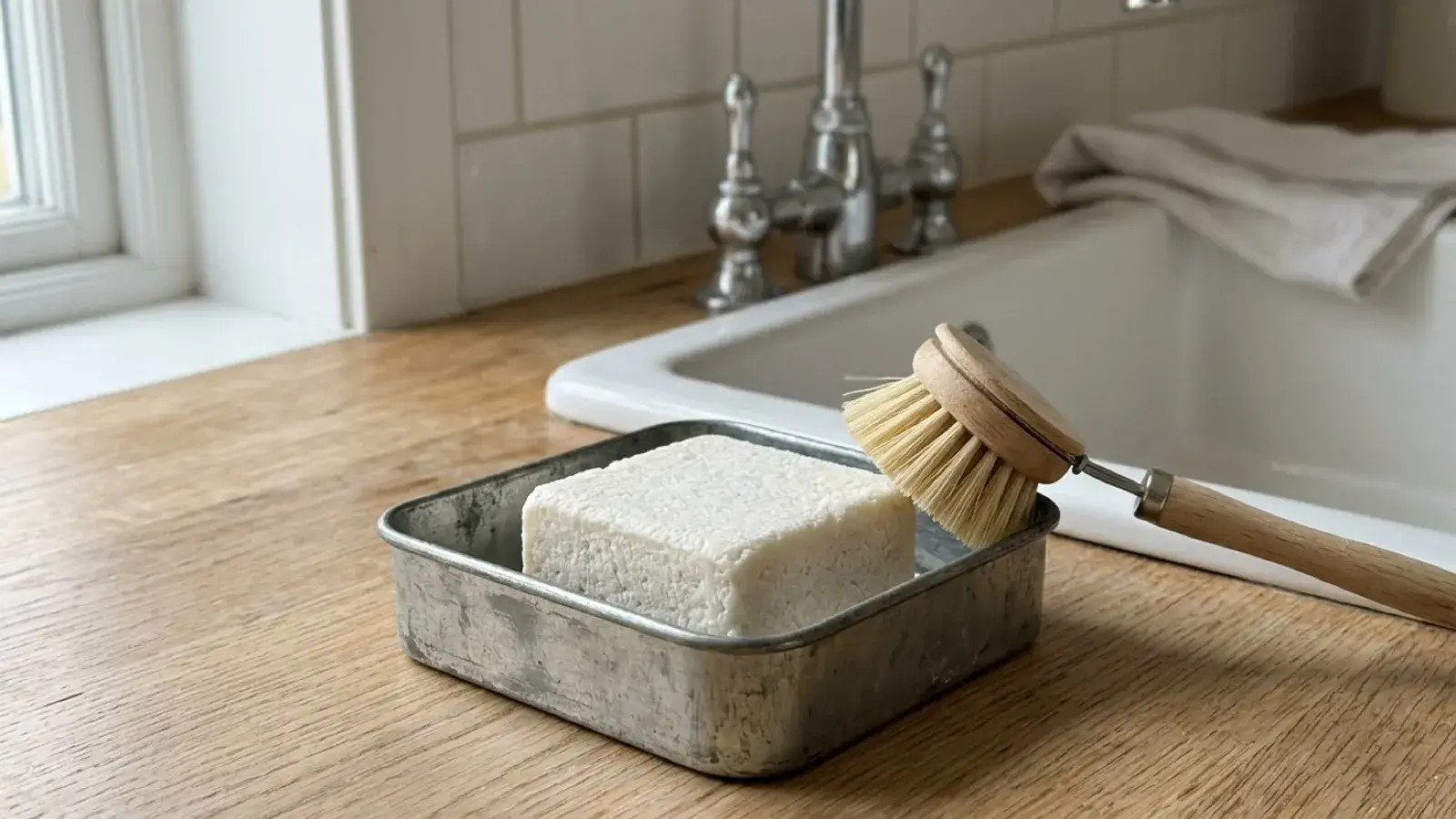
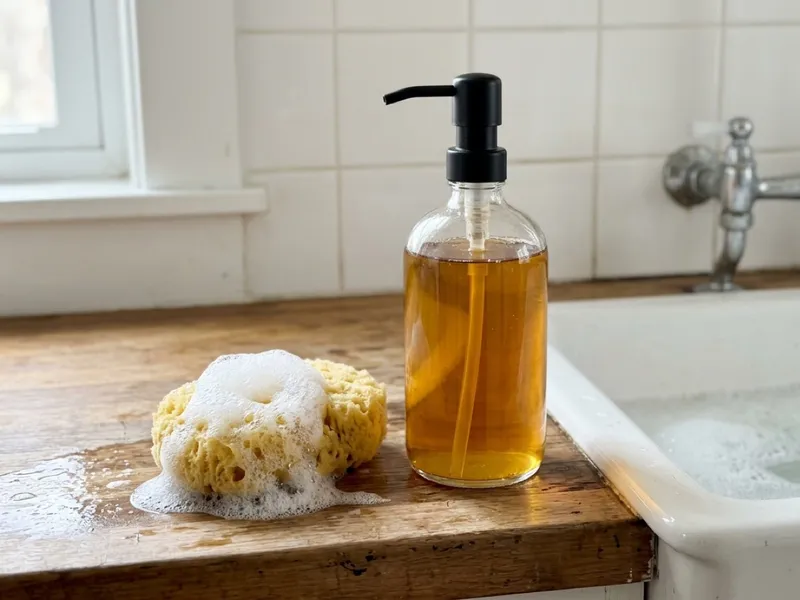
This solid dish soap recipe makes a hard, coconut-heavy block you load with a brush or sponge, the plastic-free cousin of a bottle of dish liquid. It is 80% coconut oil at a 2% superfat, so it cuts grease and rinses clean without leaving an oily film on plates.
What decides whether a dish block lasts a month or a week isn’t the formula; it’s the shape and where it lives. A shallow, wide block in a tin or draining dish gets loaded quickly with a brush and dries out between washes. A tall bar sitting in a puddle beside the faucet turns to mush. This recipe pours straight into those shallow containers.
Like any low-superfat soap, weigh the lye carefully. A 2% superfat leaves only a small margin for a scale that reads light.
Solid versus liquid dish soap
The homemade liquid dish soap uses potassium hydroxide, a slow cooker and a long cook before dilution. This bar uses sodium hydroxide and an ordinary cold process batch, so it’s the easier one to make if you’ve already made a few bars. The trade-off is convenience at the sink: liquid pours into a sponge, while a block needs a few strokes with a brush.
Why this recipe works
- Coconut, 80%. Fast-dissolving, grease-cutting soap that lathers in hot water. Its cleansing number is far above a skin bar on purpose.
- Olive, 15%. Slows trace a little so the batter is easier to pour into small containers, and softens the brittleness of a near-all-coconut bar.
- Castor, 5%. Steadier, longer-lasting lather on a brush.
- 2% superfat. Low enough to leave almost no oil on plates, with one point more margin than our laundry bar because you will touch this one with bare hands.
Ingredients
| Oil | % | Grams | Ounces |
|---|---|---|---|
| Coconut oil (76°) | 80% | 800 g | 28.22 oz |
| Olive oil | 15% | 150 g | 5.29 oz |
| Castor oil | 5% | 50.0 g | 1.76 oz |
| Lye solution | |||
| Sodium hydroxide (NaOH) 2% superfat | 170 g | 5.98 oz | |
| Distilled water 33% lye concentration | 344 g | 12.15 oz | |
Equipment
Instructions
Step 1: Choose your containers
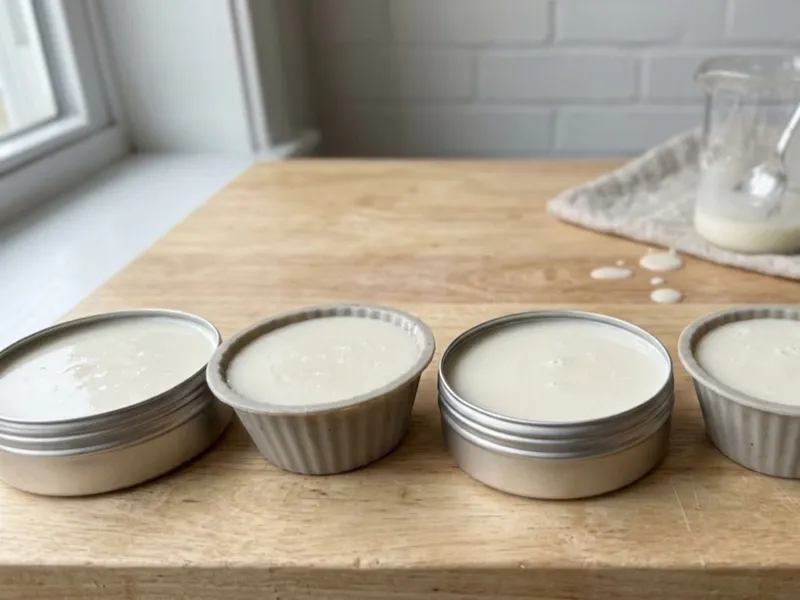
Decide before you start. Pour straight into shallow round tins, small silicone cake molds or wide-mouth jars about 2 in (5 cm) deep, or into a loaf mold to cut into blocks. A shallow, wide surface is easier to load with a brush than a tall bar.
Step 2: Make the lye solution
Goggles and gloves on. Add the lye to the distilled water, never the reverse, and stir until clear. Let it cool to about 90–100°F (32–38°C).
Step 3: Melt and cool the oils
Melt the coconut oil, add the olive and castor, and bring the mix to 90–100°F (32–38°C). Soaping this cool matters with high-coconut recipes. They heat up quickly on their own once saponification starts.
Step 4: Blend to light trace
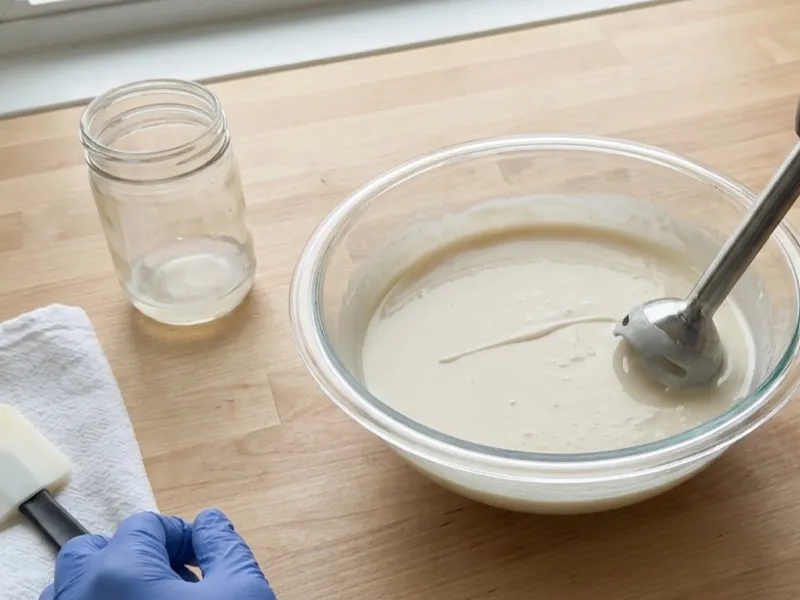
Pour the lye solution into the oils and stick blend in short bursts. Expect light trace in 1–3 minutes. Stop as soon as a drizzle leaves a faint line on the surface.
Step 5: Pour and leave uncovered
Pour into the containers or loaf mold and tap to release air. Leave uncovered in a cool room. Small containers stay cooler than a loaf, which helps prevent cracking.
Step 6: Unmold or cut the same day
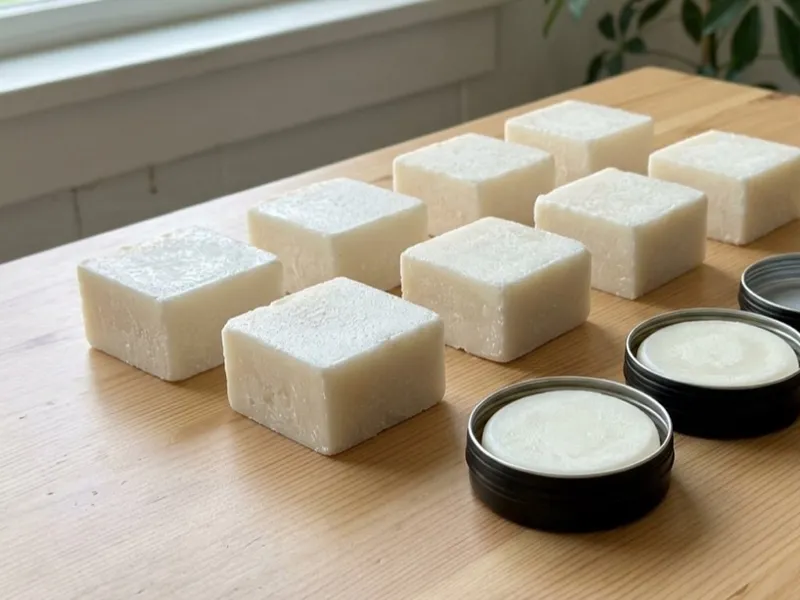
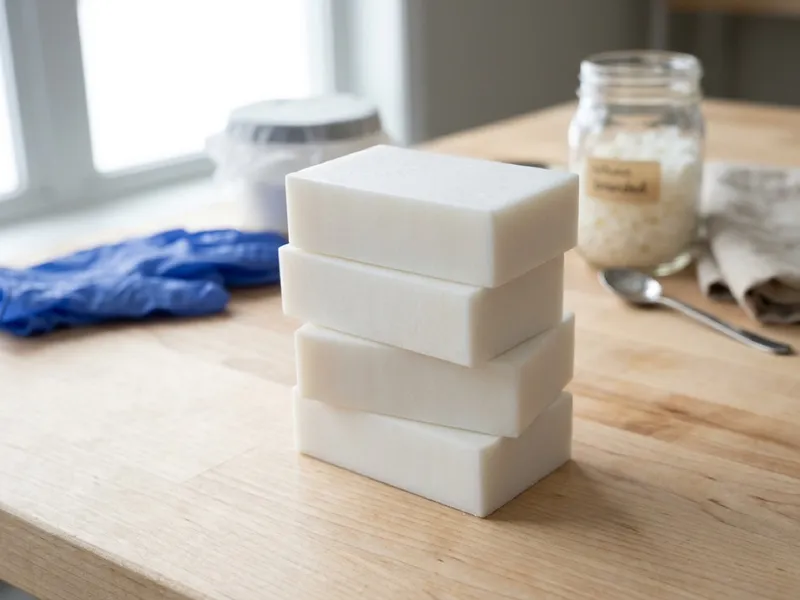
Check after 4–6 hours. A loaf should be cut into blocks as soon as it holds a fingerprint without sticking, because high-coconut soap gets brittle overnight. Rounds can be popped out of silicone the next day. Soap poured into tins stays in them.
Step 7: Cure 4 weeks before use
Cure with airflow for 4 weeks. Bars left in tins cure from the top only, so give them the full time and flip any you can. A cured block is harder and wears away more slowly under a wet brush.
Variations
Lemongrass
Lemongrass essential oil at 2% of oil weight (20 g per 1000 g). It can speed trace, so blend gently.
Kaolin for scrub
Add 10–20 g kaolin clay per 1000 g oils at trace for a slightly slippery, scrubby surface on a brush.
Laundry crossover
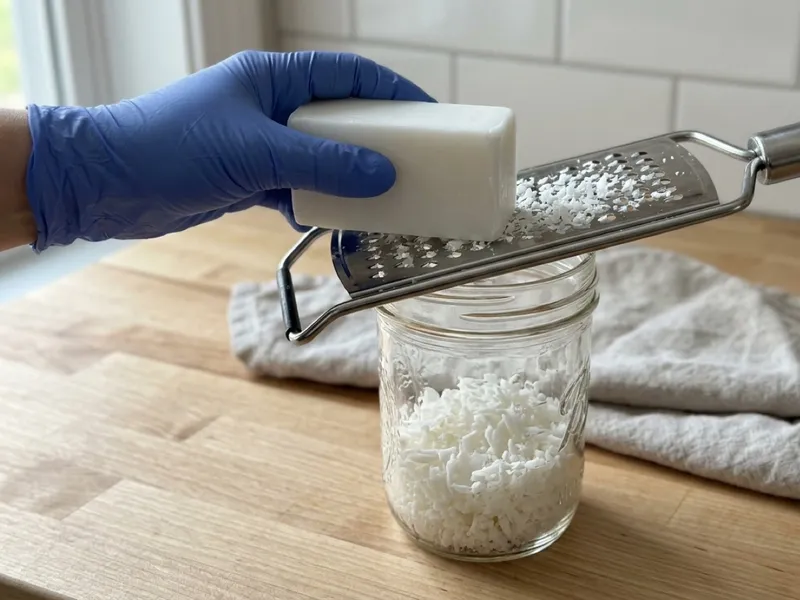
Grate a dried-out dish block for the wash. For a dedicated laundry bar, see our 1% superfat laundry soap.
If something goes wrong
- Block turns mushy in the dish
- It is sitting in water. Use a draining dish or a tin with a lid you leave open, and tip out water after each use. Soft soap that won't harden
- Loaf cracked on top
- High coconut soap overheats easily. Soap cooler and keep the mold uncovered. Cracked soap
- White powder on top
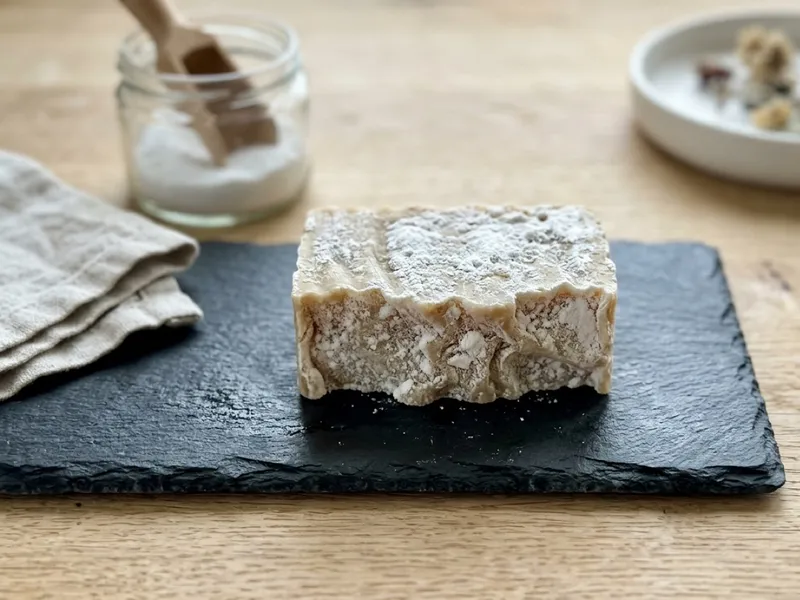
- Soda ash, common on bars cured in open tins. It is cosmetic; wipe it off or ignore it. Soda ash
FAQ
How do you use a solid dish soap bar?
Wet a dish brush or sponge, rub it across the block a few times, and wash as usual. Load the brush again when the lather fades. Let the block drain and dry between uses.
How long does a solid dish soap block last?
It depends on how wet it stays. A block that dries between uses lasts far longer than one left in a puddle. Keep it off the bottom of the sink.
Is solid dish soap good for greasy pans?
Coconut soap handles everyday grease well in hot water. For heavily baked-on grease, soak the pan first; soap doesn't replace scrubbing.
Can I use this bar on my hands?
Occasionally, it won't hurt, but it is designed to strip oil and feels drying with regular use. It's made for dishes, not as a hand soap.
Comments
No comments yet. Made this recipe? Be the first to say how it went.