Lye Pockets in Soap: How to Identify Them and What to Do
Lye pockets are unmixed lye trapped in the soap, usually from undissolved lye crystals or batter that was poured before it was fully emulsified. They're caustic: don't use the bars.
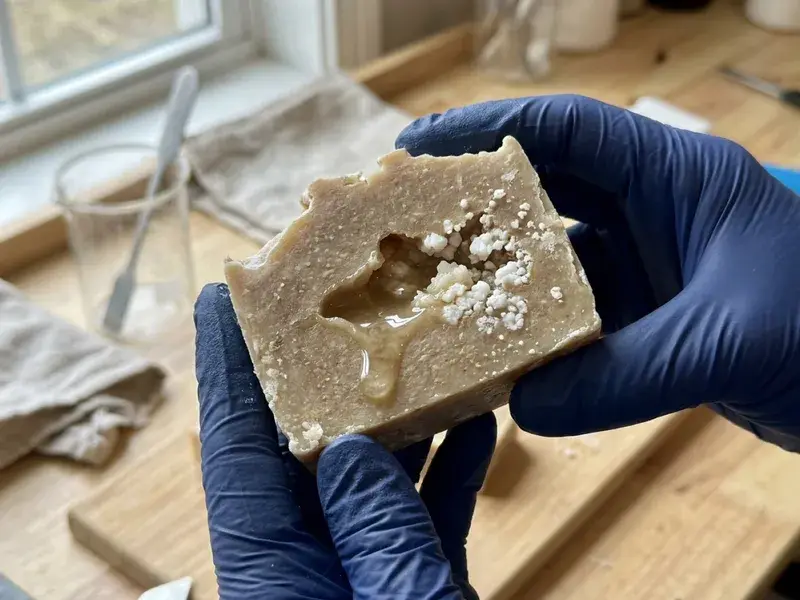
Is it safe to use?
Liquid or crystals in a lye pocket are concentrated lye and can burn skin. Don't use, sell or gift the bars. Handle them with gloves, then rebatch if the pockets are small or discard the batch.
Soft, waxy white flecks that smear under a fingernail are usually stearic spots, not lye. False trace and separation
On this page
Causes, ranked by likelihood
- Most likely
Lye didn't fully dissolve
Lye added too fast, or poured before the solution went clear, leaves crystals at the bottom of the pitcher. They go straight into the batter and stay there.
- Common
Batter was poured before true trace
Hand-stirred or briefly blended batter can look thick without being emulsified. Lye solution separates out and collects in pockets as the soap sets.
- Sometimes
Seized or riced batter trapped lye
When batter sets suddenly in the pot, unmixed lye solution can get locked inside the clumps before it reacts.
Fix this batch
Contain it, then decide
- Put on gloves and goggles before handling the bars. Treat any liquid as lye solution.
- Cut every bar to see how many pockets there are. Blot any liquid with paper towels, and bag the towels for the trash.
- If there are only a few small crystal pockets and you have your exact weights, grate and rebatch the whole loaf so the lye is spread through and can react, then test with pH strips after curing.
- If there's free liquid in many bars or you don't know the recipe, discard the batch: seal it in a bag and put it in household trash, following any local rules.
Prevent it next time
Dissolve fully, mix fully
- Add lye to water slowly while stirring, never water to lye, and stir until the solution is completely clear.
- Pour the lye solution into the oils through a fine strainer to catch any crystals.
- Stick blend in short bursts until you reach a real trace, where drizzled batter leaves a visible line on the surface.
- Keep oils warm enough that hard butters stay melted, roughly 90–110°F (32–43°C).
Lye pockets vs stearic spots
These two get confused all the time, and the stakes are very different.
| Lye pocket | Stearic spot | |
|---|---|---|
| Feel | Hard, glassy crystals or wet liquid | Soft and waxy |
| Fingernail test (gloved) | Doesn’t smear | Smears like candle wax |
| Where | Random, often in hollows | Small flecks spread through the bar |
| Usual cause | Undissolved lye, poor mixing | Butters solidifying in cool batter |
| Safe? | No | Yes, cosmetic |
The science behind it
FAQ
How do I know if white spots in my soap are lye?
Lye crystals are hard and glassy and don't smear. Stearic spots are soft, waxy and smear under a fingernail. If in doubt, a pH strip pressed against a moistened spot will read much higher than the rest of the bar.
Can I just cut the lye pocket out?
Not safely. If lye pooled in one spot, the rest of the batch is likely unevenly mixed too. Rebatch the whole loaf or discard it.
What if I touched the liquid?
Rinse the skin under cool running water for at least 15 minutes. Don't use vinegar. Get medical help for eye contact or if burning continues.
Will lye pockets go away as the soap cures?
No. The lye in a pocket has no oil to react with, so it stays caustic no matter how long the soap sits.
Comments
No comments yet. Made this recipe? Be the first to say how it went.