Shaving Soap Recipe (Hard Stearic Acid Puck)
A hot process stearic acid soap pressed into a tin, made to whip into dense lather with a brush.
This page has affiliate links. We earn a small commission at no cost to you. Disclosure
Formula not yet verified. These numbers haven't been re-run by a second maker. Don't make this batch until this notice is gone.
- Yield
- 10 bars
- Method
- Hot process
- Difficulty
- Advanced
- Cure
- Ready in 2 weeks
- Superfat
- 5%
- Lye conc.
- 30%
On this page
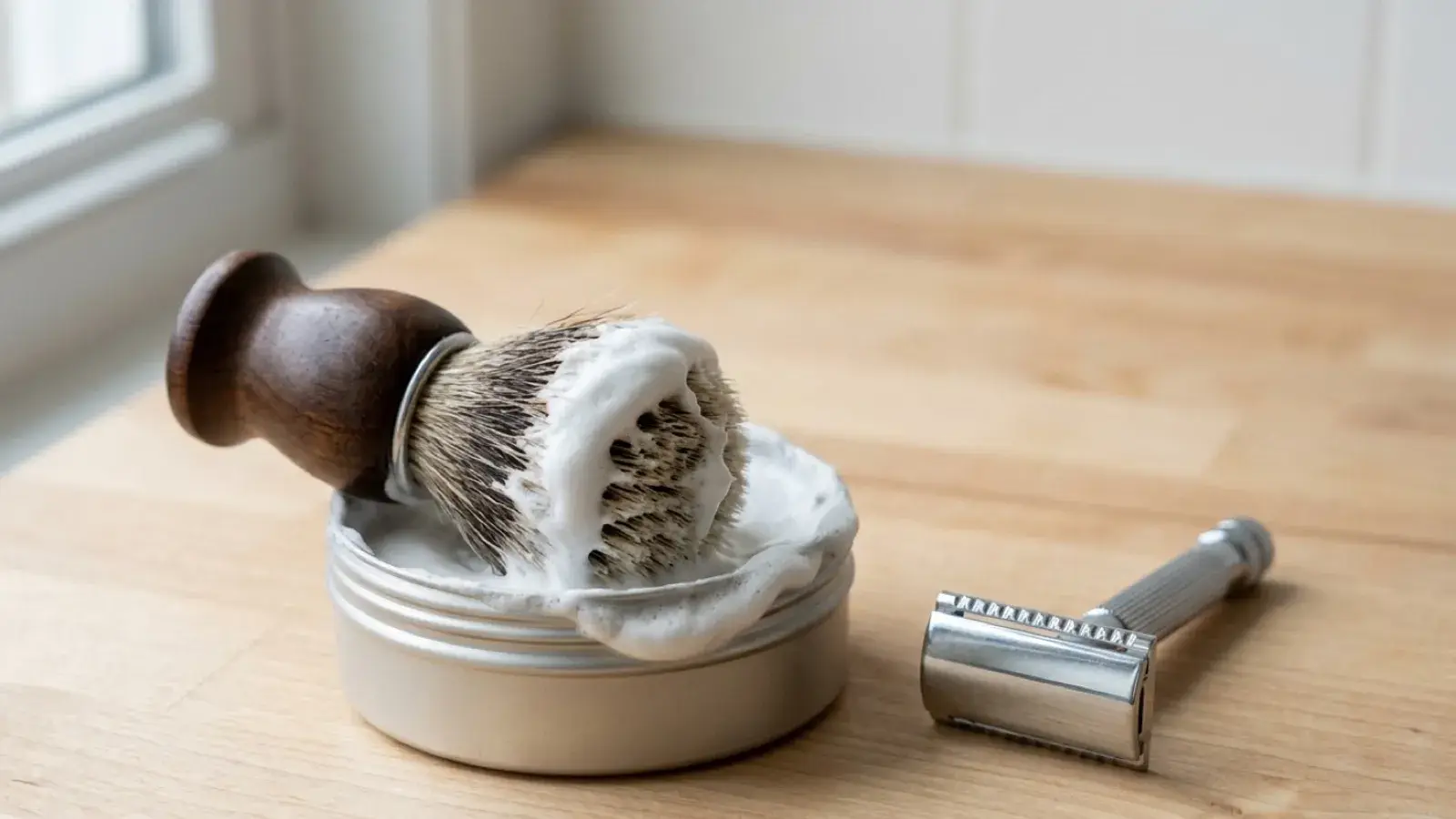
This shaving soap recipe makes a hard puck you load with a wet brush and whip into a thick, cushioning lather. It’s built on 35% stearic acid, the ingredient that turns ordinary soap bubbles into the dense, yogurt-like lather wet shavers look for, and it’s cooked by hot process because stearic-heavy batter sets too fast to pour like a normal bar.
What makes the lather isn’t the recipe alone. It’s how much soap you load onto the brush and how slowly you add water. Most people who think a shaving soap is weak have under-loaded the brush. Swirl it on the puck longer than seems necessary, then add water a few drops at a time.
This version uses sodium hydroxide only, which keeps the calculation the same as any other bar. Traditional dual-lye shaving soaps, made with both sodium and potassium hydroxide, are softer and load faster; they are a project for later.
Why the hardness number is high
On the quality readout, this soap’s hardness sits well above the usual bar range. That is deliberate. A shaving puck sits in a tin and is only ever touched by a wet brush, so it needs to resist going soft, and most of that hardness comes from stearic acid, which is also what builds the lather.
Why this recipe works
- Stearic acid, 35%. The heart of a shaving soap. Stearic soap makes the small, tight, stable bubbles that build into a dense lather on a brush. It also makes the puck very hard, so the hardness number sits well above a body bar on purpose.
- Coconut, 20%. Gets the lather started quickly. Kept at 20% so the soap is not too stripping on the face.
- Castor, 10%. Holds the lather together and helps it stay wet on the face.
- Shea and olive, 35%. A softer, more cushioned feel and a little conditioning to balance the stearic acid.
Ingredients
| Oil | % | Grams | Ounces |
|---|---|---|---|
| Stearic acid | 35% | 350 g | 12.35 oz |
| Coconut oil (76°) | 20% | 200 g | 7.05 oz |
| Olive oil | 20% | 200 g | 7.05 oz |
| Shea butter | 15% | 150 g | 5.29 oz |
| Castor oil | 10% | 100 g | 3.53 oz |
| Lye solution | |||
| Sodium hydroxide (NaOH) 5% superfat | 140 g | 4.94 oz | |
| Distilled water 30% lye concentration | 327 g | 11.53 oz | |
| Additives | |||
| Kaolin clay Optional, mixed with a little water; adds slip | 1% | 10.0 g | 0.35 oz |
| Cedarwood (Atlas) essential oil 3% of oil weight | 3% | 30.0 g | 1.06 oz |
Equipment
Instructions
Step 1: Make the lye solution
Goggles and gloves on. Add the lye to the distilled water, never the reverse, and stir until clear. Let it cool to about 120–130°F (49–54°C). With hot process you don't need to wait for room-temperature lye.
Step 2: Melt the stearic acid with the oils
Put the stearic acid, coconut and shea into a slow cooker on low and melt fully. Stearic acid melts around 155–160°F (68–71°C), so wait until no flakes remain. Add the olive and castor and hold everything at about 160°F (71°C).
Step 3: Add the lye and blend through the seize
Pour the lye solution in slowly while stirring. Stearic acid reacts fast and the batter can clump or turn to a thick mass almost immediately. That's expected here. Stick blend and stir alternately until it's a smooth, thick paste with no separated oil.
Step 4: Cook until it looks like mashed potatoes
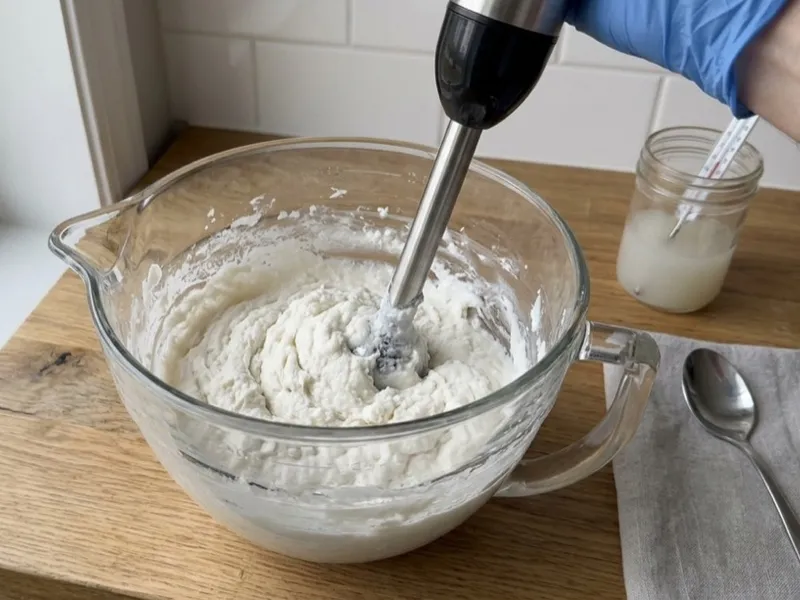
Cover and cook on low for 1–2 hours, stirring every 15–20 minutes. The soap swells, turns translucent at the edges and settles into a glossy, mashed-potato texture. It is done when it looks uniformly translucent and no longer has an opaque, waxy center.
Step 5: Stir in clay and fragrance
Turn off the heat. Let it cool for a few minutes, then stir in the kaolin, pre-mixed with a teaspoon or two of water, and the cedarwood essential oil. Mix thoroughly; hot process soap is too thick for the oil to distribute on its own.
Step 6: Press into tins
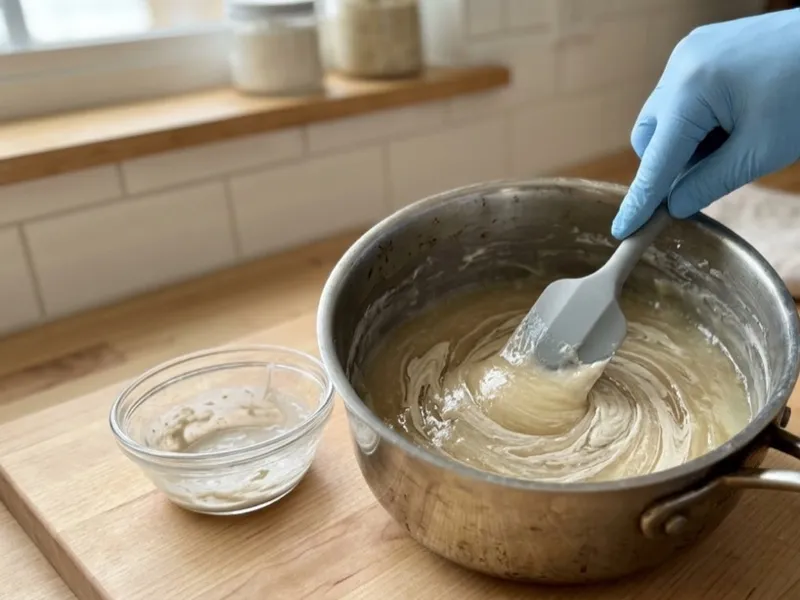
Spoon the hot soap into shaving tins, mugs or a loaf mold, pressing down firmly with the back of a spoon to remove air gaps. A flat top is easier to load with a brush. Let it cool and harden overnight.
Step 7: Rest, then lather
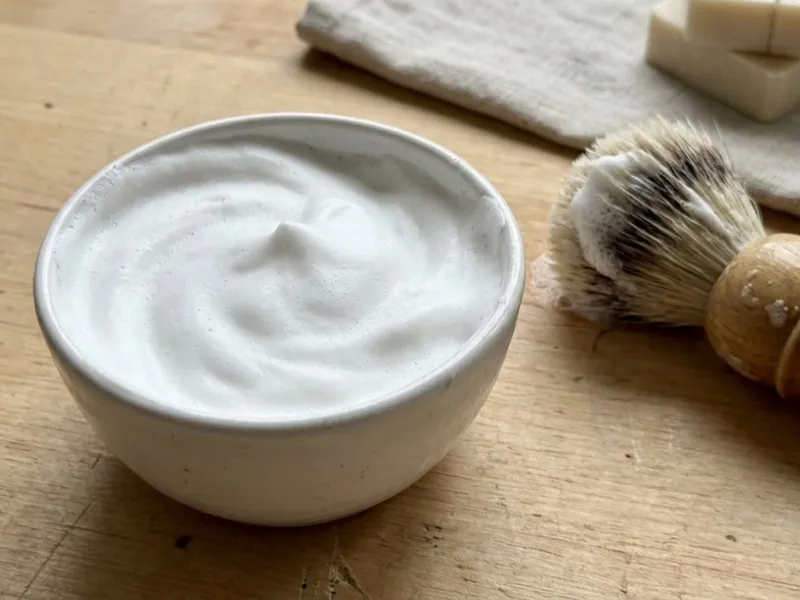
The soap is usable after 2 weeks of air drying, though many makers find shaving soap lathers better after a few months. To use, soak the brush, shake out excess water, swirl it on the puck for 20–30 seconds, then build the lather in a bowl or on the face, adding water a few drops at a time.
Variations
Dual lye (experienced makers only)
Traditional shaving soaps often use both sodium and potassium hydroxide for a softer, faster-loading puck. It needs a calculator that handles mixed lye and separate KOH purity; this recipe uses sodium hydroxide only. Try it once you are comfortable with both lyes.
Tallow base
Replace the olive with tallow for a firmer, creamier lather that many wet shavers prefer. Re-run the lye in the calculator after any swap.
Unscented
Leave out the cedarwood. Unscented shaving soap is popular if you use a scented aftershave.
If something goes wrong
- Lather is thin and bubbly
- Usually too little soap loaded on the brush, or too much water at once. Load longer and add water a few drops at a time.
- Batter seized solid when lye went in
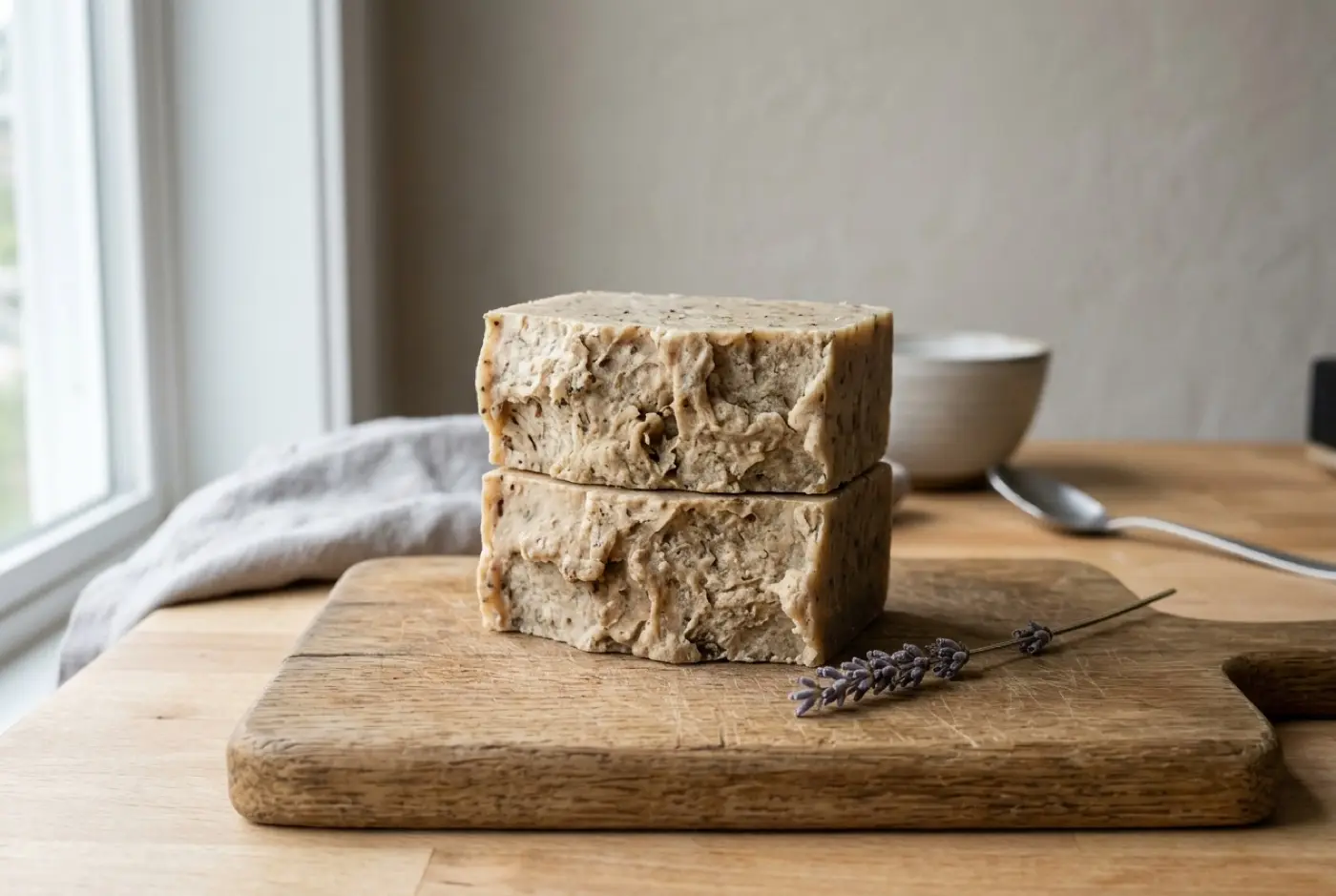
- Normal with stearic acid. Keep the heat on, stir and blend until smooth; the cook finishes the job. Soap seized
- Puck is crumbly
- It cooled before it was pressed. Spoon it while it is still hot and press firmly. Crumbly soap
FAQ
Can I use regular bar soap for shaving?
You can, but most bath bars make big, loose bubbles that collapse. Shaving soap is built on stearic acid to make a dense, stable lather that holds up while you shave.
Why is this shaving soap hot process?
High stearic acid sets almost immediately when lye goes in. In cold process it can seize before you can pour. Hot process lets you cook it through and then press it into a tin.
Do I need a shaving brush?
A brush makes the lather. You can load lather with your hands, but it won't be as thick.
What is dual-lye shaving soap?
Soap made with both sodium hydroxide and potassium hydroxide. The potassium part makes a softer, easier-to-load soap. It takes extra calculation, so start with this single-lye version.
Comments
No comments yet. Made this recipe? Be the first to say how it went.