Tea Tree Soap Recipe (Cold Process, Softened with Lavender)
A clean, sharp-smelling bar with tea tree essential oil at 2%, rounded off with lavender so it doesn't read as medicinal.
This page has affiliate links. We earn a small commission at no cost to you. Disclosure
Formula not yet verified. These numbers haven't been re-run by a second maker. Don't make this batch until this notice is gone.
- Yield
- 10 bars
- Method
- Cold process
- Difficulty
- Beginner
- Cure
- 6 weeks
- Superfat
- 5%
- Lye conc.
- 33%
On this page
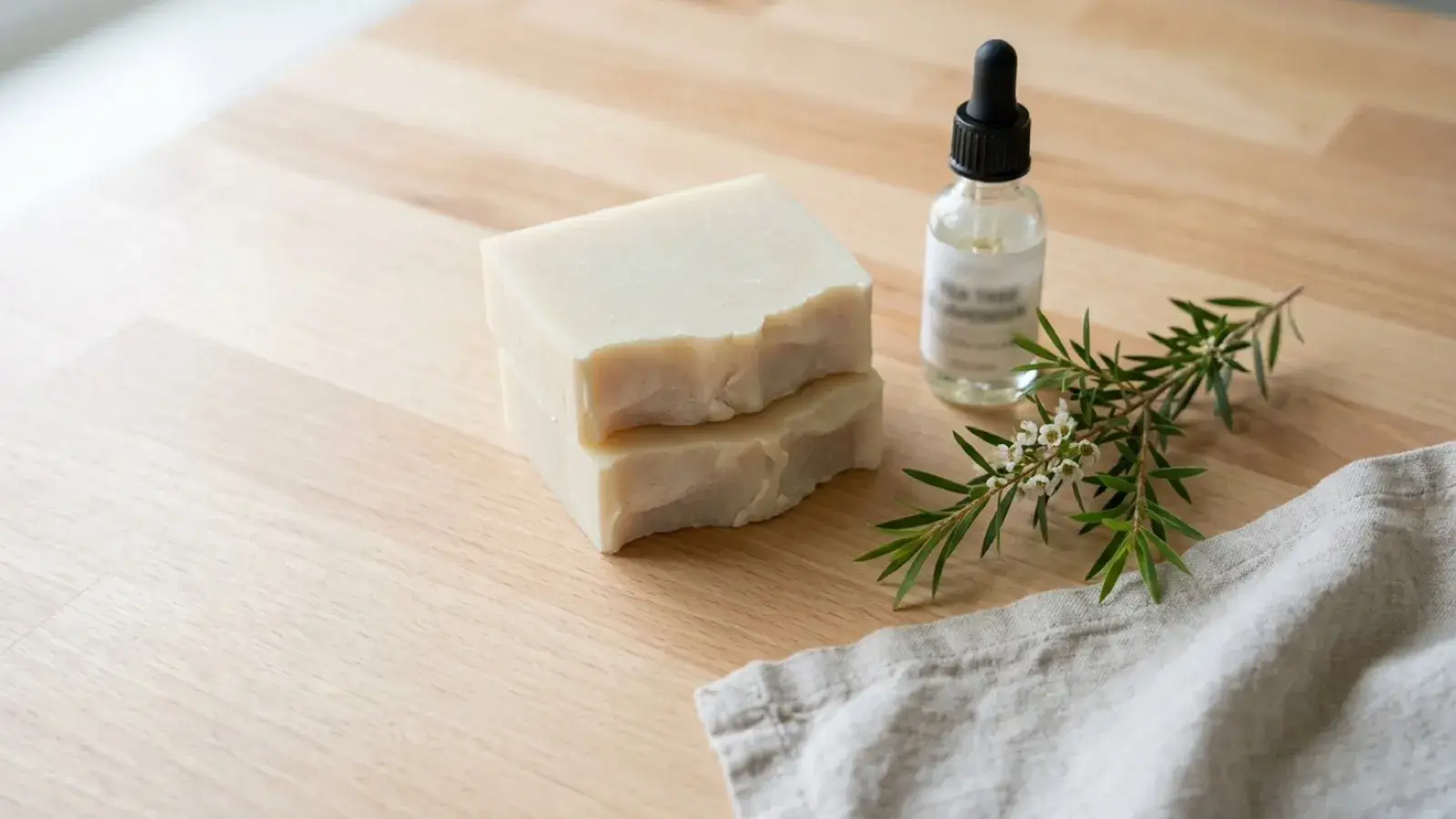
This tea tree soap recipe makes a pale, everyday bar scented with tea tree essential oil at 2% of the oil weight, softened with lavender so it smells fresh rather than clinical. The base is olive, sweet almond and coconut oils with a little shea and cocoa butter for a long-lasting bar.
Tea tree is in this soap for its scent and the clean feel people associate with it: sharp, green, a little camphor. That’s all we claim for it. Soap with tea tree isn’t a treatment for anything, and we’d steer you away from any recipe that says otherwise.
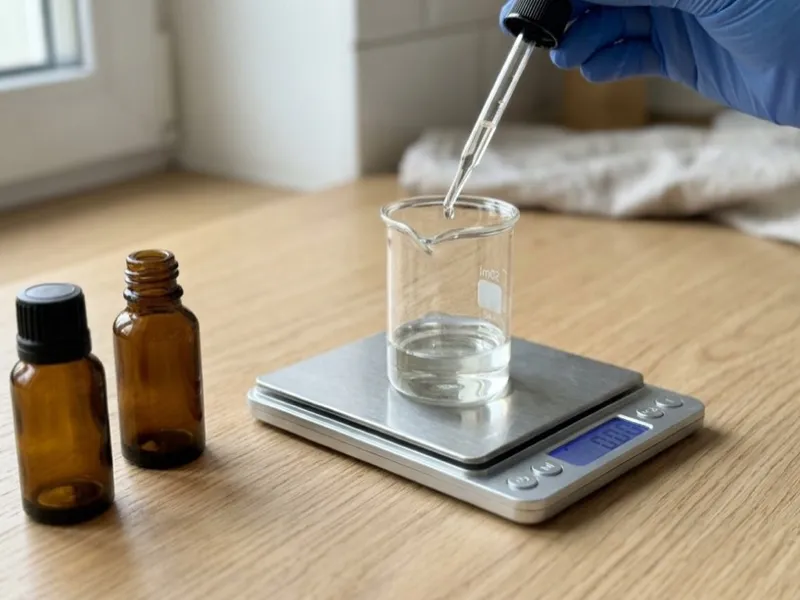
The technique that matters is weighing the essential oil. Tea tree has a usage maximum, and counting drops can put you over it without knowing. Weigh it in grams before you start, so it’s ready to pour at trace.
Getting the scent balance right
Tea tree on its own is loud and medicinal. Blending it with about three parts lavender to four parts tea tree, as here, keeps it recognizable but makes it smell like soap rather than a bandage. If you want tea tree to be the only note, keep it at 2–2.5% and accept a more clinical smell; going above 3% won’t make it last noticeably longer and isn’t within our chart’s guidance.
Why this recipe works
- Tea tree, 2%. A sharp, camphor-like, green scent. Two percent of oil weight gives a clear tea tree smell that lasts through cure, comfortably under the 3% maximum on our essential oil chart.
- Lavender, 1.5%. Tea tree on its own can smell like a first aid kit. Lavender rounds off the edges and makes it smell like soap.
- Olive and sweet almond, 53%. A mild, conditioning base with a soft, slippery lather.
- Coconut, shea and cocoa butter. Bubbles from coconut, and a harder, longer-lasting bar from the two butters.
Ingredients
| Oil | % | Grams | Ounces |
|---|---|---|---|
| Olive oil | 38% | 380 g | 13.40 oz |
| Coconut oil (76°) | 25% | 250 g | 8.82 oz |
| Sweet almond oil | 15% | 150 g | 5.29 oz |
| Shea butter | 12% | 120 g | 4.23 oz |
| Castor oil | 5% | 50.0 g | 1.76 oz |
| Cocoa butter | 5% | 50.0 g | 1.76 oz |
| Lye solution | |||
| Sodium hydroxide (NaOH) 5% superfat | 139 g | 4.89 oz | |
| Distilled water 33% lye concentration | 282 g | 9.94 oz | |
| Additives | |||
| Tea tree essential oil 2% of oil weight; chart maximum is 3% | 2% | 20.0 g | 0.71 oz |
| Lavender essential oil 1.5% of oil weight | 1.5% | 15.0 g | 0.53 oz |
Equipment
Instructions
Step 1: Weigh the essential oils first
Weigh the tea tree and lavender into a small glass container and cap it. Weighing in grams rather than counting drops is the only way to stay within a usage rate; drop sizes vary a lot between bottles.
Step 2: Make the lye solution
Goggles and gloves on. Add the lye to the distilled water, never the reverse, and stir until clear. Cool to about 100°F (38°C).
Step 3: Melt the butters, add the liquid oils
Melt the coconut oil, shea and cocoa butter, then add the olive, sweet almond and castor. Bring the oils to 95–105°F (35–41°C).
Step 4: Blend to light trace, then add scent
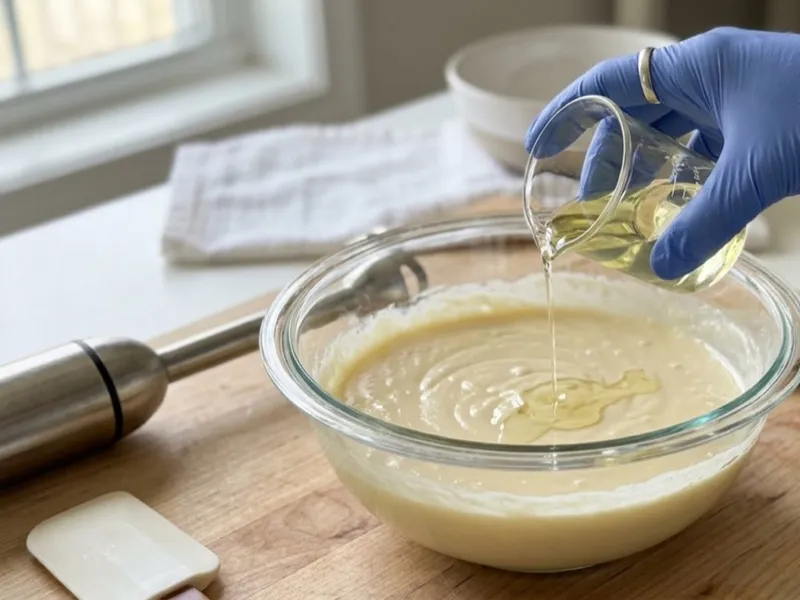
Pour the lye into the oils and stick blend to light trace. Add the essential oil blend, stir it in with a spatula, then give it two short pulses. Tea tree and lavender usually behave well and don't speed up trace much.
Step 5: Pour and cover
Pour into the mold and tap out air. Cover with cardboard and a towel to hold the heat for 12–24 hours. Gel phase makes the scent bloom a little and gives a slightly more translucent bar.
Step 6: Unmold, cut and cure
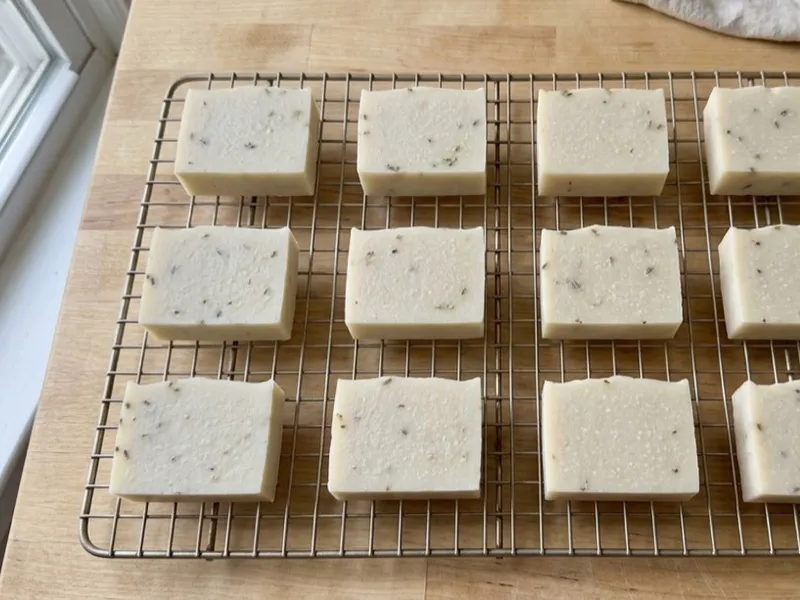
Unmold after 24–48 hours, cut, and cure with airflow for 6 weeks. The scent softens during cure; at the end you should still smell tea tree clearly when you lift the bar.
Step 7: Wrap and store away from pets
Once cured, wrap or store the bars in a closed box to slow scent fade. Keep them where dogs and cats can't reach, since tea tree is toxic to pets.
Variations
Tea tree and peppermint
Replace the lavender with peppermint at 1% of oil weight for a sharper, cooler scent.
Tea tree and rosemary
Swap the lavender for rosemary at 1.5%. More herbal, less floral.
Green color
Add 5–10 g of French green clay per 1000 g oils, mixed with a little water, at light trace for a soft sage color.
If something goes wrong
- Smells too medicinal
- Too much tea tree in proportion. Keep it at 2% and increase the lavender or another softener next time.
- Scent faded during cure
- Tea tree is fairly volatile. Wrap bars once cured and use within a year for best scent. Soap smells bad or faded
FAQ
How much tea tree oil do I put in soap?
This recipe uses 2% of the oil weight, or 20 g per 1000 g of oils. Our essential oil chart lists 2–3% as typical and 3% as the maximum for rinse-off soap. Weigh it; don't count drops.
Is tea tree soap safe around pets?
Tea tree essential oil is toxic to dogs and cats. Keep bars out of their reach and don't use this soap to bathe a pet. Our dog shampoo bars are unscented for this reason.
Does tea tree oil speed up trace?
It usually behaves well at the rates used here. Add it at light trace and stir by hand to be safe.
Comments
No comments yet. Made this recipe? Be the first to say how it went.