Shea Butter Soap Recipe (30% Shea, Cold Process)
A firm, creamy bar with shea butter at 30% of the oils, plus how to keep shea from seizing or going grainy in the pot.
This page has affiliate links. We earn a small commission at no cost to you. Disclosure
Formula not yet verified. These numbers haven't been re-run by a second maker. Don't make this batch until this notice is gone.
- Yield
- 10 bars
- Method
- Cold process
- Difficulty
- Beginner
- Cure
- 6 weeks
- Superfat
- 5%
- Lye conc.
- 33%
On this page
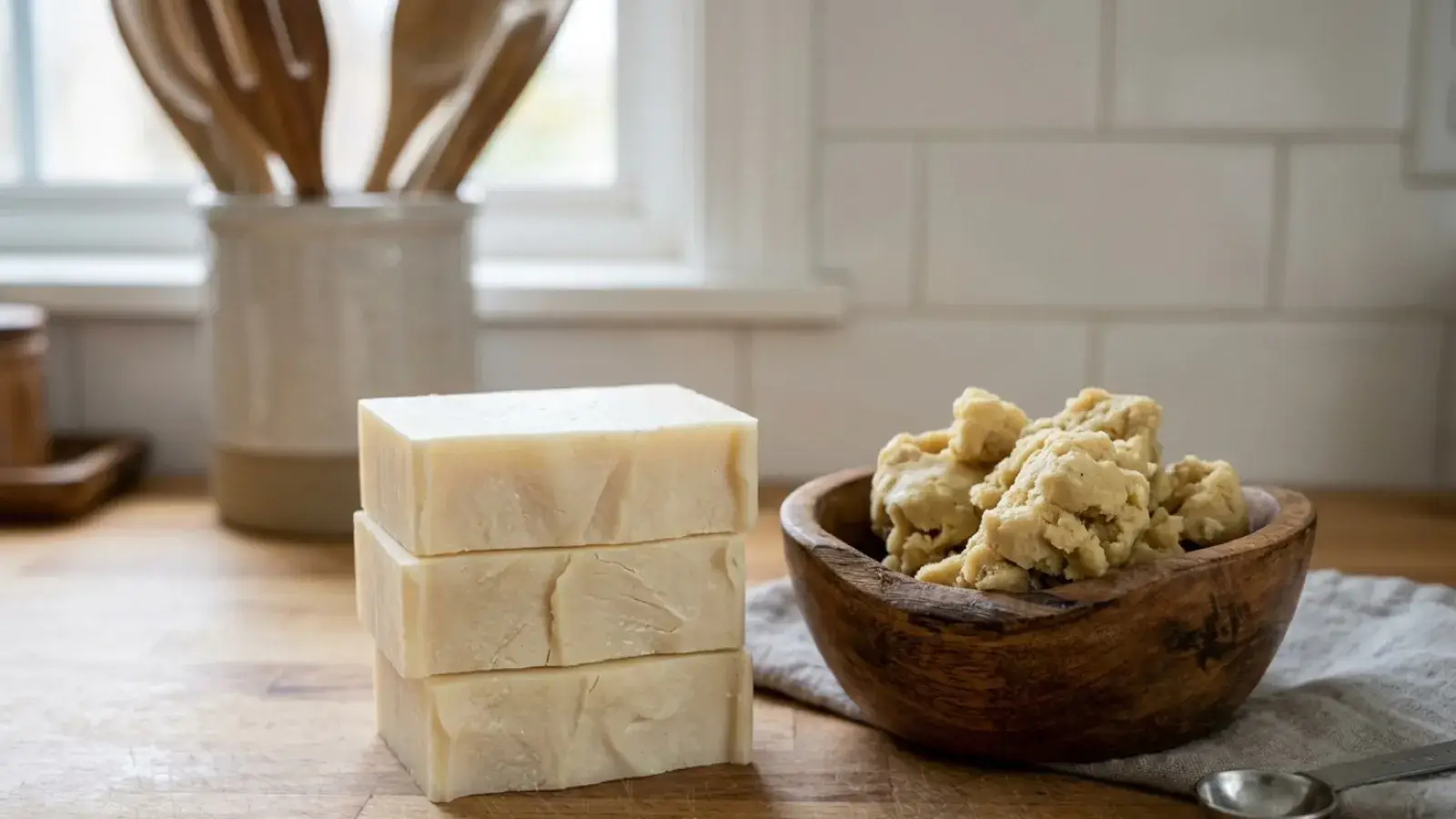
This shea butter soap recipe uses shea at 30% of the oils, high enough that you’ll feel it in the bar rather than just see it on the label. It’s balanced with olive oil and coconut, and the result is a firm, creamy bar with a dense lather and a smooth, almost buttery feel in the hand.
Shea is a lot of people’s favorite butter for soap, and many recipes use only 5–15% of it. Going higher is easy as long as you respect two things about shea. It needs a full, hot melt or it can turn up later as small specks in the bars. And it sets as it cools, so a batch soaped too cool can rush to trace. This recipe soaps a little warmer than usual to keep everything fluid.
Picking your shea
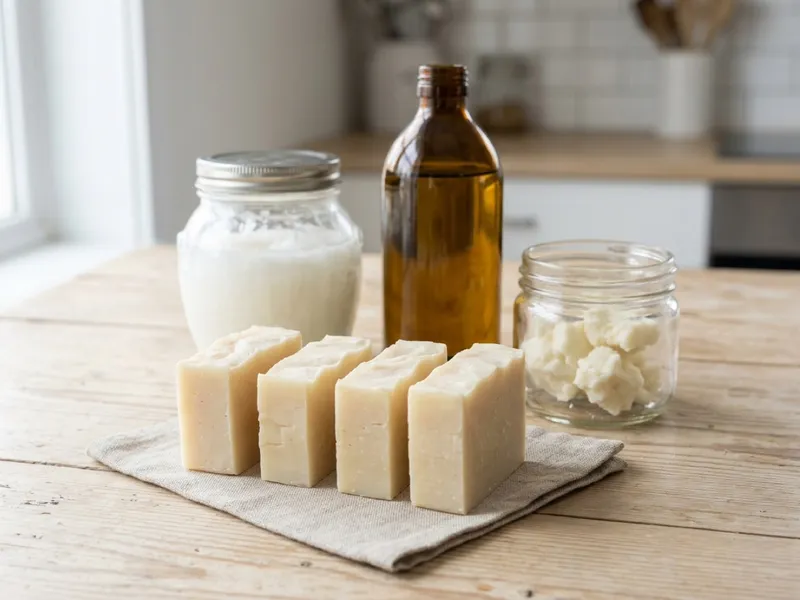
Unrefined (raw) shea is ivory to pale yellow with a nutty, smoky smell. Refined shea is white and nearly scentless. In soap they behave the same and take the same amount of lye, so the choice comes down to color and scent: refined gives a whiter bar and lets a fragrance sit on top cleanly, while unrefined lends a warmer cream tone. Either way, buy it by weight from a soap or cosmetic supplier rather than as a whipped body butter, which may already contain other oils.
If shea is the star you want, this is the recipe. If you’d rather use shea as one of three simple oils, the three-oil beginner soap uses it at 15%.
Why this recipe works
- Shea, 30%. Rich in stearic and oleic acids: it makes the bar harder and the lather creamier at the same time. Shea also carries more unsaponifiable matter than most oils, which stays in the bar as part of its smooth, slightly waxy feel.
- Olive, 35%. Balances shea’s firmness with conditioning and gives the batter a slower, more forgiving trace.
- Coconut, 25%. Shea lathers modestly on its own. Coconut supplies the bubbles.
- Avocado + castor, 10%. Avocado adds a silky slip; castor keeps the lather stable.
Ingredients
| Oil | % | Grams | Ounces |
|---|---|---|---|
| Shea butter | 30% | 300 g | 10.58 oz |
| Olive oil | 35% | 350 g | 12.35 oz |
| Coconut oil (76°) | 25% | 250 g | 8.82 oz |
| Avocado oil | 5% | 50.0 g | 1.76 oz |
| Castor oil | 5% | 50.0 g | 1.76 oz |
| Lye solution | |||
| Sodium hydroxide (NaOH) 5% superfat | 137 g | 4.84 oz | |
| Distilled water 33% lye concentration | 279 g | 9.83 oz | |
| Additives | |||
| Lavender essential oil Optional; 4% of oils, added at light trace. | 4% | 40.0 g | 1.41 oz |
Equipment
Instructions
Step 1: Make the lye solution
Put on goggles and gloves. Add the lye to the distilled water, never the reverse, and stir until clear. Let it cool to 100–110°F (38–43°C); this recipe is soaped a little warmer than most because of the shea.
Step 2: Melt the shea completely
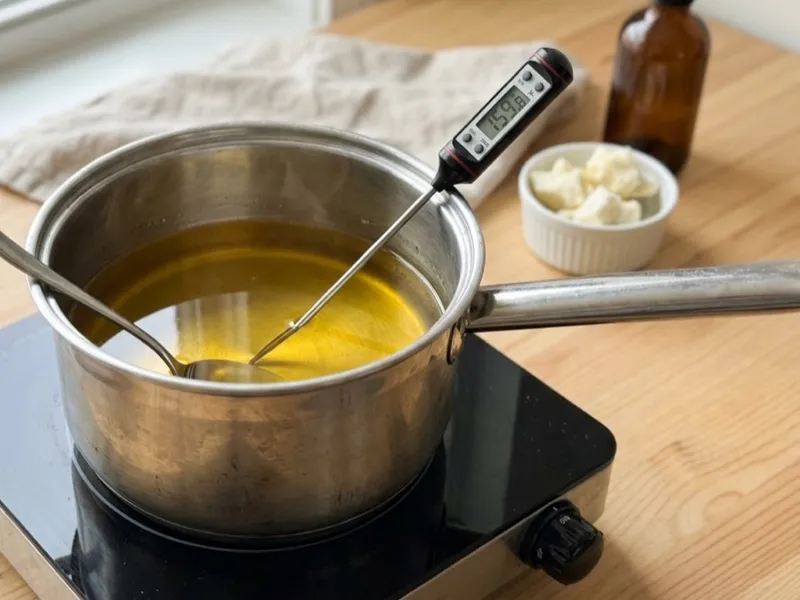
Melt the shea butter and coconut oil over low heat. Once it looks liquid, keep it there for another few minutes, around 150–170°F (65–77°C), so every crystal of shea is gone. Shea that's only just melted can recrystallize into small grains in the batter.
Step 3: Add the liquid oils and cool
Take the pot off the heat and stir in the olive, avocado and castor oils. Let the blend cool to 100–110°F (38–43°C), within 10°F (5°C) of the lye solution. Don't let it drop much below 100°F; cooling shea thickens and makes trace come on fast.
Step 4: Blend to light trace
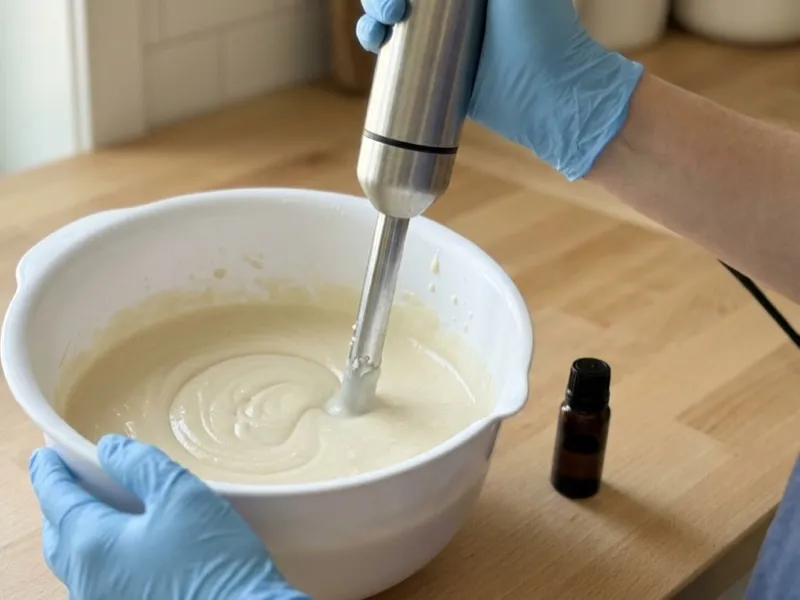
Pour in the lye solution and stick blend in short bursts with stirring between. Expect light trace in 2–4 minutes. Add the lavender essential oil now and stir it in by hand or with one or two short pulses.
Step 5: Pour and insulate lightly
Pour into the mold and cover with cardboard and a light towel. A gelled shea bar is a little smoother and harder at unmolding; if you'd rather avoid gel for a paler bar, leave it uncovered.
Step 6: Unmold and cut
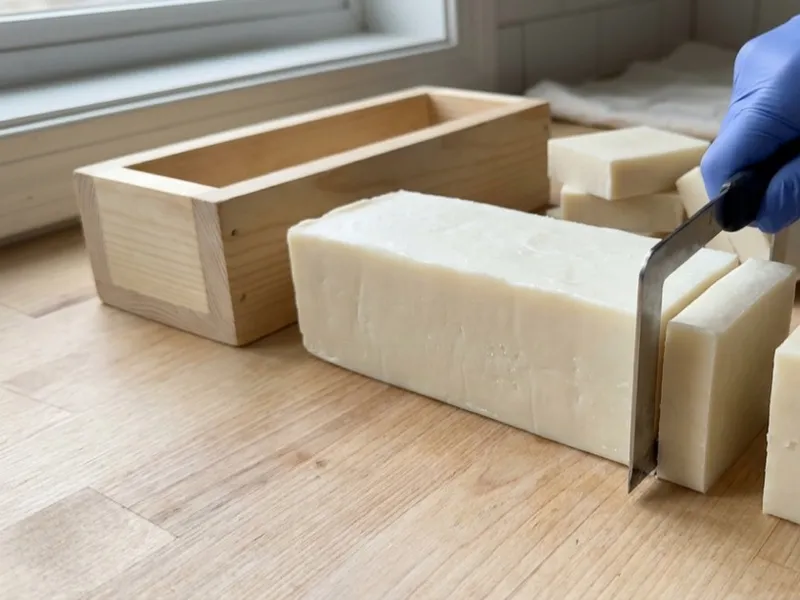
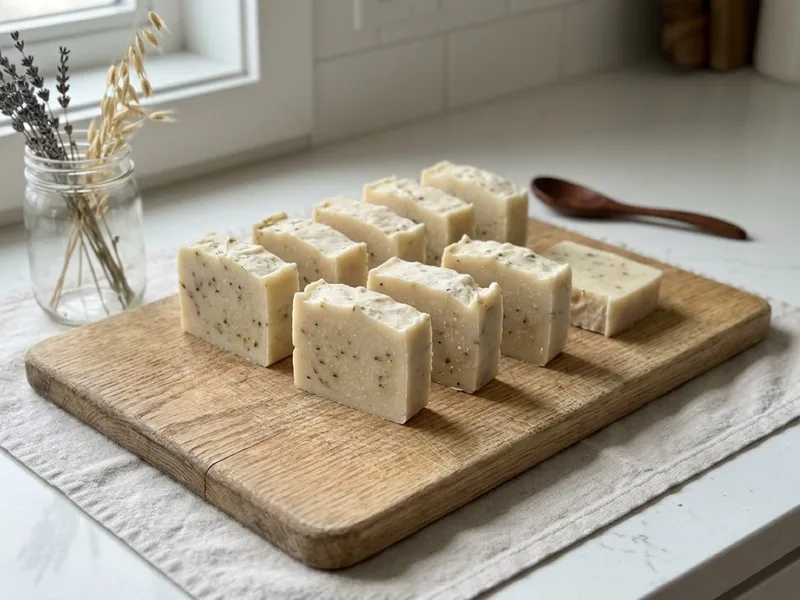
Unmold after 24–48 hours, once the loaf is firm and no longer tacky. Cut into 1-inch (2.5 cm) bars.
Step 7: Cure six weeks
Cure the bars on a rack with airflow for 6 weeks, turning once a week. The olive oil content means the bar keeps getting harder and milder across the full cure.
Variations
Shea and goat milk
Replace the water with frozen goat milk and add the lye slowly over ice. Skip the towel; milk sugars heat the loaf.
Mango butter swap
Mango butter can replace up to half the shea for a slightly firmer bar. Recalculate the lye, since the SAP value differs.
Unscented
Leave out the lavender. Unrefined shea has a light nutty smell that mostly fades during cure.
If something goes wrong
- Small white specks in the bars
- Shea that wasn’t fully melted recrystallized. Melt it longer and hotter next batch. The bars are still usable.
- Batter thickened very fast
- The oils cooled too much before the lye went in. Soap at 100–110°F (38–43°C). Soap seized
- White film on top
- Soda ash, more likely on ungelled loaves. Steam it off or plane the top. Soda ash on soap
FAQ
How much shea butter can you put in soap?
Most recipes use 5–20%, and 30% is about as high as it goes while staying easy to work. Much above that, trace speeds up and the bar can feel waxy rather than creamy.
Refined or unrefined shea butter for soap?
Both work with the same lye amount. Unrefined shea is ivory to yellowish with a nutty smell; refined is white and neutral. Choose refined if you want a pale bar or a clean base for fragrance.
Does shea butter survive saponification?
Most of it becomes soap, like any oil. A small share is unsaponifiable matter that stays in the bar unchanged, along with some of the superfat. That combination is part of why shea bars feel smooth.
Why is my shea soap grainy?
Shea can form small crystals if it melts only partway and then cools slowly. Melting it fully and holding it warm for a few minutes before adding liquid oils prevents it.
Comments
No comments yet. Made this recipe? Be the first to say how it went.