Sweet Almond Oil Soap Recipe (Slow-Trace Swirl Bar)
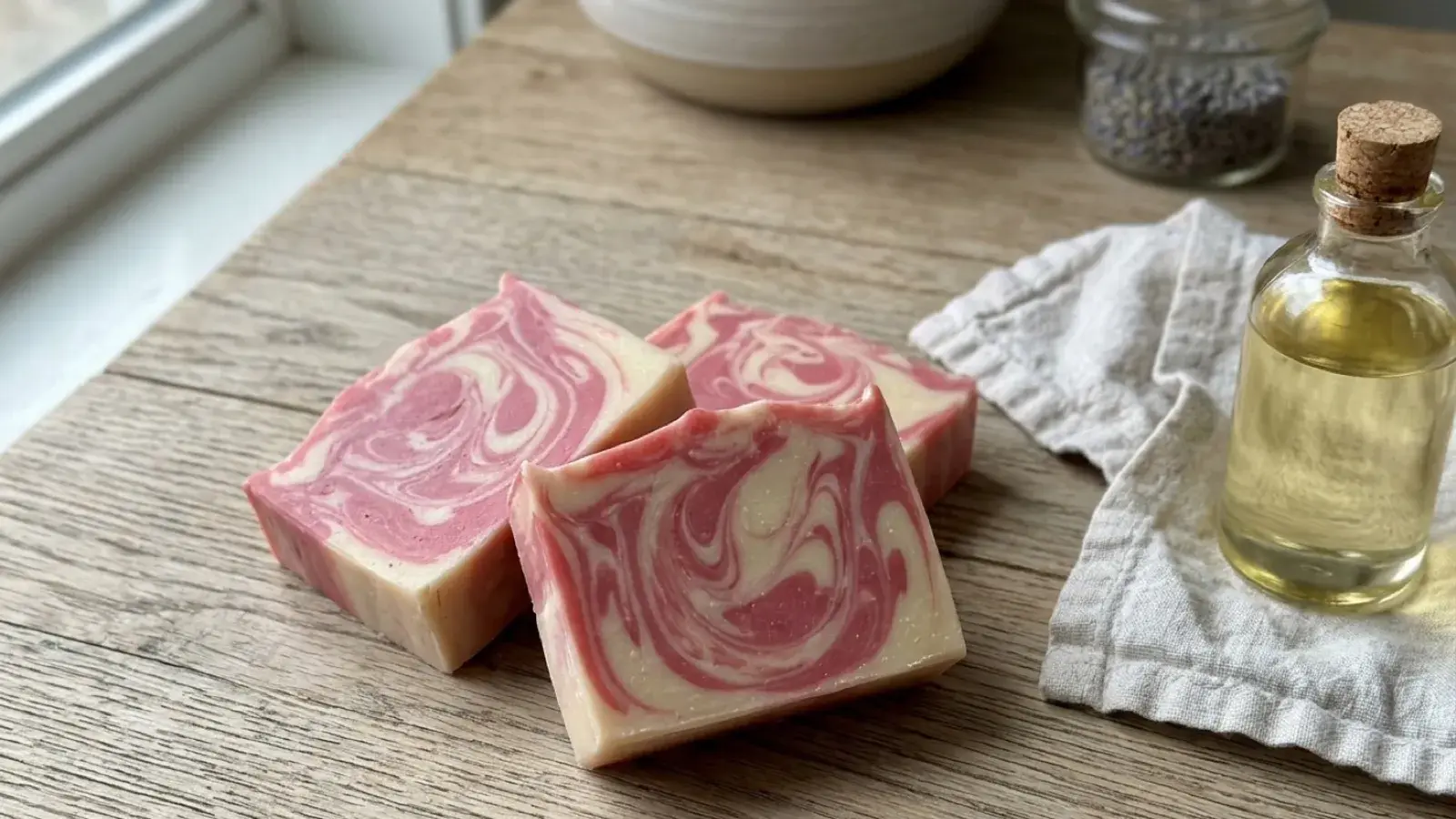
A soft-feeling bar with 20% sweet almond oil, whose slow trace gives you plenty of time for a two-color swirl.
This page has affiliate links. We earn a small commission at no cost to you. Disclosure
Formula not yet verified. These numbers haven't been re-run by a second maker. Don't make this batch until this notice is gone.
- Yield
- 10 bars
- Method
- Cold process
- Difficulty
- Intermediate
- Cure
- 6 weeks
- Superfat
- 5%
- Lye conc.
- 33%
On this page
This sweet almond oil soap recipe uses almond oil at 20% of the oils, with olive, coconut and shea. It makes a mild, soft-feeling bar, and because almond and olive oil both trace slowly, it’s the batter to choose when you want time for a swirl. The recipe includes an optional pink clay swirl to make the most of it.
Sweet almond oil is a gentle, light oil that a lot of makers keep on hand for lotions and massage oils, which is often how it ends up in soap. In the pot it’s a pleasure to work with: thin, slow, forgiving. The one thing to respect is its linoleic acid, roughly 18% of the oil. That fatty acid is what makes oils prone to going rancid in a finished bar, so this recipe caps almond at 20% and pairs it with olive oil, which is more stable.
Why the swirl works here
Most swirl failures come from batter that thickens before you’re done. This recipe stacks the odds the other way: 50% slow-tracing liquid oils, soaping on the cool side at 85–95°F (29–35°C), and stopping the stick blender at emulsion rather than trace. That leaves several minutes to color a portion and pour it back in. For more designs that need fluid batter, see the soap swirl techniques guide.
Buy almond oil fresh and use it within a few months of opening. If the bottle smells nutty-sharp or like old crayons, it’s past its best for soap.
Why this recipe works
- Sweet almond, 20%. Mostly oleic acid with a fair amount of linoleic: a light, soft-feeling bar and a slow, fluid trace. Kept at 20% so the linoleic content stays modest.
- Olive, 30%. More slow-tracing conditioning oil, and more stable than almond over the long cure.
- Coconut, 25%. Bubbles and hardness to offset two soft liquid oils.
- Shea, 20%. Firms the bar so it doesn’t go soft in the dish. With castor at 5% for a steadier lather.
Ingredients
| Oil | % | Grams | Ounces |
|---|---|---|---|
| Sweet almond oil | 20% | 200 g | 7.05 oz |
| Olive oil | 30% | 300 g | 10.58 oz |
| Coconut oil (76°) | 25% | 250 g | 8.82 oz |
| Shea butter | 20% | 200 g | 7.05 oz |
| Castor oil | 5% | 50.0 g | 1.76 oz |
| Lye solution | |||
| Sodium hydroxide (NaOH) 5% superfat | 138 g | 4.87 oz | |
| Distilled water 33% lye concentration | 281 g | 9.90 oz | |
| Additives | |||
| Lavender essential oil Optional; 3% of oils. | 3% | 30.0 g | 1.06 oz |
| Rose clay Optional, for the pink swirl. Disperse in about 1 tbsp distilled water. | 0.6% | 6.0 g | 0.21 oz |
Equipment
Instructions
Step 1: Prep the colorant and lye
Disperse the rose clay in about 1 tablespoon of distilled water and set it aside. Put on goggles and gloves, then add the lye to the main water, never the reverse, and stir until clear. Cool to 90–100°F (32–38°C).
Step 2: Melt the shea and coconut
Melt the shea butter and coconut oil over low heat until fully clear. Take the pot off the heat and add the almond, olive and castor oils, then the lavender essential oil.
Step 3: Soap cool for a long working time
Let the oils and lye settle to 85–95°F (29–35°C). Soaping on the cool side, combined with the slow-tracing almond and olive oils, gives you several minutes to work the swirl.
Step 4: Blend to emulsion, not trace
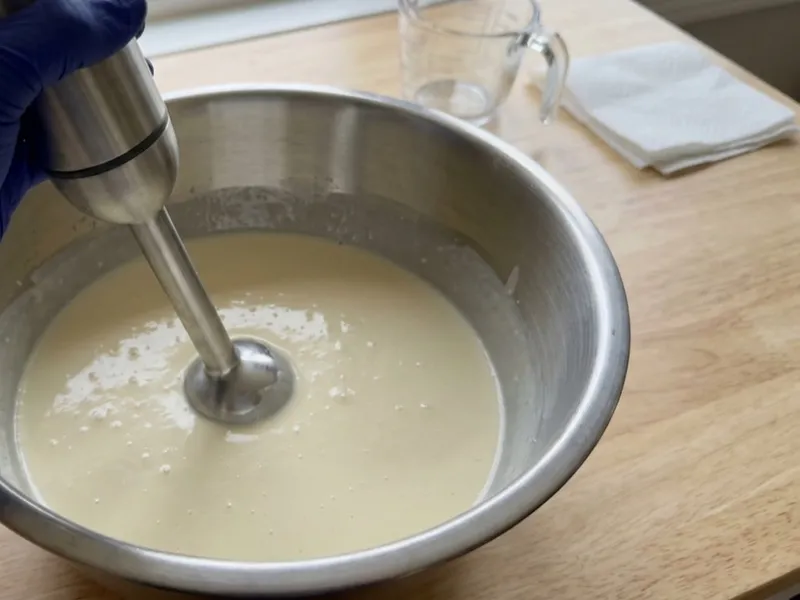
Pour the lye in and stick blend in short bursts just until the batter is uniform and no oily streaks remain, usually 1–2 minutes. This is emulsion; it should still be thin. Stop here.
Step 5: Color a portion and swirl in the pot
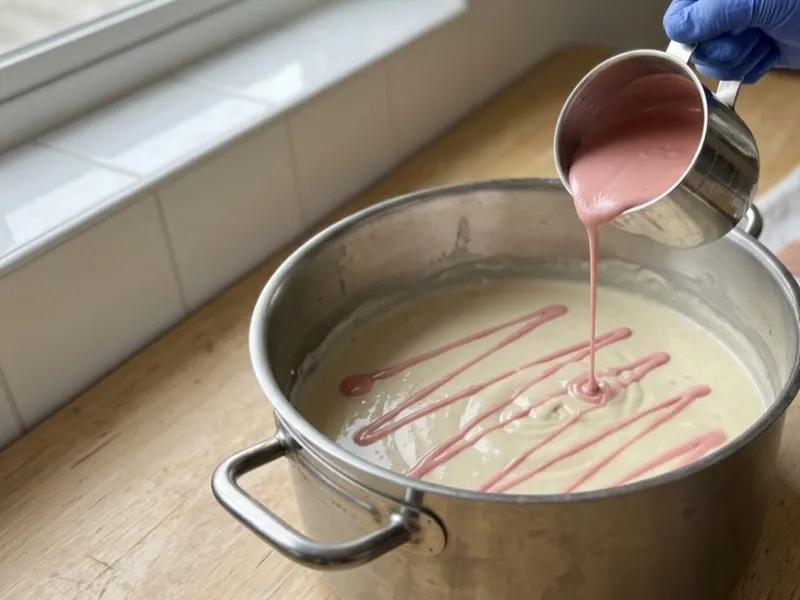
Pour about a third of the batter into a jug and whisk in the clay. Pour the pink batter back into the main pot from a height in three or four thin lines, drag a spatula once around the pot, and pour everything into the mold in one steady stream.
Step 6: Insulate and unmold
Cover with cardboard and a towel. Almond and olive bars set slowly, and gel helps the loaf firm up. Unmold after 48 hours; if it's still soft, give it another day.
Step 7: Cut and cure
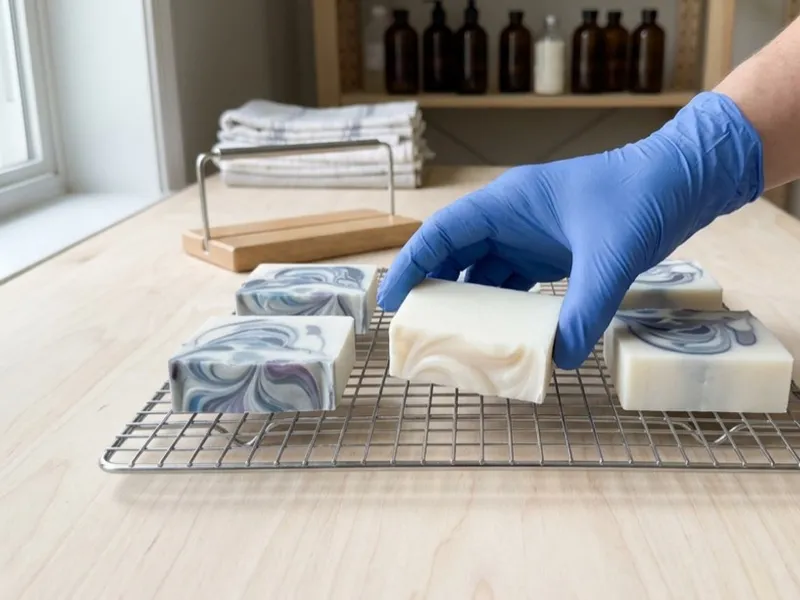
Cut into 1-inch (2.5 cm) bars and cure on a rack with airflow, out of direct sun, for 6 weeks. Turn them weekly.
Variations
Apricot kernel swap
Apricot kernel oil behaves similarly and also traces slowly. It is higher in linoleic acid, so keep it at 15% or less and recalculate.
Single color
Skip the clay and stick blend to light trace for a plain cream bar.
Almond and oatmeal
Add 1 tbsp colloidal oats per 500 g oils at light trace. Leave out the clay to keep it neutral.
If something goes wrong
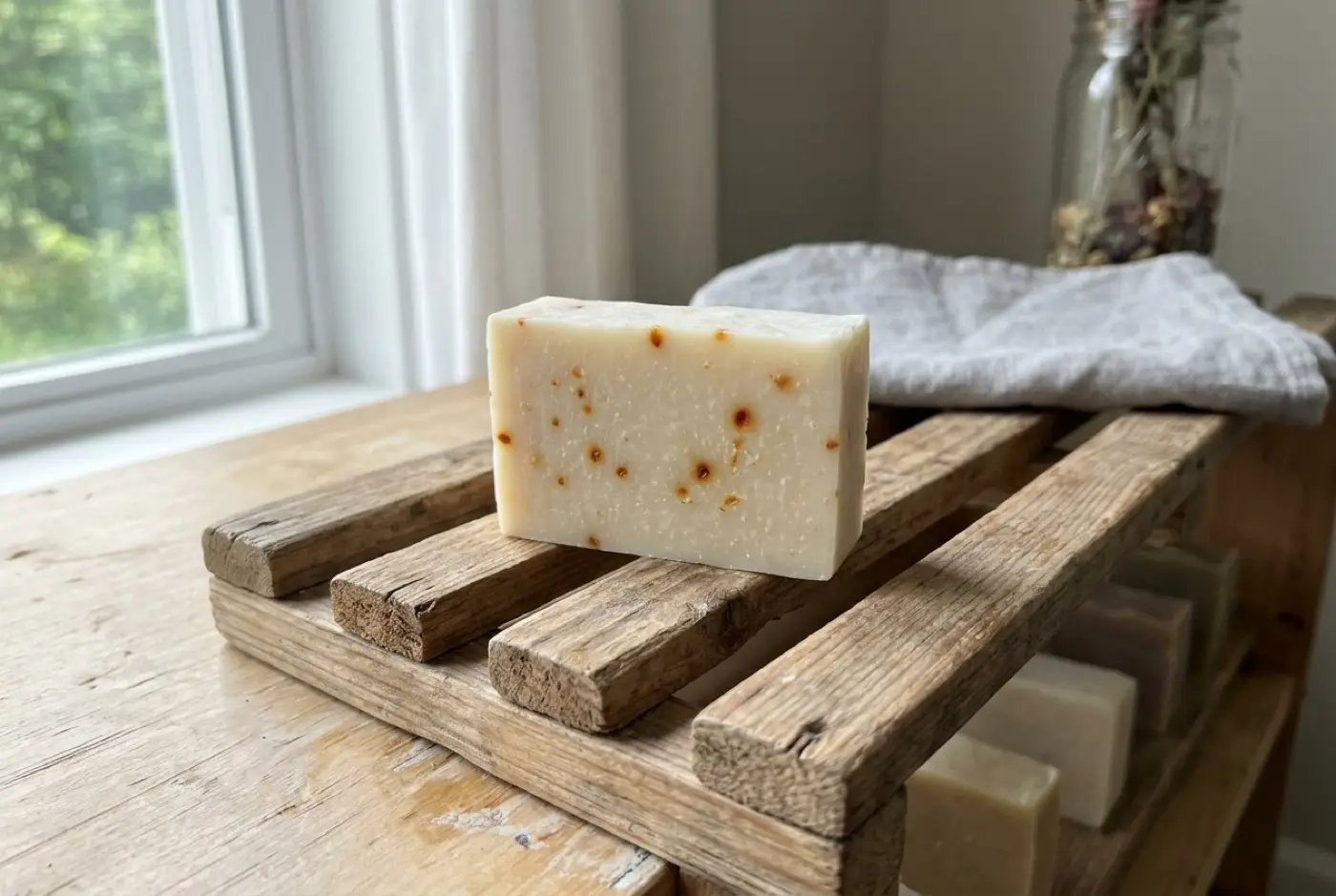
- Orange spots after a few months
- Dreaded orange spots from oxidized oil. Use fresh almond oil, keep it at 20% or less, and store bars cool and dark. Dreaded orange spots and shelf life
- Swirl came out muddy
- The batter was too thick or over-stirred. Stop at emulsion and give it one pass with the spatula.
- Loaf soft after two days
- Normal for this many liquid oils in a cool room. Wait, or soap slightly warmer next time. Soft soap that won’t harden
FAQ
How much sweet almond oil can I use in soap?
Many makers keep it around 10–20%. It makes a pleasant, soft-feeling bar, but its linoleic acid content makes it more prone to rancidity at high amounts, and a high-almond bar is slow to harden.
Does almond oil soap need to be labeled for nut allergies?
If you sell or give away the soap, list sweet almond oil on the label so people with tree-nut allergies can avoid it. Check the labeling rules where you live if selling.
Is sweet almond oil the same as almond extract?
No. Sweet almond oil is a pressed oil with very little scent. Almond extract is a flavoring and should not be used as soap fragrance.
Why does almond oil trace so slowly?
It is mostly oleic and linoleic acid, which saponify more slowly than the saturated fats in coconut, tallow or palm. That slow trace is why almond oil is popular for swirl designs.
Comments
No comments yet. Made this recipe? Be the first to say how it went.