White Powder on Soap (Soda Ash): Causes and Fixes
It's soda ash: unsaponified lye reacting with carbon dioxide on the surface before the soap sets. It's cosmetic and easy to remove.
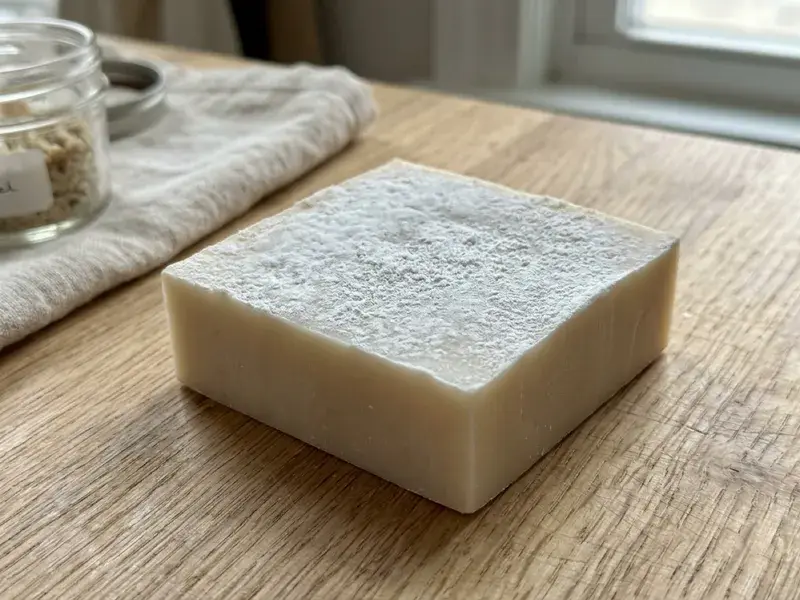
Is it safe to use?
Once cured, the bar is fine to use. Ash can feel slightly drying, so remove it before gifting or selling.
If the whole bar is crumbly or zaps your tongue, that's a different problem. Lye-heavy soap
Causes, ranked by likelihood
- Most likely
Air reached the batter before it set
An uncovered mold lets carbon dioxide react with free lye on the surface during the first 24 hours.
- Common
Poured at thin trace
Thin batter takes longer to saponify, so more lye sits at the surface for longer.
- Sometimes
The soap didn't gel
Cooler batches, including chilled milk soaps, stay soft longer and are more prone to ash.
Fix this batch
Steam or plane it off
- Wait until bars are firm, usually after cutting.
- Hold each bar in kettle steam for 2–3 seconds, or use a clothes steamer.
- For thick ash, shave the top with a vegetable peeler.
Prevent it next time
Seal the surface
- Spritz the top with 99% isopropyl alcohol right after pouring.
- Cover the mold with plastic wrap or a lid.
- Pour at medium trace rather than thin.
The science behind it
FAQ
Does soda ash mean my soap is lye heavy?
No. Ash sits only on the surface and forms even in perfectly balanced recipes. Lye-heavy soap is harsh all the way through.
Will soda ash wash off?
Yes. It disappears after the first few uses, but steaming it off looks better for gifts.
Does a water discount help?
Often. Less water means the soap sets faster, giving ash less time to form.
Comments
No comments yet. Made this recipe? Be the first to say how it went.