Water Discount in Soap: Lye Concentration, Water-to-Lye Ratio and When to Use Less Water
A water discount in soap means using less water to dissolve your lye. How lye concentration, water:lye ratio and water as % of oils relate, with a worked example.
On this page
A water discount means dissolving your lye in less water than the traditional default, so the lye solution is more concentrated. Water discount soap unmolds sooner, tends to get less soda ash and reaches a hard bar faster, but it also traces faster and runs hotter. The clearest way to set it is by lye concentration: around 30–33% suits most beginner cold process recipes, with up to about 40% for experienced makers. The amount of lye doesn’t change; only the water does.
Three ways recipes describe water
Recipes and calculators describe the same thing in three different ways, which is the source of most confusion.
1. Lye concentration (our calculator’s setting). The lye’s share of the lye solution, by weight:
lye concentration = lye ÷ (lye + water)
At 33%, the solution is one third lye and two thirds water.
2. Water : lye ratio. Grams of water per gram of lye. 2:1 means twice as much water as lye.
3. Water as % of oils. Water weight as a percentage of total oil weight. Older calculators often defaulted to 38%, and many older recipes were written that way. “Water discount” originally meant using less than that 38%.
The first two convert directly into each other, whatever the recipe:
- ratio = (1 − concentration) ÷ concentration
- concentration = 1 ÷ (1 + ratio)
| Lye concentration | Water : lye |
|---|---|
| 25% | 3 : 1 |
| 28.6% | 2.5 : 1 |
| 33.3% | 2 : 1 |
| 40% | 1.5 : 1 |
So “33% concentration” and “2:1 water to lye” are essentially the same setting. (Exactly 33% works out to 2.03:1; 33.3% is exactly 2:1.)
The third, water as % of oils, does not convert on its own, because it depends on how much lye the oils need. 38% water is a different lye concentration for a coconut-heavy recipe than for an olive-heavy one. That’s the main reason to stop using it.
Worked example: one recipe, every water setting
Take a 1,000 g bar recipe of 40% olive, 30% coconut, 25% shea and 5% castor at 5% superfat. Using SAP values of 0.135, 0.183, 0.128 and 0.128:
- Lye before superfat: 54.0 + 54.9 + 32.0 + 6.4 = 147.3 g
- Lye at 5% superfat: 147.3 × 0.95 = 139.9 g NaOH
Water at each concentration is lye ÷ concentration − lye. At 33%: 139.9 ÷ 0.33 − 139.9 = 284.1 g. The full range:
| Lye concentration | Water | Water : lye | Water as % of oils |
|---|---|---|---|
| 25% | 419.8 g | 3.00 : 1 | 42.0% |
| 28% | 359.8 g | 2.57 : 1 | 36.0% |
| 30% | 326.5 g | 2.33 : 1 | 32.7% |
| 33% | 284.1 g | 2.03 : 1 | 28.4% |
| 35% | 259.9 g | 1.86 : 1 | 26.0% |
| 40% | 209.9 g | 1.50 : 1 | 21.0% |
Now the old-style setting. 38% of oils is 380 g of water. For this recipe that’s:
- Ratio: 380 ÷ 139.9 ≈ 2.72 : 1
- Concentration: 139.9 ÷ (139.9 + 380) ≈ 26.9%
So the “full water” default of older recipes is a fairly dilute lye solution. Moving from 38% of oils to a 33% concentration cuts the water from 380 g to 284 g, a reduction of about a quarter.
What more or less water does
| Less water (higher concentration) | More water (lower concentration) |
|---|---|
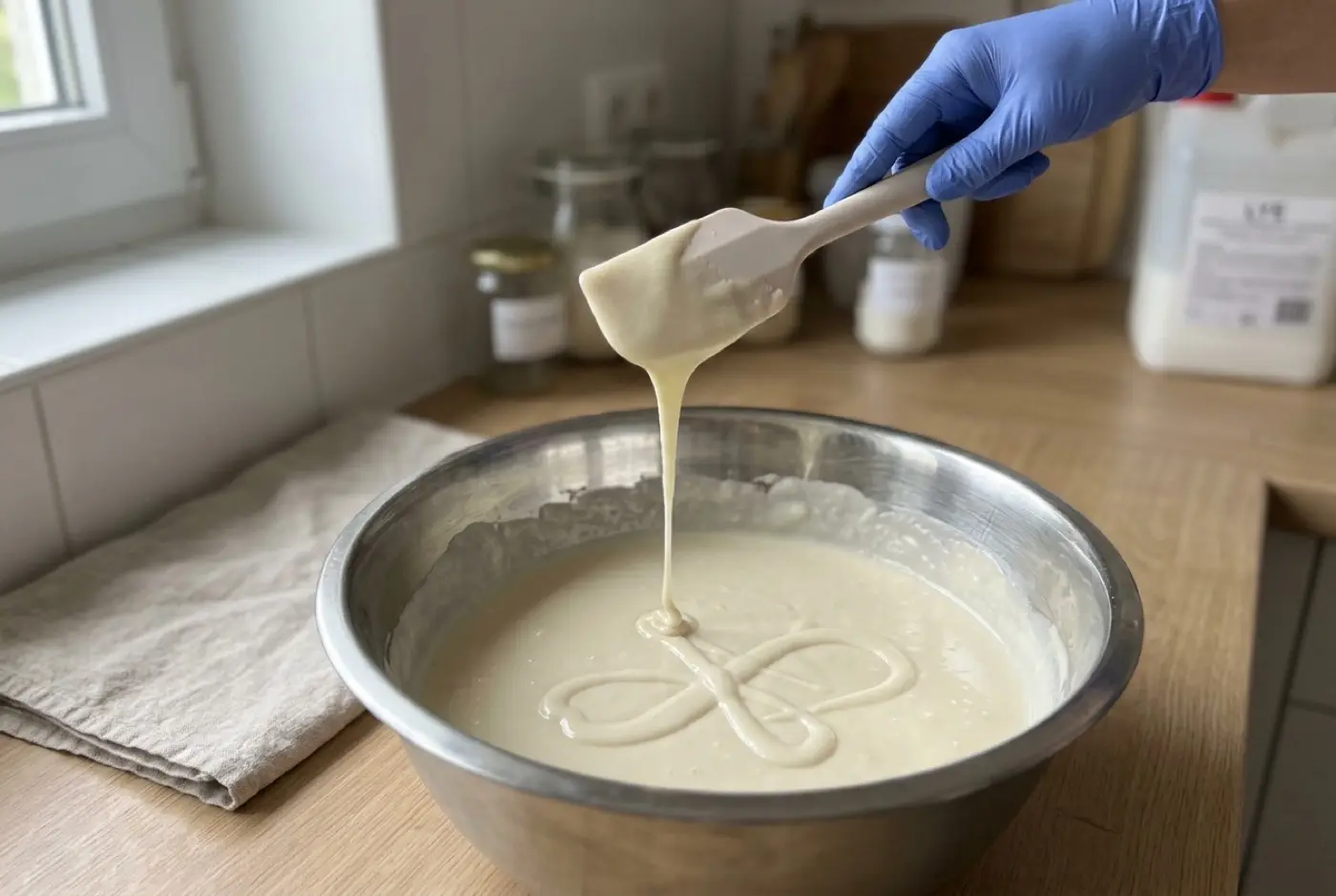
| Faster trace, less working time | Slower trace, more time for swirls |
| More heat; more likely to gel or overheat | Cooler; less likely to gel in a thin mold |
| Firm enough to unmold sooner | Can stay soft for days, especially high-olive recipes |
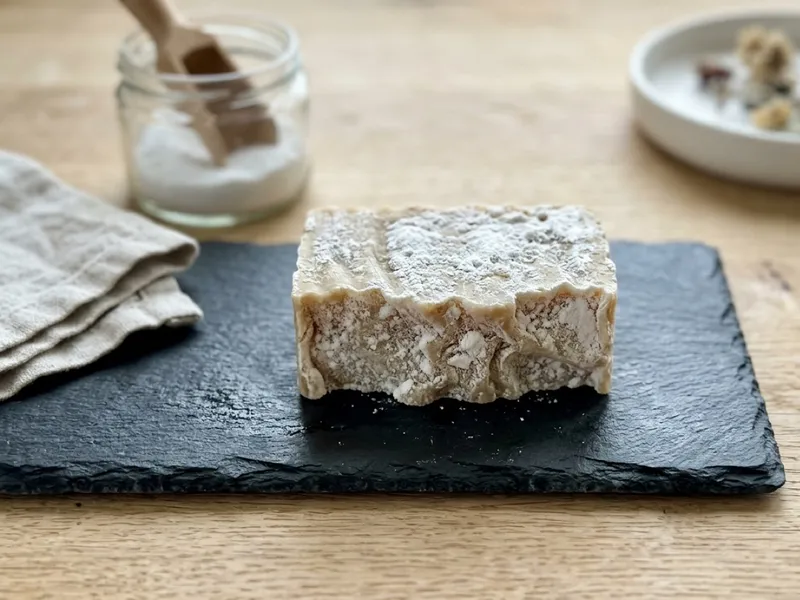
| Less soda ash, typically | More prone to soda ash |
| Less shrinkage and warping during cure | More shrinkage as water evaporates |
| Higher risk of cracking or seizing with fast fragrances | Higher risk of glycerin rivers in some colorants |
There’s no single best setting; it depends on the recipe and design.
Practical ranges
- 30–33%: the everyday range. Our lye calculator defaults to 33%.
- 28–30%: more working time for intricate swirls, at the cost of a slower unmold. Use with recipes that have plenty of hard oils.
- 33–38%: high-olive recipes like castile soap that would otherwise stay soft for a long time; also salt bars and some quick-unmold production batches.
- Around 40%: the practical upper limit for most makers. Lye dissolves only with effort, and the batter can move very fast.
Our calculator’s slider runs from 25% to 40%.
When to use a water discount
- Recipes that stay soft. High-olive or high-soft-oil recipes benefit from less water.
- Slow-moving recipes where you want to unmold in a day rather than three.
- Recurring soda ash on the tops of bars.
- Recipes you insulate for gel where you want a firmer bar sooner.
When not to
- Fast-moving fragrances or recipes high in hard oils, which already trace quickly. See soap seized.
- Complex swirls that need thin batter for several minutes.
- Milk, honey or sugar recipes, which already run hot. Less water adds more heat; see overheating soap.
- Liquid soap, which follows its own water rules during the paste and dilution stages.
Converting an old recipe to lye concentration
If you have a favorite recipe written as “water at 38% of oils”, here’s how to bring it into a concentration-based calculator:
- Run the oils and superfat through the lye calculator to get the lye weight.
- Work out the recipe’s water: total oils × the water percentage. For 1,000 g of oils at 38%, that’s 380 g.
- Calculate the concentration: lye ÷ (lye + water).
- Set the calculator slider to the nearest whole number, then decide whether to keep it or step toward 33%.
When you change it, move a few points at a time, not all at once, and note the result in your batch log. That way you’ll know whether a faster trace or quicker unmold came from the water or from something else.
Common mistakes
- Mixing up the three formats. “33%” as concentration and “33%” as water-of-oils are very different amounts.
- Adding milk or another liquid on top of the calculated water instead of using it as part of the water amount. It dilutes your lye solution without you noticing.
- Going straight to 40% as a beginner. Change one thing at a time, in small steps.
- Thinking less water means less lye. Lye is set by oils and superfat only.
Next steps
Set your concentration in the lye calculator and watch the water : lye figure change. The trace page explains how the water setting affects working time, and gel phase covers the heat side.
FAQ
What is a water discount in soap making?
Using less water in your lye solution than the traditional default. It's best expressed as a higher lye concentration, for example 33% instead of about 27%.
What lye concentration should beginners use?
Around 30–33% is a forgiving range for most cold process recipes. It gives enough working time for simple designs without bars staying soft for days.
Does water discount change the amount of lye?
No. Lye is set by your oils and superfat. Water discount only changes how much water dissolves it.
What happens if I use too little water?
Very concentrated lye solutions make the batter trace faster and run hotter, which can cause seizing, cracking or overheating. Above about 40% concentration, the lye can also be hard to dissolve fully.
Does the water stay in the soap?
Most of it evaporates during cure, which is one reason bars lose weight over the first few weeks. Less water at the start means less to lose and a faster cure toward a hard bar.
Comments
No comments yet. Made this recipe? Be the first to say how it went.