Avocado Oil Soap Recipe (30% Avocado, Cold Process)
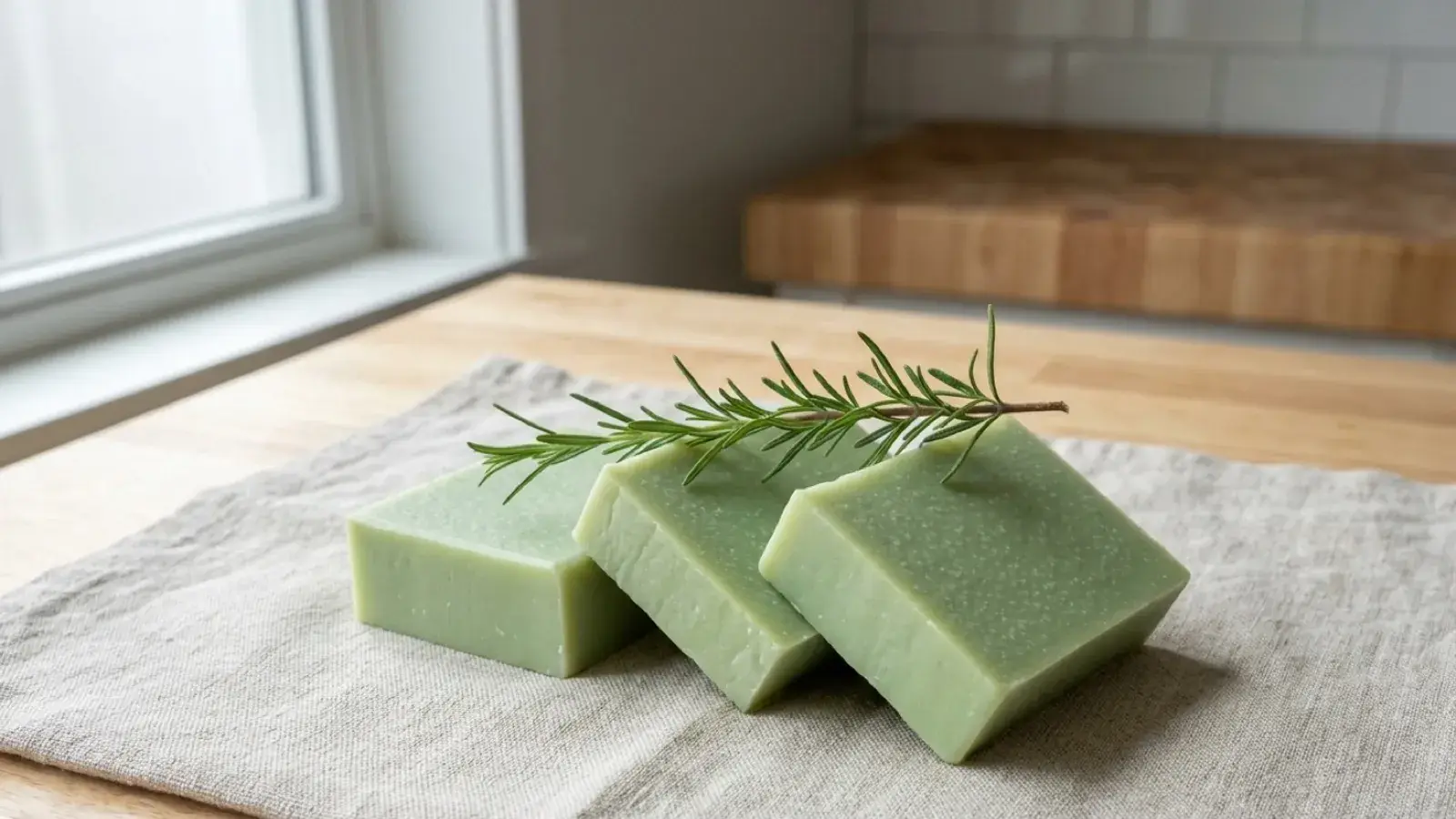
A silky, sage-tinted bar with avocado oil as the lead liquid oil at 30%, scented with rosemary and mint.
This page has affiliate links. We earn a small commission at no cost to you. Disclosure
Formula not yet verified. These numbers haven't been re-run by a second maker. Don't make this batch until this notice is gone.
- Yield
- 10 bars
- Method
- Cold process
- Difficulty
- Beginner
- Cure
- 6 weeks
- Superfat
- 5%
- Lye conc.
- 33%
On this page
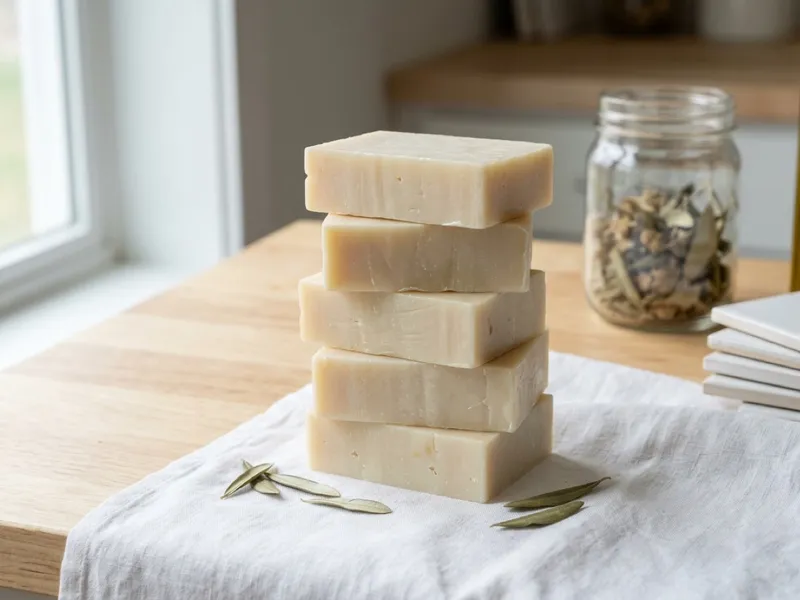
This avocado oil soap recipe puts avocado oil in the lead at 30% of the oils, alongside olive, coconut and shea. Use unrefined avocado oil and the bar comes out a soft sage green; use refined and it’s a creamy white. Either way it’s a silky, mild, slow-wearing everyday bar.
Avocado oil behaves a lot like olive oil in soap, and you can treat it as a richer cousin. Both are mostly oleic acid, but avocado carries noticeably more palmitic acid, so it nudges a bar toward firmness and a creamier lather instead of pushing it softer. In practice that means a 30% avocado batch traces a bit faster than a high-olive one and unmolds a little sooner.
The oil, not the fruit
Search for avocado soap and you’ll find two different things. This recipe uses avocado oil, which is just another soap fat and needs nothing special. Recipes that blend mashed avocado into the batter are a different technique: the fruit adds water and sugars that heat the batch and can spoil if not fully incorporated. If that’s what you’re after, treat it like any purée and follow a vegetable recipe such as cucumber soap for the handling.
The green tint from unrefined avocado oil comes from its natural pigments, and like most plant colors it fades with light. Cure the bars in the shade and expect them to mellow toward green-beige over months.
One practical note on sourcing: smell the bottle before you weigh it. Avocado oil that has been open in a warm kitchen for a long time can start to smell stale or crayon-like, and that smell carries into the soap and shortens its shelf life. Fresh oil smells mild and faintly green. If your bottle is borderline, buy fresh oil for this recipe rather than risk the whole batch.
Why this recipe works
- Avocado, 30%. Mostly oleic acid like olive oil, but with more palmitic acid, so it adds a little creaminess and firmness along with a silky, conditioned feel.
- Olive, 25%. Shares the conditioning work and keeps trace slow enough to handle easily.
- Coconut, 25%. Lather and hardness. With two mild liquid oils in the lead, the bar needs it.
- Shea + castor, 20%. Shea firms the bar; castor stabilizes the lather.
Ingredients
| Oil | % | Grams | Ounces |
|---|---|---|---|
| Avocado oil | 30% | 300 g | 10.58 oz |
| Olive oil | 25% | 250 g | 8.82 oz |
| Coconut oil (76°) | 25% | 250 g | 8.82 oz |
| Shea butter | 15% | 150 g | 5.29 oz |
| Castor oil | 5% | 50.0 g | 1.76 oz |
| Lye solution | |||
| Sodium hydroxide (NaOH) 5% superfat | 138 g | 4.86 oz | |
| Distilled water 33% lye concentration | 280 g | 9.87 oz | |
| Additives | |||
| Rosemary essential oil Optional; 2% of oils. | 2% | 20.0 g | 0.71 oz |
| Peppermint essential oil Optional; 1% of oils. | 1% | 10.0 g | 0.35 oz |
Equipment
Instructions
Step 1: Make the lye solution
Put on goggles and gloves. Add the lye to the distilled water, never the reverse, and stir until clear. Let it cool to 90–100°F (32–38°C).
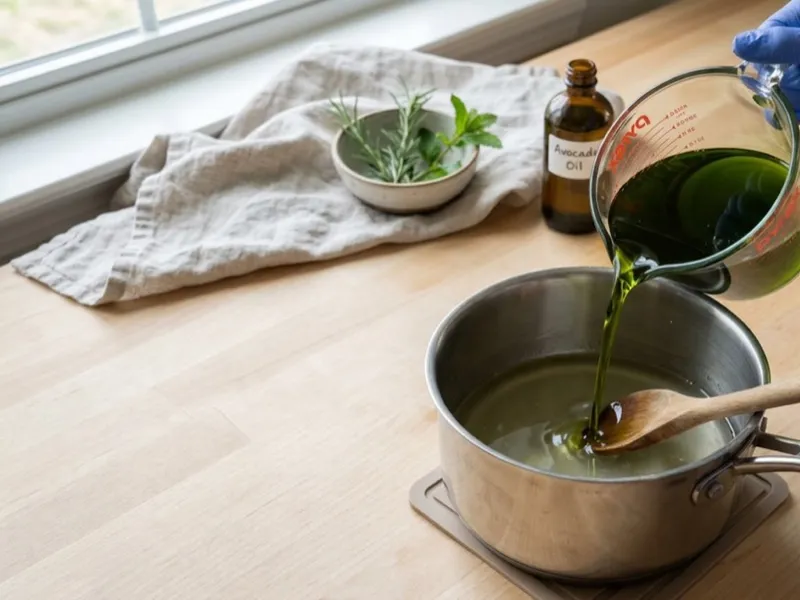
Step 2: Melt and combine the oils
Melt the coconut oil and shea butter over low heat until completely clear, then take the pot off the heat and add the avocado, olive and castor oils. Stir in the rosemary and peppermint essential oils now if using them.
Step 3: Match temperatures
Let the oils and lye solution settle to 90–100°F (32–38°C). With 55% liquid oils, this blend stays fluid at room temperature, so there's no rush.
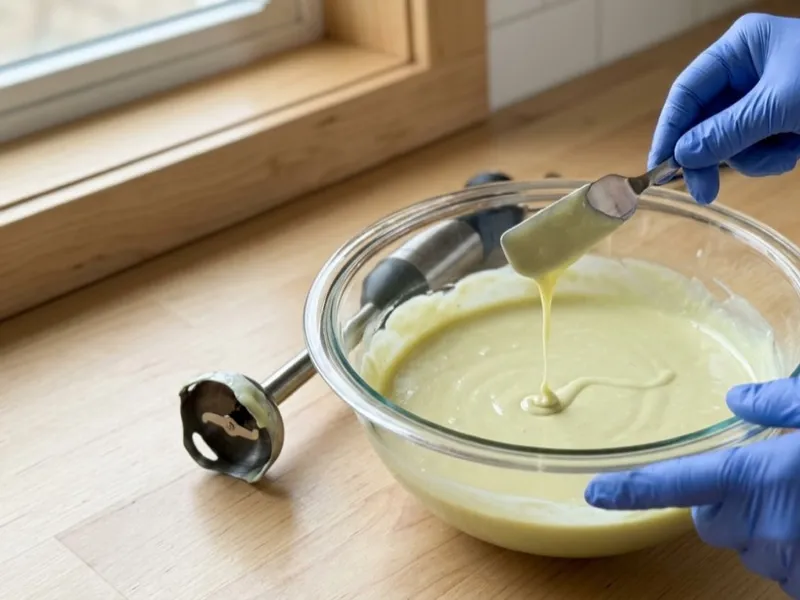
Step 4: Blend to light trace
Pour the lye into the oils and stick blend in short bursts with stirring between. Expect light trace in 3–5 minutes, a little quicker than a high-olive recipe. Stop when drips leave a faint trail.
Step 5: Pour and cover
Pour into the mold and cover with cardboard and a light towel. Gel deepens the green slightly and gives a smoother cut face. Leave it uncovered if you'd rather keep the color paler.
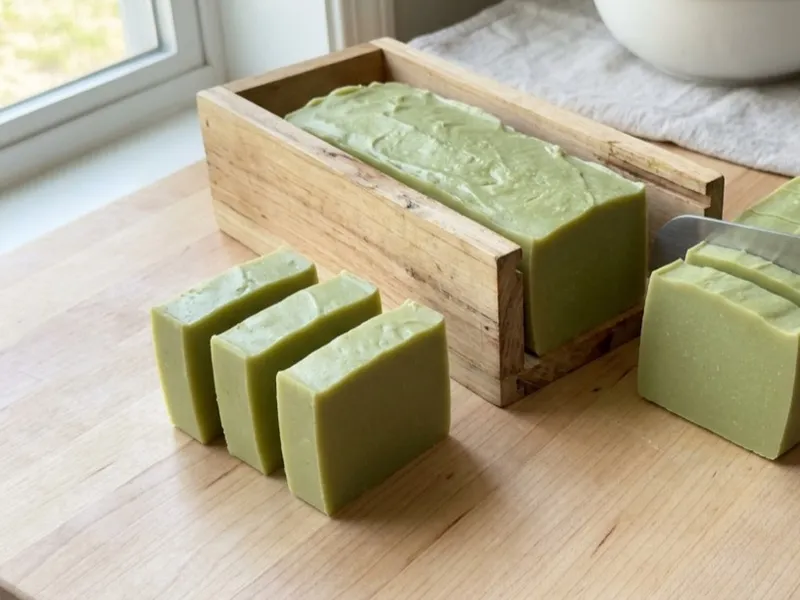
Step 6: Unmold and cut
Unmold after 24–48 hours, once firm. Cut into bars about 1 inch (2.5 cm) thick.
Step 7: Cure six weeks
Cure on a rack with airflow and out of direct sun for 6 weeks, turning weekly. Light fades the green tone, so a shaded spot keeps the color better.
Variations
Avocado and clay
Add 1 tsp green or kaolin clay per 500 g oils, dispersed in a little water, at light trace for a deeper sage color.
Avocado purée
Purée is a different technique with its own heat and spoilage issues; see the vegetable recipes like cucumber soap for that method.
Unscented
Leave out the essential oils. Refined avocado oil is nearly scentless; unrefined has a faint grassy note.
If something goes wrong
- Green color faded to beige
- Natural chlorophyll tints fade in light. Cure and store in the shade; expect some fading either way. Fading and morphing colors
- Loaf soft at 48 hours
- Normal in a cool room with this many liquid oils. Wait another day, or gel next time. Soft soap that won’t harden
FAQ
Refined or unrefined avocado oil for soap?
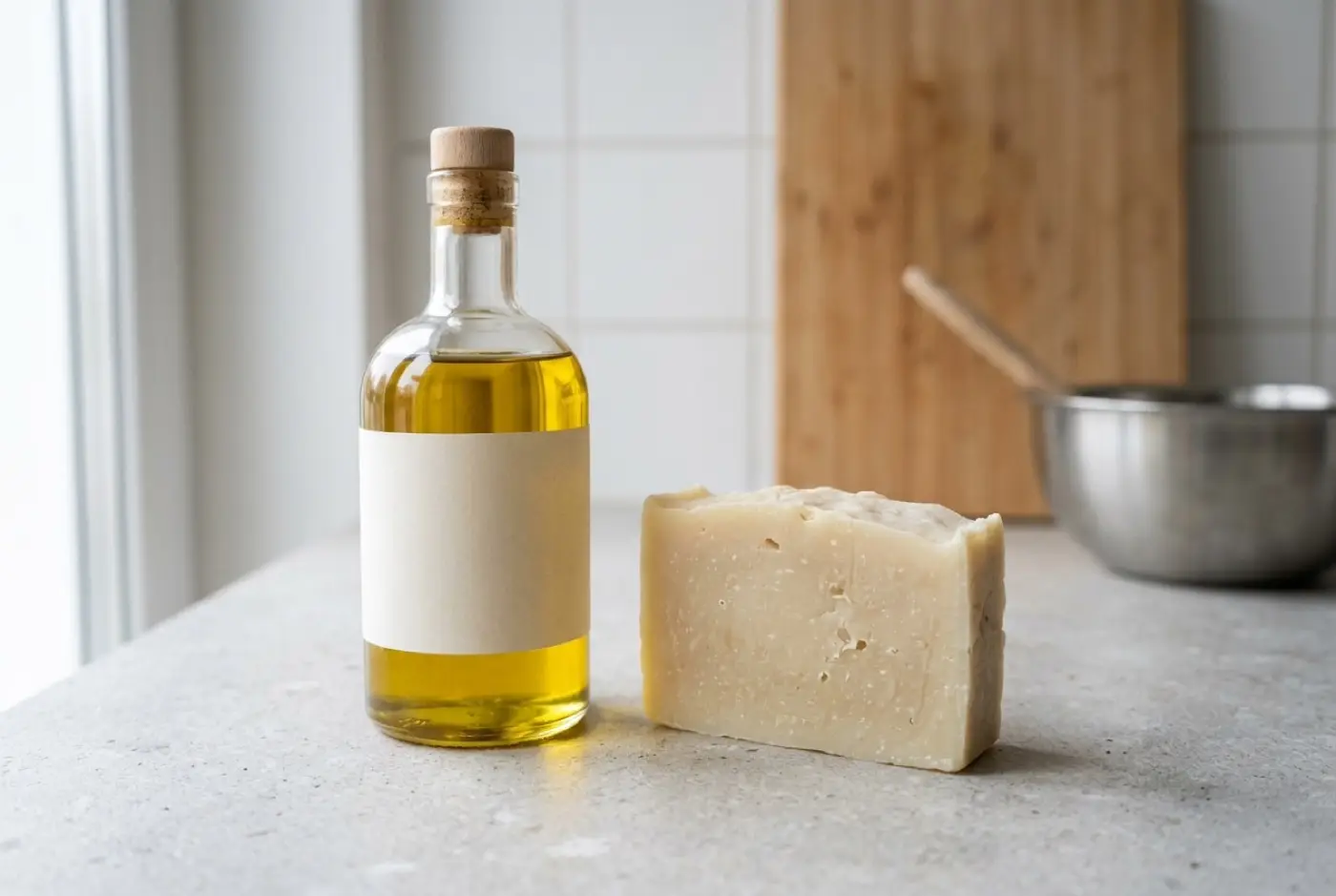
Either. Unrefined avocado oil is green and gives the bar a pale sage tint. Refined is pale yellow and makes a creamier white bar. Both take the same lye amount.
Can I use avocado oil from the grocery store?
Yes. Cooking-grade avocado oil is usually refined and works fine. Check that it is 100% avocado oil, since some bottles are blends.
Can I use avocado oil instead of olive oil in soap?
In most recipes, yes, though you need to re-run the lye because avocado's SAP value is slightly lower. Avocado traces a little faster and makes a slightly firmer bar.
How much avocado oil should I use in soap?
Anywhere from 5% to about a third of the oils works well. This recipe uses 30% so it is clearly the lead oil without making the bar soft.
Comments
No comments yet. Made this recipe? Be the first to say how it went.