Salt Bar Soap Recipe (Sea Salt Spa Bar)
A dense, high-coconut cold process bar packed with fine sea salt at 70% of the oil weight, with a 20% superfat and a cut window measured in hours.
This page has affiliate links. We earn a small commission at no cost to you. Disclosure
Formula not yet verified. These numbers haven't been re-run by a second maker. Don't make this batch until this notice is gone.
- Yield
- 10 bars
- Method
- Cold process
- Difficulty
- Intermediate
- Cure
- 6 weeks
- Superfat
- 20%
- Lye conc.
- 33%
On this page
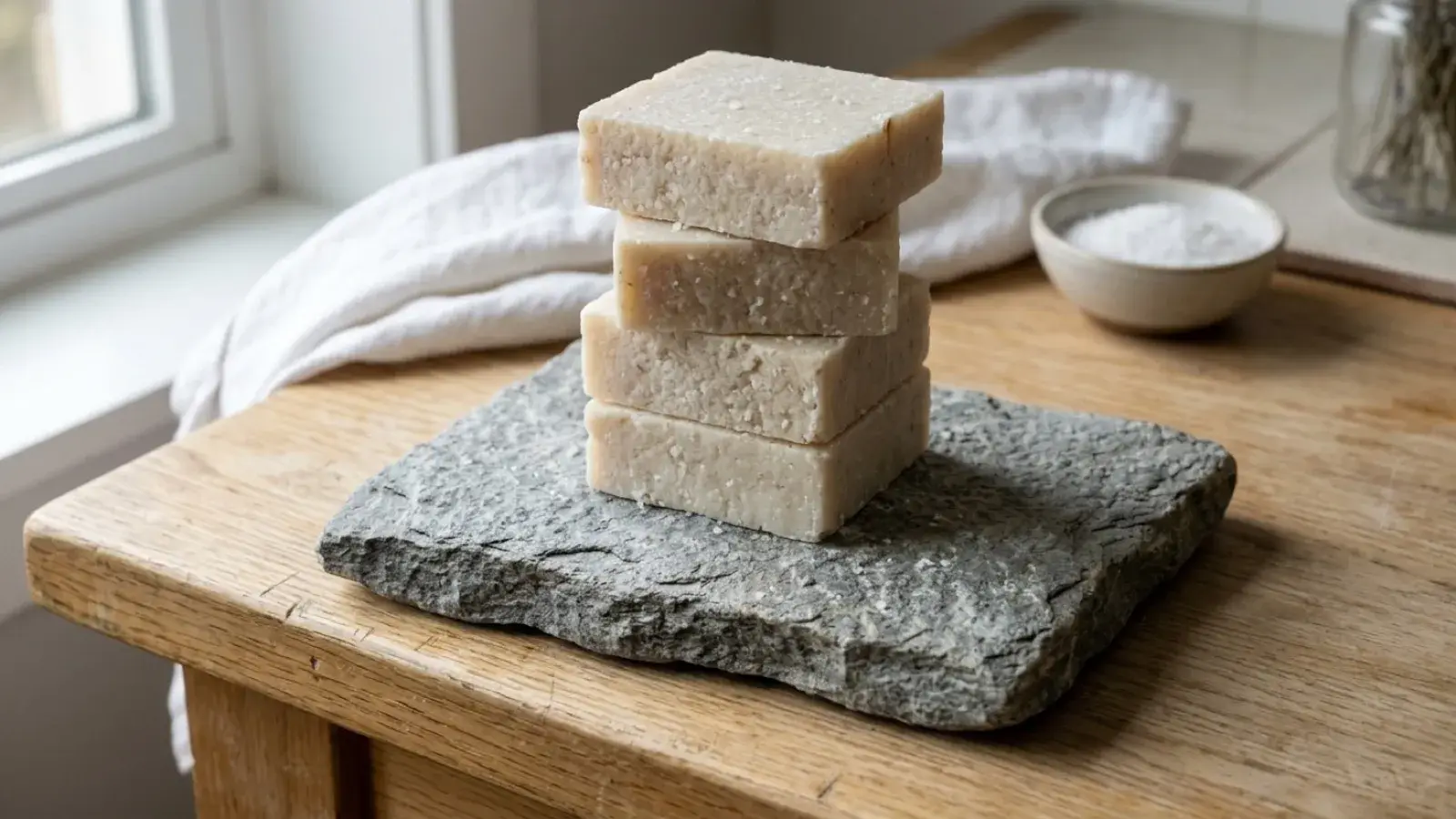
This salt bar soap recipe packs 700 g of fine sea salt into every 1000 g of oils, about 70% of the oil weight, and builds the bar on 80% coconut oil with a 20% superfat. The result is a dense, stone-smooth bar with a creamy, low lather and a gentle texture. It breaks three usual rules at once, and each break has a reason. Get the timing of the cut right and the rest is easy.
Salt works against lather, so salt bars need an oil that foams anyway, and coconut is the one that does. That much coconut would be harsh at a normal superfat, so the formula leaves 20% of the oils unsaponified to keep it mild. The calculator’s cleansing and hardness numbers land well above the usual ranges as a result; that is expected for this style of bar.
Why salt bars are cut early
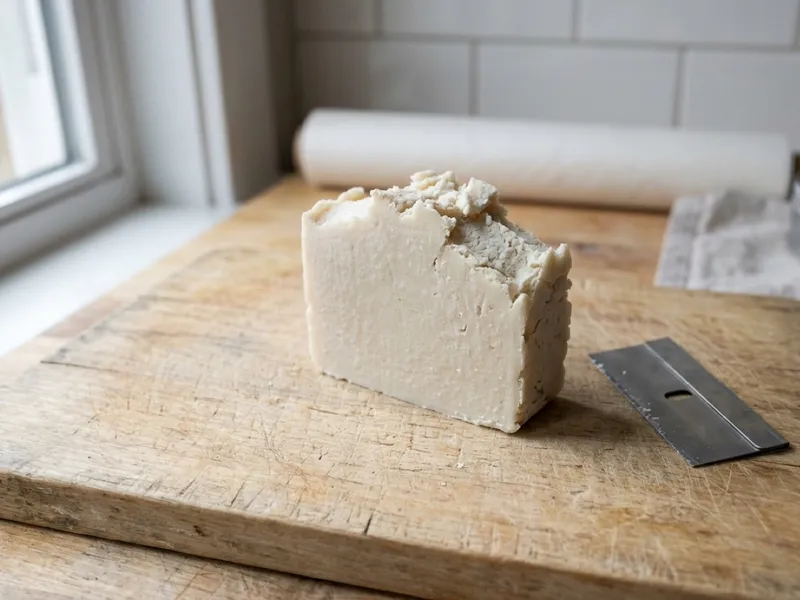
A salt bar sets fast and keeps going. Within a few hours of pouring, the loaf is firm but still warm, and a knife slides through cleanly. By the next morning, it has hardened into something closer to stone, and cutting it usually ends with jagged chunks or a loaf that splits along the salt. Start checking about an hour after pouring and cut as soon as a slice holds a clean edge without smearing. If you cannot be there for that window, use individual cavity molds, which skip cutting entirely. Fine salt is part of the same plan: coarse grains feel scratchy and give a crumbly cut, and Dead Sea salt pulls in moisture that makes bars weep.
Why this recipe works
- Coconut, 80%. Salt kills lather in ordinary bars. Coconut is one of the few oils that still foams through that much salt, which is why salt bars sit far above the usual 25–30%.
- 20% superfat. Coconut at 80% would be harsh and drying at 5%. The high superfat leaves plenty of free oil to keep the bar mild. Cleansing and hardness numbers run high on paper; this is deliberate.
- Olive + castor, 20%. Olive softens the feel; castor helps the lather hold up against the salt.
- Fine sea salt, 70%. Makes the dense, stone-like bar with a creamy, low-bubble lather and gentle texture. Fine grains dissolve into the surface instead of scratching.
Ingredients
| Oil | % | Grams | Ounces |
|---|---|---|---|
| Coconut oil (76°) | 80% | 800 g | 28.22 oz |
| Olive oil | 15% | 150 g | 5.29 oz |
| Castor oil | 5% | 50.0 g | 1.76 oz |
| Lye solution | |||
| Sodium hydroxide (NaOH) 20% superfat | 138 g | 4.88 oz | |
| Distilled water 33% lye concentration | 281 g | 9.91 oz | |
| Additives | |||
| Fine sea salt 70% of oil weight. Fine grain, not coarse or Dead Sea salt, for a first batch. Stir in at light trace. Anywhere from 500 to 1000 g works. | 70% | 700 g | 24.69 oz |
| Lemongrass essential oil 1.5% of oil weight; can speed trace, so add just before the salt. | 1.5% | 15.0 g | 0.53 oz |
| Rosemary essential oil 1.5% of oil weight. | 1.5% | 15.0 g | 0.53 oz |
Equipment
Instructions
Step 1: Gear up and make the lye solution
Put on goggles and gloves. Add the lye to the distilled water, never the reverse, and stir until clear. Let it cool to about 100°F (38°C).
Step 2: Melt the oils and weigh the salt
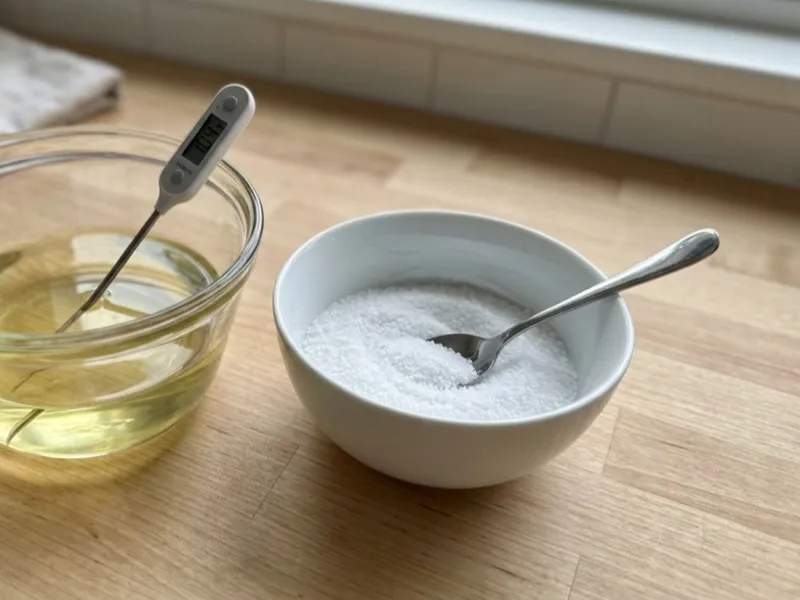
Melt the coconut oil fully, add the olive and castor, and bring to 100–110°F (38–43°C). Weigh the fine sea salt into a separate bowl and break up any clumps.
Step 3: Blend to light trace and scent
Pour the lye solution into the oils and stick blend to light trace. Add the lemongrass and rosemary essential oils and pulse once.
Step 4: Stir in the salt by hand
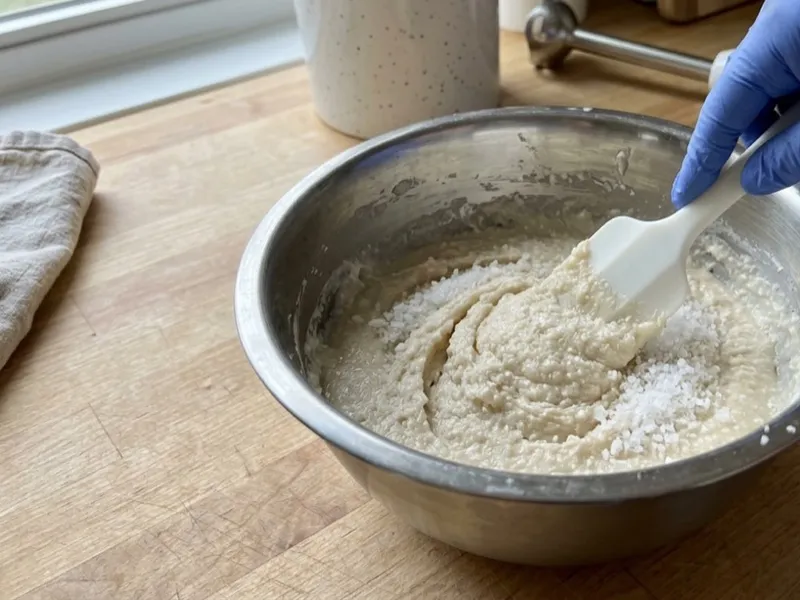
Put down the stick blender. Add the salt and fold it in with a spatula until evenly mixed. The batter will thicken to a gritty, frosting-like paste within a minute or two. Work quickly.
Step 5: Pack into the mold
Spoon the batter into individual cavity molds or a loaf mold and press it down firmly to remove air pockets. Smooth the top with a spatula. Leave it uncovered; salt bars heat up and gel on their own.
Step 6: Cut within hours
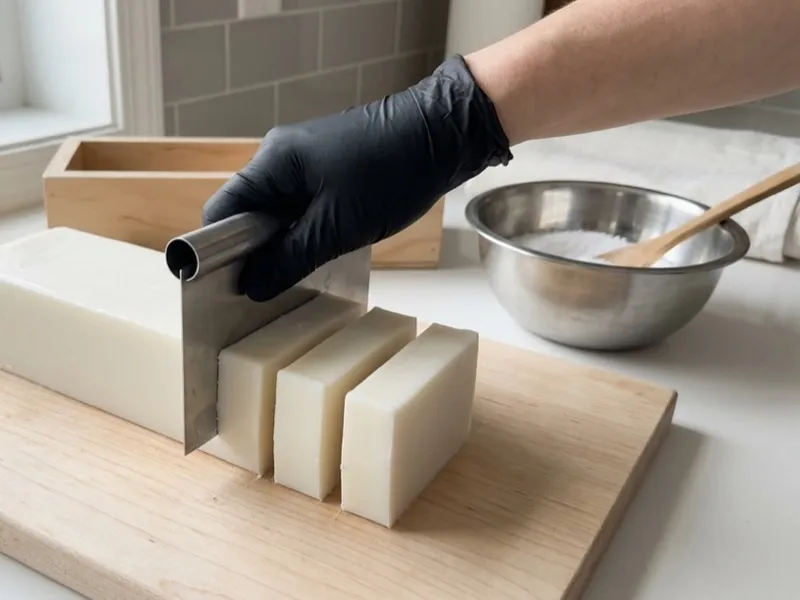
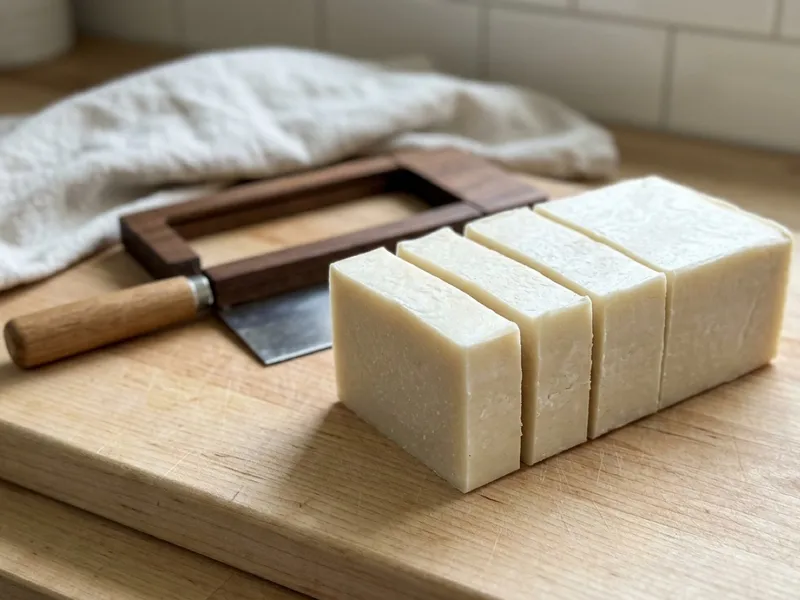
Check the loaf every 30 minutes from about 1 hour after pouring. When it feels firm and warm but a knife still slides through cleanly, usually at 1–4 hours, unmold and cut. If you wait until the next day it will likely crumble or shatter. Cavity molds avoid the problem; unmold those the next day.
Step 7: Cure
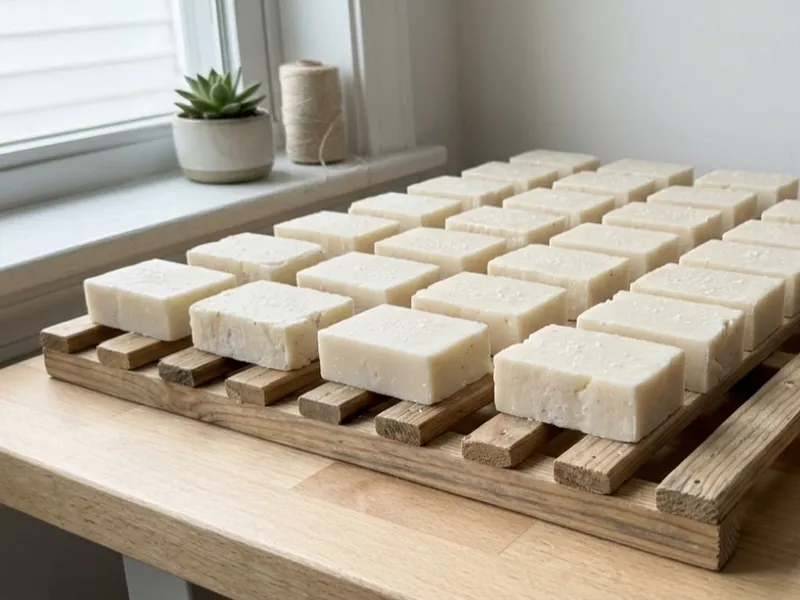
Cure on a rack with airflow for at least 6 weeks, turning weekly. Salt bars keep getting milder and harder for months, and many makers prefer them at 3 months or more.
Variations
Lower salt
Start at 500 g of salt per 1000 g oils for a softer, more bubbly first batch with an easier cutting window.
Pink salt
Swap in fine pink Himalayan salt for a faint blush color. Keep the grain fine.
Lavender spa bar
Use lavender essential oil at 3% (30 g per 1000 g) instead of the lemongrass and rosemary.
If something goes wrong
- Loaf shattered or crumbled when cut
- Cut too late. Salt bars set rock hard within hours. Cut earlier, or use cavity molds. Crumbly soap
- Bar weeps beads of liquid
- Salt pulls moisture from humid air. Cure in a dry room and store bars wrapped once cured. Sweating soap
- Scratchy feel
- Salt grains were too coarse. Use fine-grain sea salt.
FAQ
Why are salt bars made with so much coconut oil?
Salt suppresses lather. Coconut oil still makes bubbles through a lot of salt, so salt bars run at 70–100% coconut and use a high superfat to stay gentle.
Why do I have to cut salt bars so soon?
Salt and coconut together set extremely hard in a few hours. Cut once the loaf holds its shape but is still warm. The next day, most loaves break instead of cutting.
Can I use Dead Sea salt or Epsom salt?
Not for a first batch. Dead Sea salt holds a lot of moisture and can make bars weep. Epsom salt is a different compound and behaves differently. Start with plain fine sea salt.
How much salt do I put in a salt bar?
50–100% of the oil weight. This recipe uses 70%. More salt means a harder, denser bar with less lather.
Comments
No comments yet. Made this recipe? Be the first to say how it went.