Men's Soap Recipe (Cedarwood, Patchouli and Charcoal)
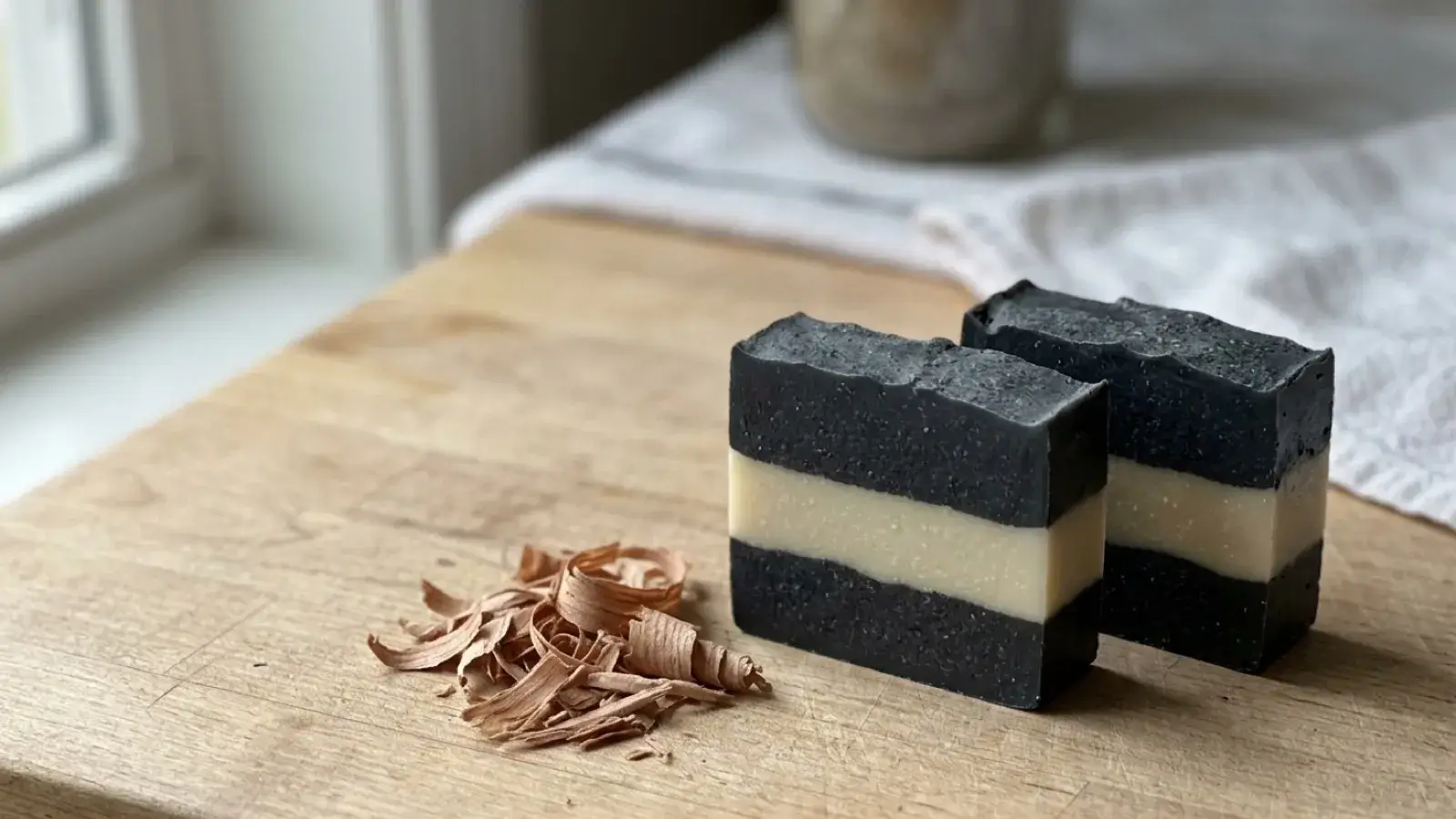
A hard, long-lasting tallow bar with a woodsy cedarwood, patchouli and rosemary blend and a charcoal-black base layer.
This page has affiliate links. We earn a small commission at no cost to you. Disclosure
Formula not yet verified. These numbers haven't been re-run by a second maker. Don't make this batch until this notice is gone.
- Yield
- 10 bars
- Method
- Cold process
- Difficulty
- Beginner
- Cure
- 6 weeks
- Superfat
- 5%
- Lye conc.
- 33%
On this page
This men’s soap recipe makes a hard, long-lasting tallow bar with a woodsy cedarwood, patchouli and rosemary scent, poured in two layers: charcoal black below, cream above. It isn’t a special kind of soap. It’s the bar people usually mean by “men’s soap”: earthy rather than sweet, simple to look at, and dense enough to last in a wet shower.
Built to last in the dish
The difference between this bar and our other seasonal recipes is how long it lasts. Tallow at 30% with coconut and shea gives a high hardness number, and a 6-week cure (8 if you can wait) lets it dry out further. A bar like this melts away much more slowly than a high-olive or high-oil bar. That counts in a shared shower, or for someone who leaves soap sitting in water. Give it a draining soap dish and it lasts longer still. See our tallow soap recipe for more on working with tallow.
The scent is all base and middle notes. Cedarwood (Atlas) and patchouli are slow to evaporate, so the bar still smells of them months later. Rosemary adds a fresher edge at the start. All three are within our usage chart limits. If you’d rather use leather, tobacco or vetiver fragrances, use them at the supplier’s rate and expect vanillin to darken the top.
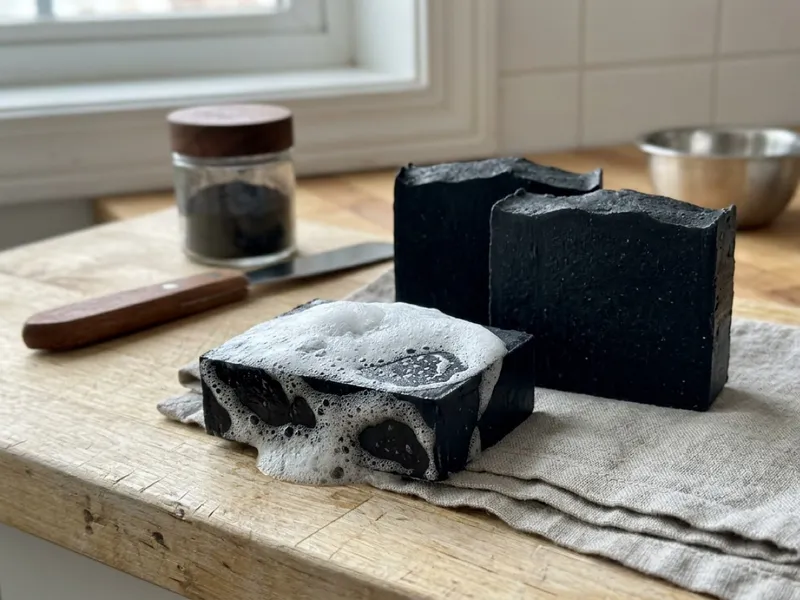
The charcoal is decoration. A black layer under a cream top looks clean and modern. It’s poured as a simple two-layer bar, explained in the layered soap guide. For a bar that’s black all the way through, see our activated charcoal soap.
Why this recipe works
- Tallow, 30%. The main reason this bar lasts. Tallow makes a hard, dense soap with a creamy, stable lather that doesn’t melt away in a wet shower.
- Coconut + shea, 35%. More hardness, plus a quick lather from the coconut.
- Olive + castor, 35%. Mildness and a lather that holds up.
- Cedarwood, patchouli, rosemary. Base notes that stay in the bar for months. 5% total, each within our chart’s limits.
Ingredients
| Oil | % | Grams | Ounces |
|---|---|---|---|
| Olive oil | 30% | 300 g | 10.58 oz |
| Tallow (beef) | 30% | 300 g | 10.58 oz |
| Coconut oil (76°) | 25% | 250 g | 8.82 oz |
| Shea butter | 10% | 100 g | 3.53 oz |
| Castor oil | 5% | 50.0 g | 1.76 oz |
| Lye solution | |||
| Sodium hydroxide (NaOH) 5% superfat | 141 g | 4.97 oz | |
| Distilled water 33% lye concentration | 286 g | 10.09 oz | |
| Additives | |||
| Cedarwood (Atlas) essential oil 3% of oil weight. Our chart’s maximum is 4%. | 3% | 30.0 g | 1.06 oz |
| Patchouli essential oil 1% of oil weight. | 1% | 10.0 g | 0.35 oz |
| Rosemary essential oil 1% of oil weight. A fresh, herbal top note. | 1% | 10.0 g | 0.35 oz |
| Activated charcoal For the bottom third only. Disperse in 1 tbsp oil. | 0.5% | 5.0 g | 0.18 oz |
Equipment
Instructions
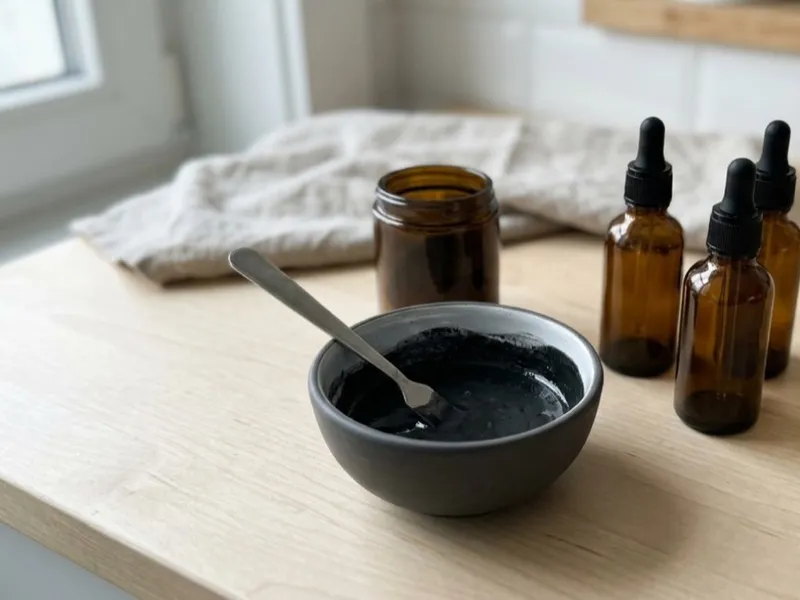
Step 1: Prepare the charcoal and scent
Stir the activated charcoal into a tablespoon of the liquid oils until smooth and fully wet. Charcoal is a fine powder that floats, so mix it gently and away from drafts. Weigh the three essential oils together.
Step 2: Make the lye solution
In goggles and gloves, add the lye to the water, never the reverse, and stir until clear. Melt the tallow, coconut and shea, add the olive and castor, and bring the oils and lye to 95–105°F (35–41°C).
Step 3: Blend to light trace and scent
Pour the lye into the oils and stick blend to light trace, about 1–2 minutes; tallow moves a little faster than vegetable oils. Stir in the essential oils by hand.
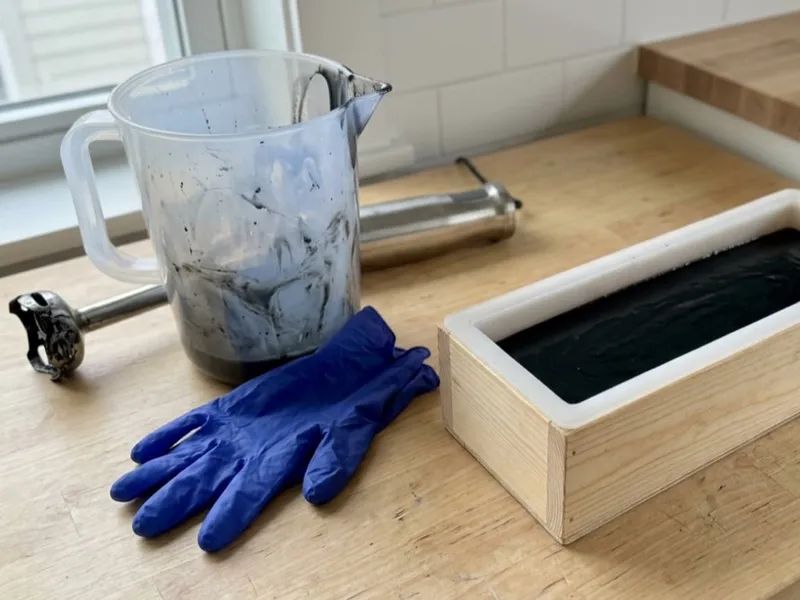
Step 4: Pour the charcoal layer
Pour about one third of the batter into a jug and stick blend in the charcoal paste until evenly black. Pour it into the mold and tap to level. Wait until it holds a spoonful of batter on top, usually 5–10 minutes.
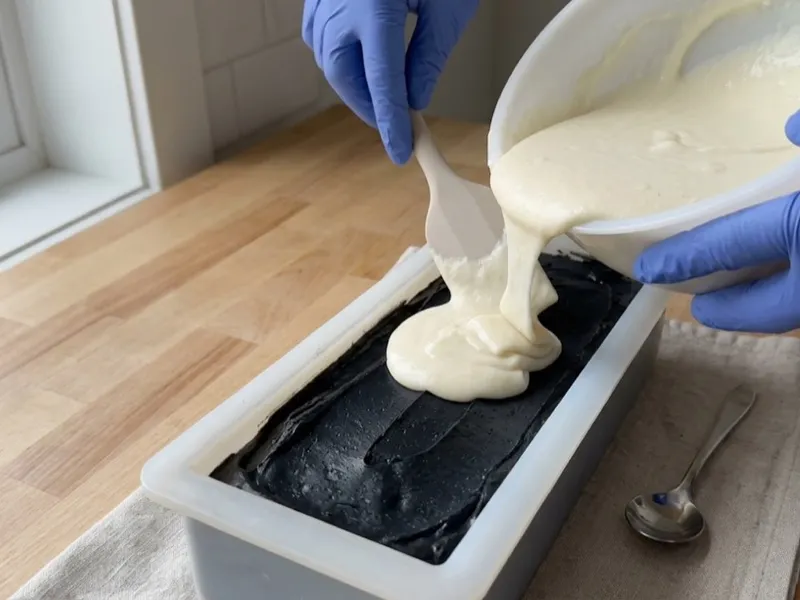
Step 5: Pour the top layer
Pour the uncolored batter slowly over a spatula held just above the charcoal layer so it doesn't break through. Texture the top with a spoon, or smooth it flat.
Step 6: Insulate and unmold
Cover with cardboard and a towel. A tallow bar can gel fully, which gives slightly more saturated color and a glossier cut face. Unmold after 24–48 hours.
Step 7: Cut and cure
Cut into 1-inch (2.5 cm) bars and cure 6 weeks on a rack with airflow. Tallow bars keep getting harder over a longer cure, so if you have time, give them 8.
Variations
Palm-free
Replace the tallow with 15% cocoa butter and 15% high-oleic sunflower. It won’t be quite as long-lasting. Re-run the lye numbers.
Charcoal swirl
Instead of layers, pour the charcoal portion back into the pot and stir two or three times for an in-the-pot swirl. Stop at a thin trace so it doesn’t blur.
Fragrance oil
Leather, tobacco, vetiver or bay rum fragrance oils at the supplier’s recommended rate suit this bar. Many of these contain vanillin and will brown the top layer.
If something goes wrong
- Gray lather or charcoal streaks on the washcloth
- Too much charcoal. At 5 g per 1000 g oils in one third of the batter, lather should stay white. Reduce it if you see gray.
- Layers separated when cut
- The bottom layer had set too far before the top went on. Pour within 10–15 minutes and don’t add a mica line between them.
- Ash on the top
- Soda ash shows up white on dark soap. Steam it off or plane the top; it’s cosmetic. Soda ash
FAQ
What makes a soap a "men's soap"?
Nothing chemical. It's a gift and marketing category. What people usually want is a woody or earthy scent, a plain or dark look, and a bar that lasts. This recipe aims for all three, and anyone can use it.
Why use tallow?
Tallow makes one of the hardest, longest-lasting traditional bars, with a creamy, stable lather. If you need a vegetable bar, see the palm-free variation.
Is activated charcoal just for color here?
Yes. At this amount it gives a black layer. We don't make claims about what charcoal does for skin.
Can I use this as a shaving soap?
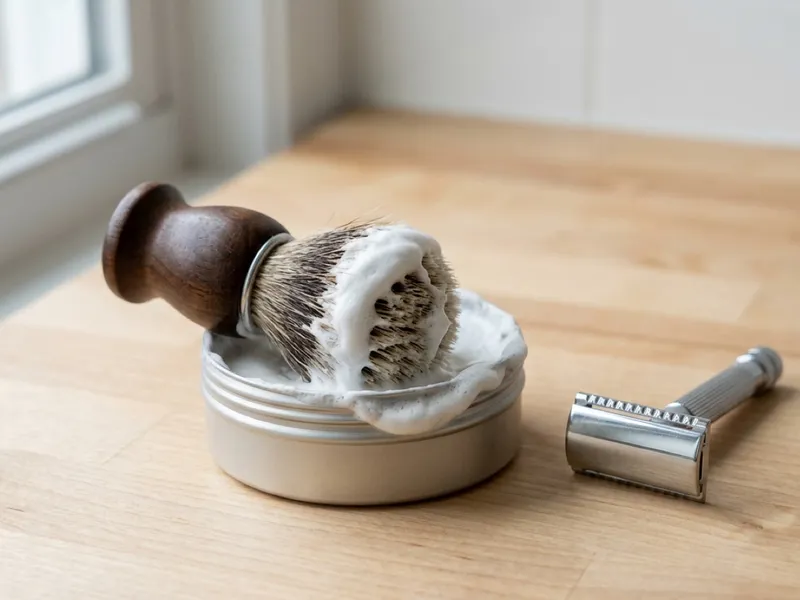
It will lather, but proper shaving soaps use stearic acid and potassium hydroxide for a dense, slick lather. Our shaving soap recipe is built for that.
Comments
No comments yet. Made this recipe? Be the first to say how it went.