Pumpkin Soap Recipe (Pumpkin Purée Cold Process)
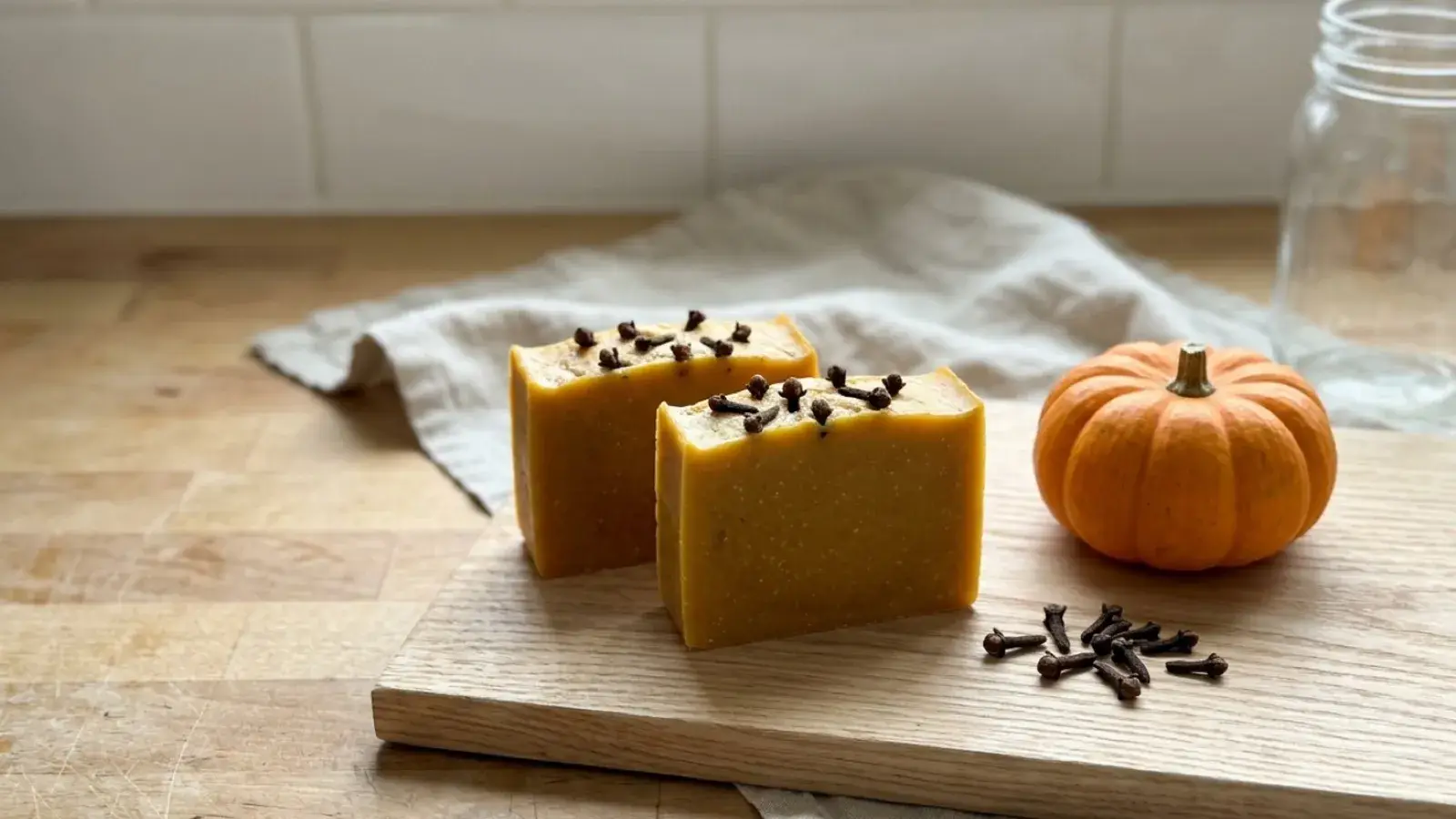
An autumn lard-and-olive bar with plain pumpkin purée stirred in at trace and an orange-clove scent, with the water reduced to make room for the purée.
This page has affiliate links. We earn a small commission at no cost to you. Disclosure
Formula not yet verified. These numbers haven't been re-run by a second maker. Don't make this batch until this notice is gone.
- Yield
- 10 bars
- Method
- Cold process
- Difficulty
- Intermediate
- Cure
- 6 weeks
- Superfat
- 5%
- Lye conc.
- 38%
On this page
This pumpkin soap recipe stirs plain pumpkin purée into a lard, olive and cocoa butter bar at light trace, then scents it with sweet orange and a little clove for a golden, speckled fall soap. The amount of purée is deliberately small: enough for color and character, not so much that the bar goes soft.
The detail that makes it work is counting the purée as liquid. Pumpkin purée is mostly water, so this recipe makes the lye solution with less water than usual. Once the purée goes in, the batter lands back at a normal liquid level.
Accounting for the water in purée
Most lye calculators only know about the water you dissolve the lye in. Add purée on top of a full water amount and you’ve quietly raised the liquid in the batch, which leads to a slower unmold, a softer bar and more chance of soft spots.
Here the lye solution is set at 38% instead of the usual 33%. At 1000 g of oils that’s about 230 g of water. The 50 g of purée adds roughly 45 g of water back, bringing the total to around 275 g, close to a 33–34% concentration. If you scale up the purée, reduce the water by about 90% of the extra purée weight, and don’t push the purée much past what’s here. Vegetable matter is food; more of it is more to dry out and more to spoil.
Why this recipe works
- Lard + olive, 60%. A mild, creamy, slow-tracing base that leaves time to stir the purée in evenly.
- Coconut, 25%. Lather and hardness. The purée’s natural sugars add a little extra bubble too.
- Cocoa butter, 10%. A firmer bar and a faint chocolate note that suits the orange and clove.
- Reduced water + purée. Purée is mostly water. Cutting the lye water to a 38% solution means the finished batter ends up at a normal liquid level instead of a soggy one.
Ingredients
| Oil | % | Grams | Ounces |
|---|---|---|---|
| Olive oil | 30% | 300 g | 10.58 oz |
| Lard | 30% | 300 g | 10.58 oz |
| Coconut oil (76°) | 25% | 250 g | 8.82 oz |
| Cocoa butter | 10% | 100 g | 3.53 oz |
| Castor oil | 5% | 50.0 g | 1.76 oz |
| Lye solution | |||
| Sodium hydroxide (NaOH) 5% superfat | 140 g | 4.95 oz | |
| Distilled water, reduced The water is cut back because the pumpkin purée (about 90% water) is added at trace. Together they come to roughly a 33–34% lye concentration. | 229 g | 8.08 oz | |
| Additives | |||
| Pumpkin purée, plain Canned or homemade, no spices or sugar. Smooth and at room temperature. Added at light trace. | 5% | 50.0 g | 1.76 oz |
| Sweet orange essential oil (10x) 3% of oil weight. | 3% | 30.0 g | 1.06 oz |
| Clove bud essential oil 0.5% of oil weight. Can speed trace and darken the bar slightly. | 0.5% | 5.0 g | 0.18 oz |
Equipment
Instructions
Step 1: Prepare the purée
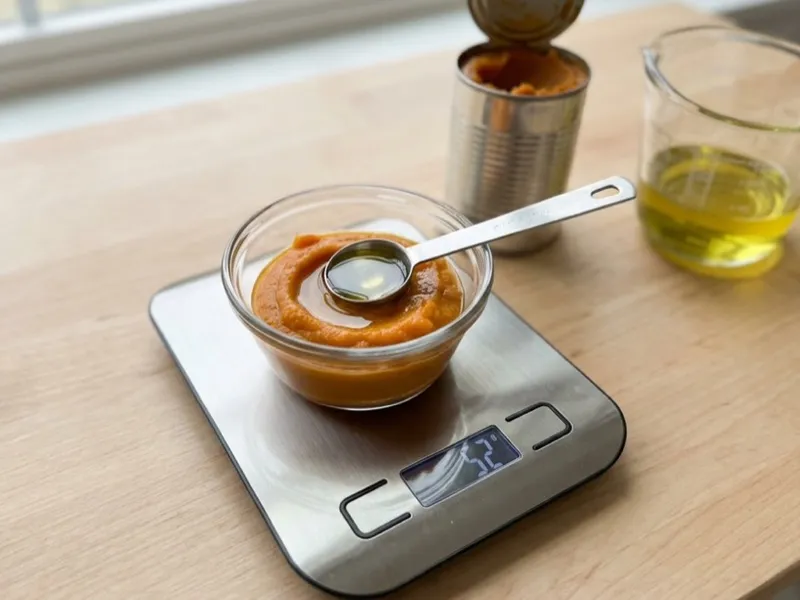
Use plain canned pumpkin or roast and blend your own until completely smooth. Weigh out the purée for your batch (50 g per 1000 g of oils) and blend it with a spoonful of the olive oil from your formula so it loosens and won’t clump. Let it come to room temperature.
Step 2: Make the lye solution with the reduced water
Put on goggles and gloves. Weigh the water as shown in the recipe (it’s less than usual on purpose). Add the lye to the water, never the reverse, stir until clear, and let it cool to 85–95°F (29–35°C).
Step 3: Melt and cool the oils
Melt the lard, coconut oil and cocoa butter, add the olive and castor oils, and cool to 85–95°F (29–35°C), about the same as the lye solution.
Step 4: Blend to light trace, then add the purée
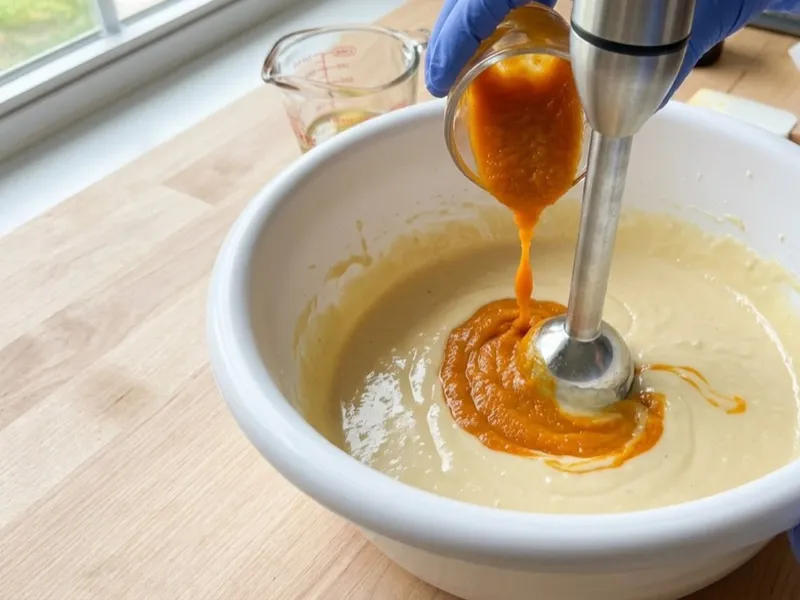
Pour the lye solution into the oils and stick blend to light trace. Add the purée and the essential oils, then pulse the blender three or four times until the batter is an even golden color with no orange streaks.
Step 5: Pour and keep it from overheating
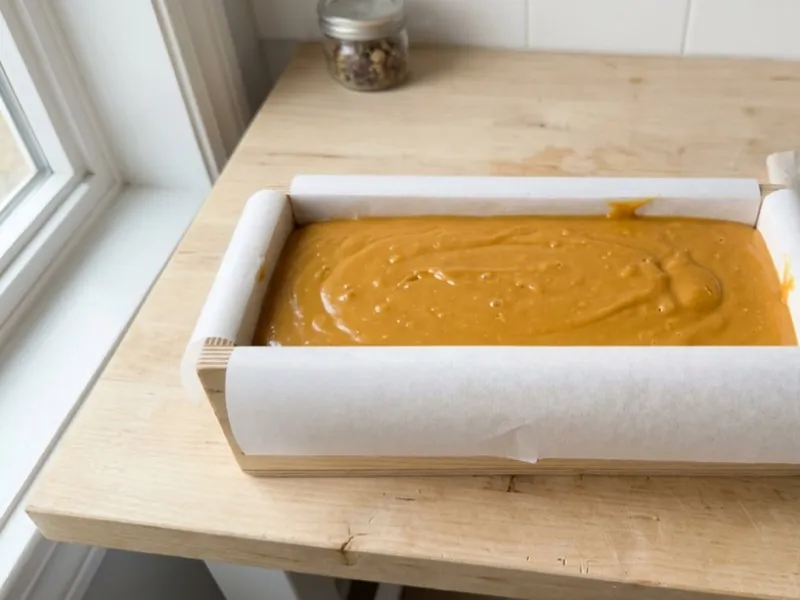
Pour into the mold and leave it uncovered at cool room temperature. Pumpkin sugars warm the loaf, and clove can push it further. If the top looks glossy or starts to crack in the first two hours, move it to the fridge.
Step 6: Unmold and cut
Unmold after 48 hours. Purée soaps can stay a little soft at first, so give it another day if it dents easily. Cut into bars.
Step 7: Cure with good airflow
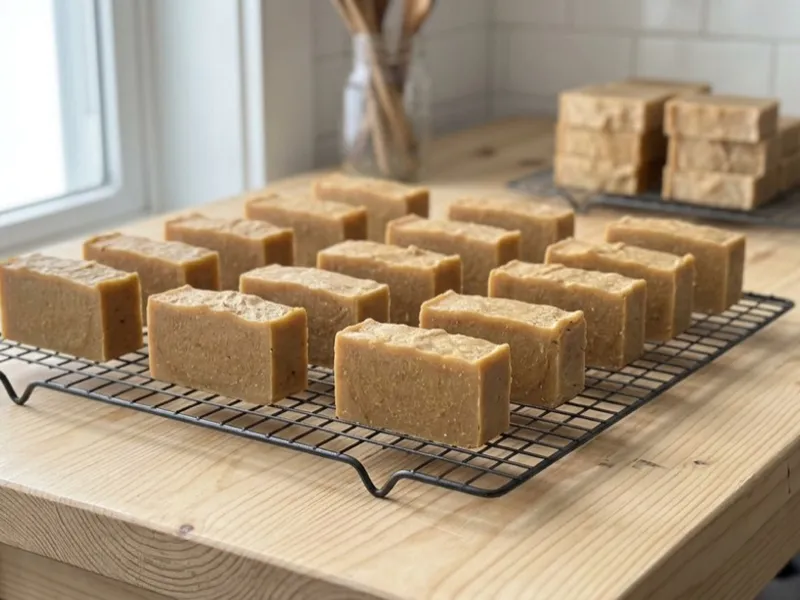
Cure for 6 weeks on a rack with space between bars, turning them weekly. Airflow matters more than usual with vegetable additions; it helps the bars dry evenly. Expect the color to settle from bright gold to a warmer tan.
Variations
Pumpkin and oats
Stir 10 g of finely ground oats per 1000 g oils into the purée before adding it. It gives a softer, speckled look.
No clove
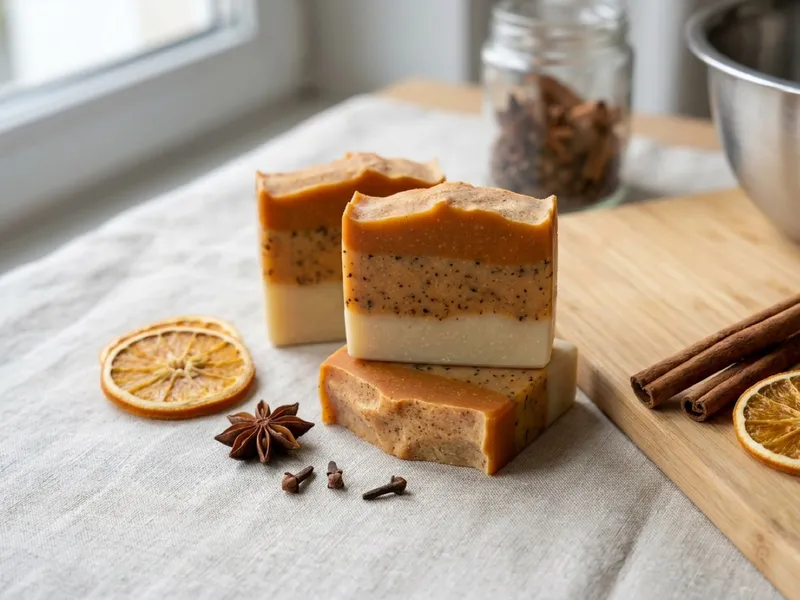
Use 10x sweet orange at 3% with patchouli at 1% if you want a warm scent without clove’s faster trace and darkening.
Pumpkin swirl
Add the purée to only half the batter, then pour both halves together for a gold-and-cream swirl.
If something goes wrong
- Brown or soft spots
- Clumps of purée that didn’t mix in, or too much purée overall. Blend it smooth, loosen with oil, and keep to the stated amount. Soft soap that won’t harden
- Batter thickened fast after the purée
- Clove essential oil and purée can both speed trace. Add them at the very first sign of trace and hand stir if needed. When soap seizes
- Color went brown
- Sugars and clove darken during the cure, and gel deepens the effect. It’s cosmetic; chilling the mold keeps it lighter. Fading and morphing color
FAQ
Can I use pumpkin pie filling?
No. Pie filling contains sugar and spices that add heat and unpredictable color. Use plain pumpkin purée only.
How much pumpkin can I add to soap?
Keep it modest. This recipe uses 50 g per 1000 g of oils. Much more than that risks a soft bar with spots that can spoil, especially if the water isn’t reduced to match.
Why is the lye solution stronger than usual?
The purée is roughly 90% water, so it counts toward the liquid. Using less water for the lye means the total ends up close to a standard amount once the purée is in.
Does pumpkin soap smell like pumpkin?
Barely. Pumpkin itself has little scent after saponification. The orange and clove give the bar its fall scent.
Comments
No comments yet. Made this recipe? Be the first to say how it went.