Turmeric Soap Recipe (Natural Golden Color, Cold Process)
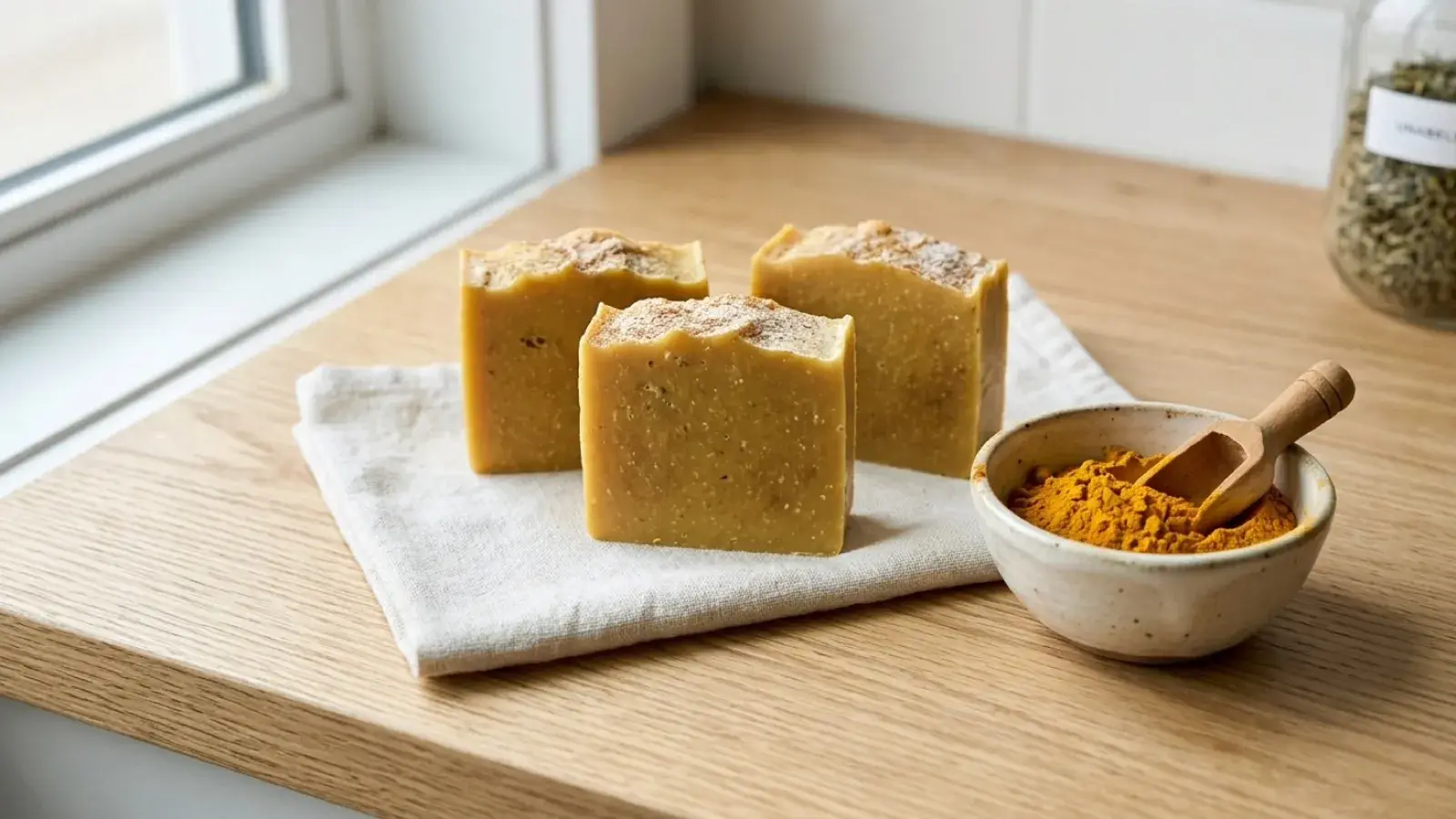
A golden-orange cold process bar colored with turmeric two ways, infused oil for a clean color or powder for speckles, scented with sweet orange.
This page has affiliate links. We earn a small commission at no cost to you. Disclosure
Formula not yet verified. These numbers haven't been re-run by a second maker. Don't make this batch until this notice is gone.
- Yield
- 10 bars
- Method
- Cold process
- Difficulty
- Beginner
- Cure
- 6 weeks
- Superfat
- 5%
- Lye conc.
- 33%
On this page
This turmeric soap recipe uses about 3 g of turmeric per 1000 g of oils to color a creamy, mango-butter bar a warm golden orange, with sweet orange essential oil on top. Turmeric is here purely for color. It is one of the strongest natural colorants you can buy, which means the skill is restraint, and choosing between an infusion and loose powder.
Infusing the turmeric in the olive oil and straining it gives a smooth, even color with nothing to feel in the bar. Adding the powder at trace gives tiny speckles and a slightly deeper color, but undispersed clumps can feel scratchy. Either way, a pinch more than you need turns the bar brown and starts to tint lather and washcloths.
Why turmeric color shifts
Turmeric is yellow in neutral conditions and turns more orange in alkaline ones, so the batter deepens the moment the lye goes in. As the soap cures, the color can drift a little and, like most plant colorants, fade in strong light. Gelling the loaf usually gives a brighter result, and storing bars in a box or drawer keeps them closer to the color you poured. If you need a color that never changes, a mica or oxide is the better tool; turmeric is for makers who like a living, slightly variable natural shade.
Why this recipe works
- Olive, 40%. A pale, greenish-gold oil that lets turmeric color read warm instead of muddy. It also carries the infusion.
- Coconut, 25%. Lather and a firm bar.
- Mango butter + rice bran, 30%. Mango gives a creamy, hard bar; rice bran adds a smooth, light feel. Both are pale, so the color stays bright.
- Turmeric, 0.3%. Turmeric is intense. A few grams per kilo is a sunny yellow-orange; more turns the bar brownish and can tint lather and washcloths.
Ingredients
| Oil | % | Grams | Ounces |
|---|---|---|---|
| Olive oil | 40% | 400 g | 14.11 oz |
| Coconut oil (76°) | 25% | 250 g | 8.82 oz |
| Mango butter | 15% | 150 g | 5.29 oz |
| Rice bran oil | 15% | 150 g | 5.29 oz |
| Castor oil | 5% | 50.0 g | 1.76 oz |
| Lye solution | |||
| Sodium hydroxide (NaOH) 5% superfat | 139 g | 4.89 oz | |
| Distilled water 33% lye concentration | 281 g | 9.93 oz | |
| Additives | |||
| Turmeric powder Infuse in the olive oil and strain for a smooth color, or disperse in 10 g of oil and add at light trace for speckles. Start with 1–3 g. | 0.3% | 3.0 g | 0.11 oz |
| Sweet orange essential oil (10-fold) 3.5% of oil weight; add at light trace. | 3.5% | 35.0 g | 1.23 oz |
| Patchouli essential oil 1% of oil weight; anchors the orange so it lasts. | 1% | 10.0 g | 0.35 oz |
Equipment
Instructions
Step 1: Infuse the oil (or skip for speckles)
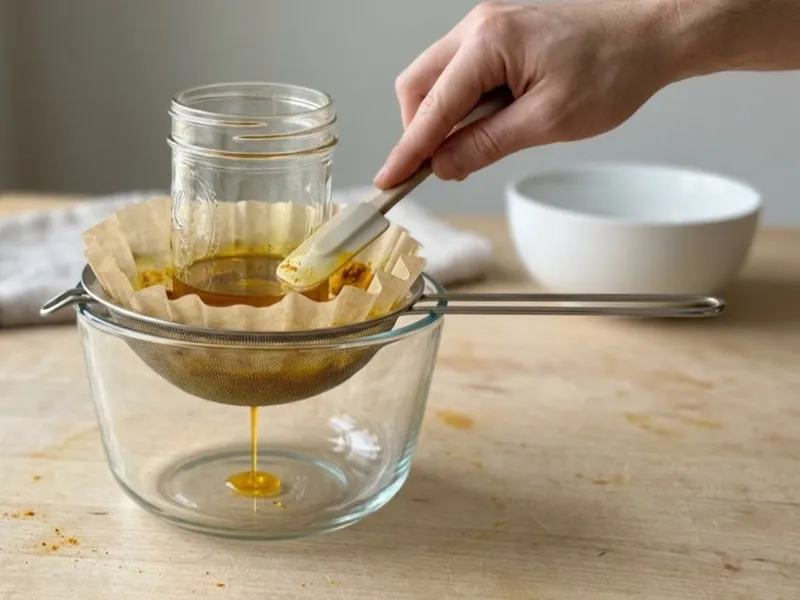
For an even color, stir the turmeric into the olive oil, warm it to about 140°F (60°C) for 30 minutes, then let it sit a few hours or overnight. Strain through a coffee filter. For a speckled bar, skip this and save the powder for trace.
Step 2: Make the lye solution
Put on goggles and gloves. Add the lye to the distilled water, never the reverse, and stir until clear. Cool to about 100°F (38°C).
Step 3: Melt and combine the oils
Melt the coconut oil and mango butter, then add the rice bran, castor and the infused olive oil. Bring everything to 95–105°F (35–40°C). The oils will look bright orange; the cured bar will be softer in tone.
Step 4: Blend to light trace
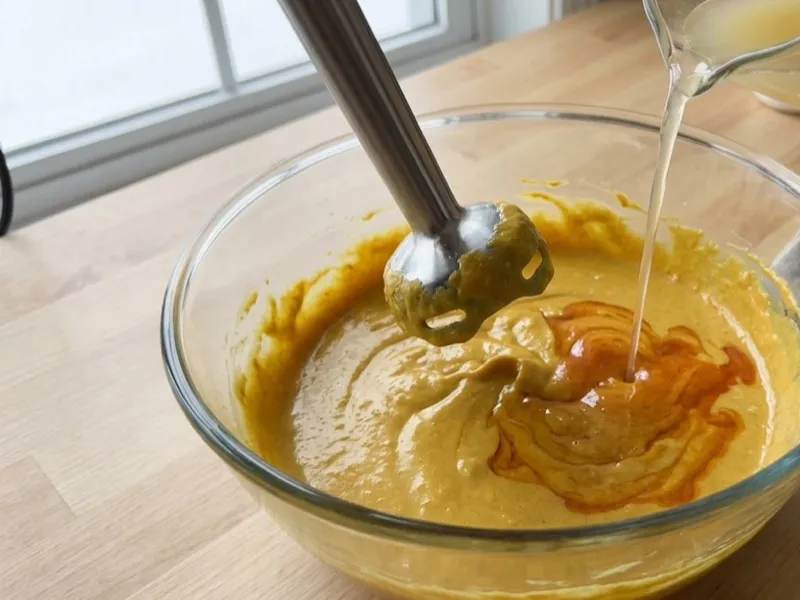
Pour the lye into the oils and stick blend in short bursts to light trace. The batter turns a deeper orange the moment lye hits turmeric. That shift is normal.
Step 5: Scent and (optional) speckle
Stir in the sweet orange and patchouli essential oils by hand. If you are using powder instead of an infusion, mix it into 10 g of oil until smooth and stir it in now. Pulse briefly.
Step 6: Pour and gel
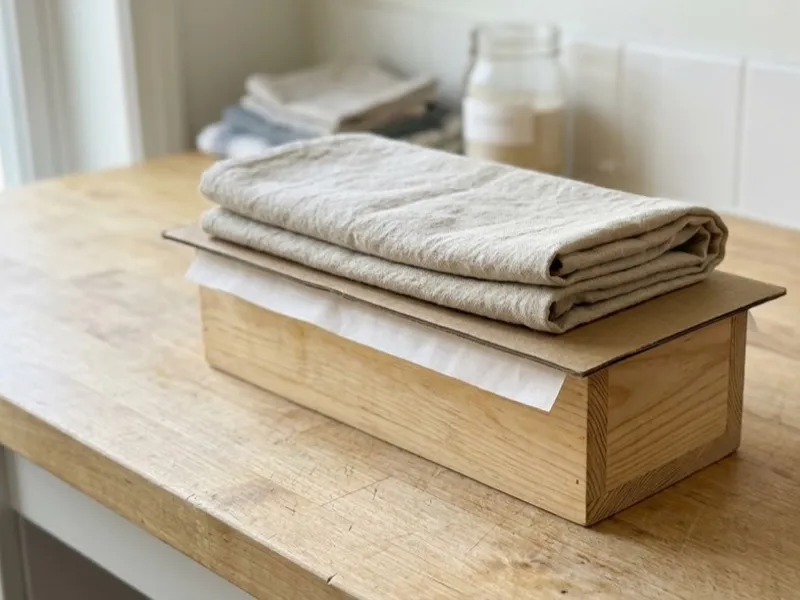
Pour into the mold. Cover with cardboard and a towel. Gelling brightens most botanical colors, and turmeric is no exception. Keep the loaf out of direct sunlight while it sets.
Step 7: Unmold, cut and cure
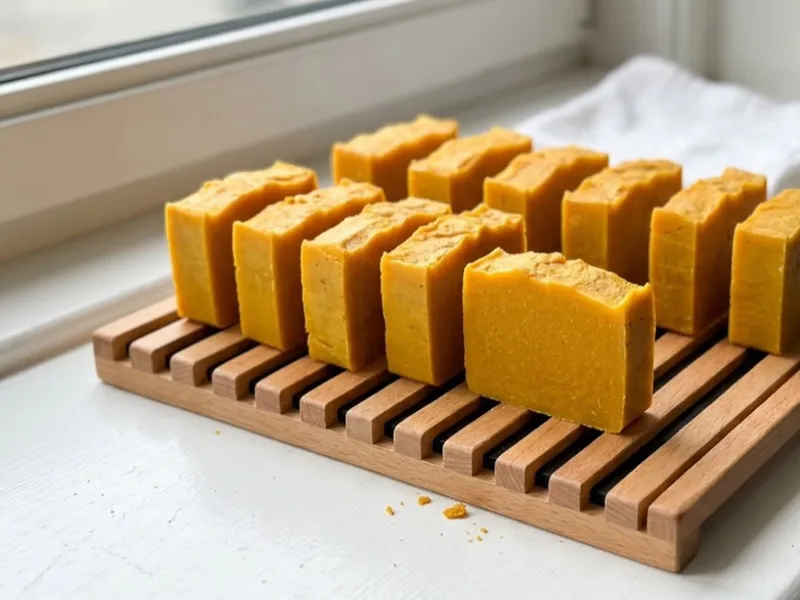
Unmold after 24–48 hours and cut. Wipe the knife and board right away to avoid yellow stains. Cure on a rack out of direct light for 6 weeks, turning weekly.
Variations
Turmeric layer
Color only half the batter and pour it as a bottom layer under a plain top, for a two-tone bar that uses half the turmeric.
Unscented
Leave out the essential oils. Turmeric has very little scent in a cured bar.
Spice blend
Replace the orange with clove bud at 0.5% and cedarwood at 3% for a warm, spicy scent.
If something goes wrong
- Bar turned brownish orange
- Too much turmeric, or a slight color morph over time. Use less, and store bars out of light. Fading and color morphing
- Scratchy specks
- Undispersed powder. Infuse and strain, or mix the powder into oil before adding.
- Yellow lather or stained washcloth
- Too much colorant. 1–3 g per 1000 g oils is usually enough.
FAQ
How much turmeric do I put in soap?
About 1–3 g per 1000 g of oils, roughly a quarter to half a teaspoon per pound. Start low; turmeric gets brown and stains at higher amounts.
Why did my turmeric soap change color?
Turmeric shifts toward orange in high-pH soap and can slowly fade or darken in light. It is a natural colorant, so some change over months is expected.
Will turmeric soap stain my skin?
At the amounts in this recipe, not noticeably. Very heavy-handed turmeric bars can leave a yellow tint on washcloths, sinks and grout.
Is turmeric soap good for my skin?
We do not make skin-benefit claims. In this recipe turmeric is a colorant, chosen for its warm golden-orange shade.
Comments
No comments yet. Made this recipe? Be the first to say how it went.