100% Coconut Oil Soap Recipe (20% Superfat)
The classic single-oil coconut bar; rock hard and huge-lathering, made comfortable with a 20% superfat and cut within hours.
This page has affiliate links. We earn a small commission at no cost to you. Disclosure
Formula not yet verified. These numbers haven't been re-run by a second maker. Don't make this batch until this notice is gone.
- Yield
- 10 bars
- Method
- Cold process
- Difficulty
- Intermediate
- Cure
- 4 weeks
- Superfat
- 20%
- Lye conc.
- 33%
On this page
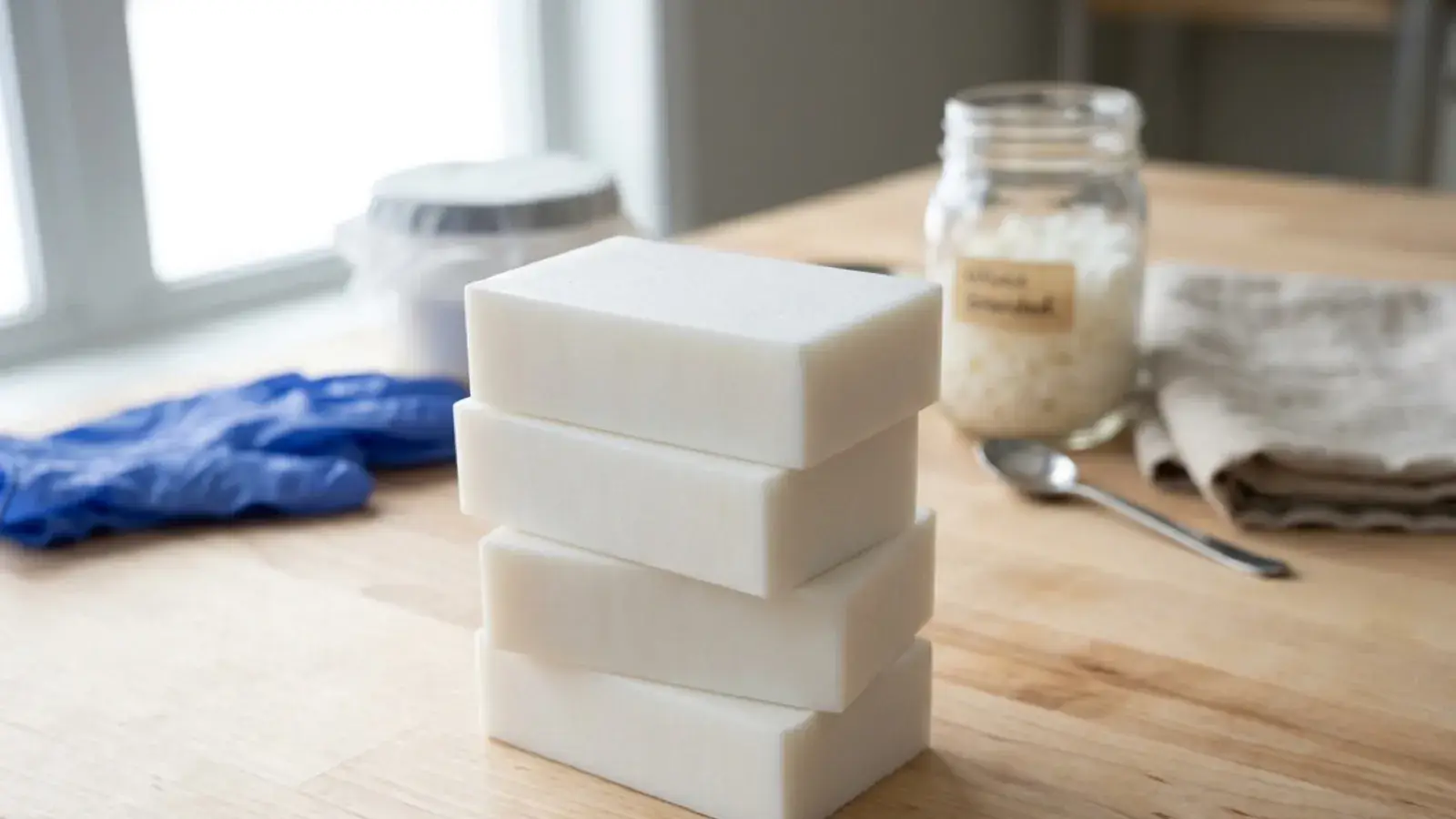
This 100% coconut oil soap recipe is the classic single-oil bar: coconut oil, lye and water, with a 20% superfat. It makes a rock-hard, bright white bar with a huge, fast lather that works even in hard or salty water.
The superfat is the whole recipe. Coconut soap at the usual 5% superfat cleans so thoroughly that many people find it harsh. At 20%, a fifth of the coconut oil stays as oil in the finished bar. That cushions the cleansing without killing the bubbles, because coconut makes so much lather that there’s plenty to spare. The other thing that sets this bar apart is timing. You’ll cut it within hours of pouring, not the next day.
Why the numbers look wrong (and aren’t)
Run this formula through a calculator and the bar-quality numbers go off the chart: hardness and cleansing far above the usual ranges, conditioning far below. Those ranges describe balanced blends, and a single-oil soap was never going to fit them. What matters in practice is how the bar feels, and the high superfat is what fixes that.
Coconut’s saturated fat is also why a 20% superfat is a reasonable choice here and a bad idea in, say, a 100% sunflower bar. Saturated oils resist going rancid, so a lot of free coconut oil in the bar doesn’t turn into orange spots and stale smells. If you want a more conventional body bar with coconut in the lead, try the balanced coconut oil soap recipe instead.
Why this recipe works
- Coconut, 100%. Mostly lauric and myristic acid: an extremely hard bar with fast, abundant bubbles that lathers in hard water and even salt water. The quality numbers sit far outside the usual ranges on purpose.
- 20% superfat. A fifth of the oil is left unsaponified. That turns an aggressively cleansing soap into one most people find comfortable, and coconut oil is stable enough not to go rancid with that much free oil.
- Cut in hours, not days. Pure coconut soap goes from soft to brick-hard very quickly. Cutting early keeps the bars from cracking or crumbling.
Ingredients
| Oil | % | Grams | Ounces |
|---|---|---|---|
| Coconut oil (76°) | 100% | 1,000 g | 35.27 oz |
| Lye solution | |||
| Sodium hydroxide (NaOH) 20% superfat | 146 g | 5.16 oz | |
| Distilled water 33% lye concentration | 297 g | 10.48 oz | |
Equipment
Instructions
Step 1: Make the lye solution
Put on goggles and gloves. Add the lye to the distilled water, never the reverse, and stir until clear. Let it cool to 85–95°F (29–35°C). Because the superfat is 20%, this batch uses noticeably less lye than the same coconut oil at a 5% superfat would; if you copied numbers from another coconut recipe, double-check you've weighed the amount shown above.
Step 2: Melt the coconut oil
Melt the coconut oil over low heat until just clear, then let it cool to 85–95°F (29–35°C). Coconut oil stays liquid down to about 76°F (24°C), so you can soap it cooler than most fats.
Step 3: Blend to a light trace
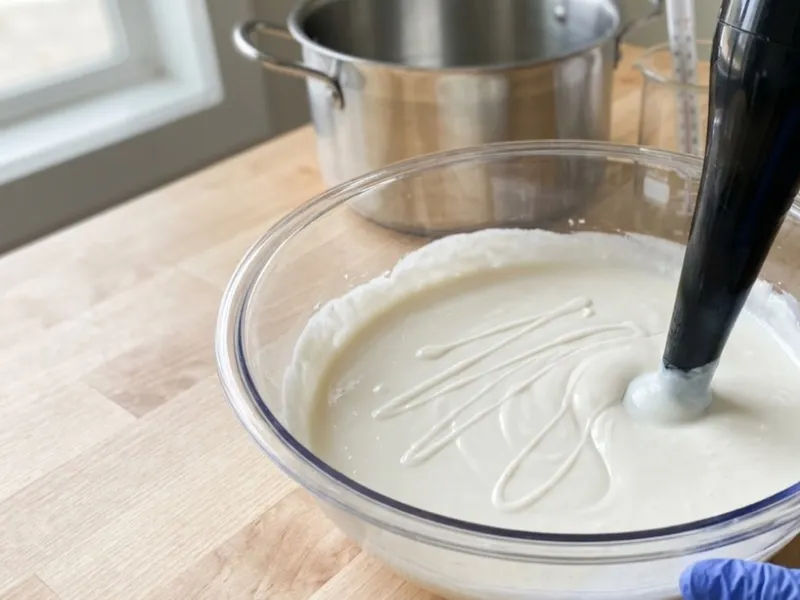
Pour the lye into the oil and stick blend in short bursts. Pure coconut traces fast, often in under a minute or two. Stop at the first light trace; it will keep thickening in the mold.
Step 4: Pour and let it gel
Pour into the mold and cover loosely with cardboard. 100% coconut heats up fast and almost always gels. Don't wrap it in towels; that can push it into overheating and a cracked top.
Step 5: Cut within a few hours
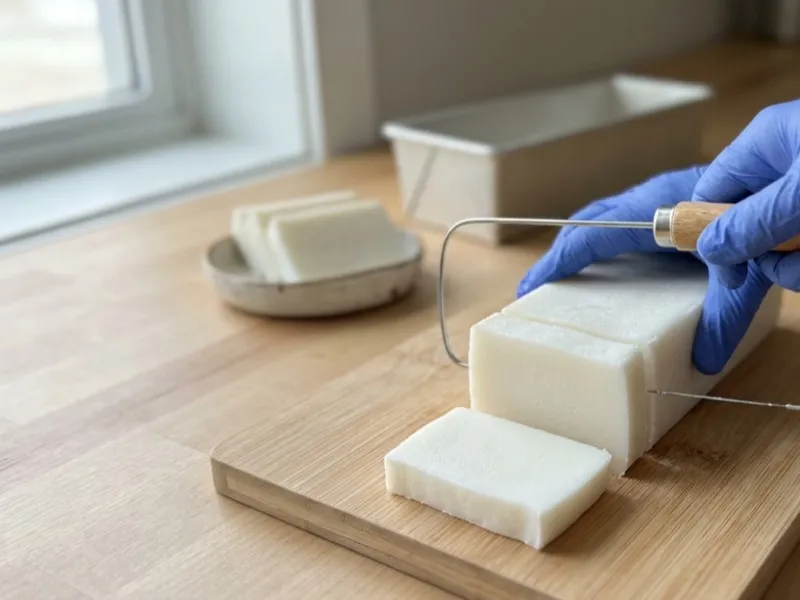
Start checking about 2 hours after pouring. As soon as the loaf is firm enough to hold its shape, usually 2–6 hours, unmold it and cut into bars while it's still warm. Wear gloves; it's fresh soap. Leave it overnight and it can be so hard that it cracks or crumbles under the knife.
Step 6: Cure four weeks
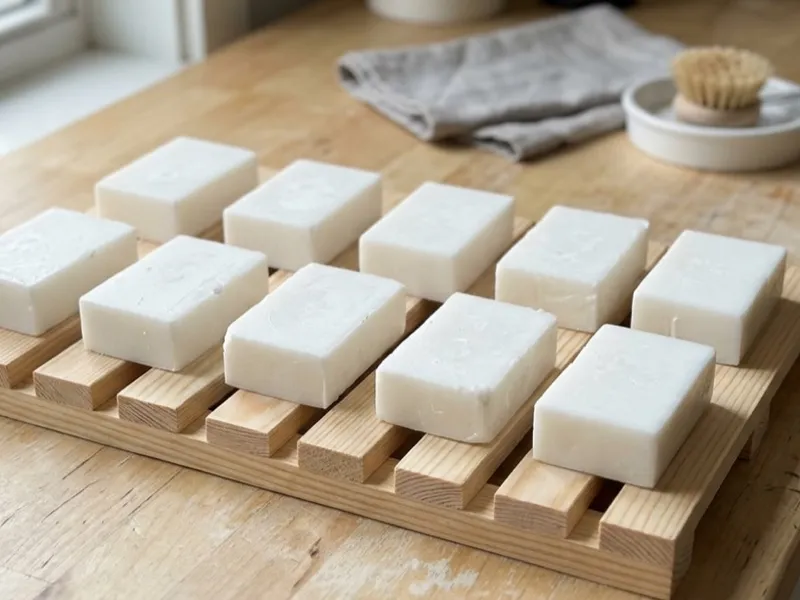
Cure the bars on a rack with airflow for 4 weeks, turning weekly. They're hard almost immediately, but the cure lets the bar get milder and lets any excess water evaporate.
Variations
Salt bar
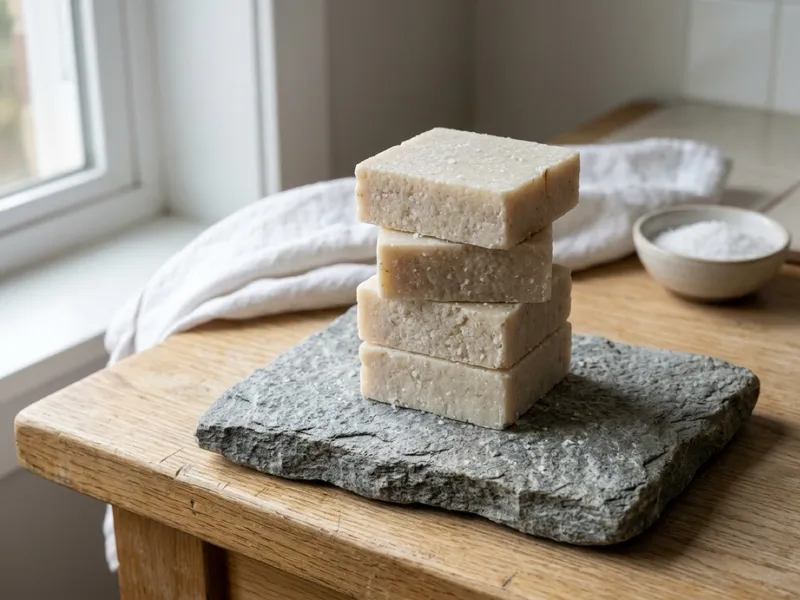
This formula is the classic base for salt bars. Stir in fine sea salt at trace; see the salt bar soap recipe for amounts and timing.
Lower superfat for cleaning
Some makers use 100% coconut at 0–2% superfat as a laundry or cleaning bar. That is a different product, not for skin; see the laundry soap recipe.
Citrus
Sweet orange (10x) essential oil at 4% of oil weight (40 g per 1000 g). Coconut soap holds citrus reasonably well.
If something goes wrong
- Cracked or crumbled when cut
- It was cut too late. Cut within hours of pouring next time. Crumbly soap
- Crack or volcano on top
- Pure coconut overheated during gel. Soap cooler and skip the towel. Overheating soap
- Oily feel or droplets on bars
- Some oiliness is normal at a 20% superfat in the first days. Beads of liquid on the surface are a different thing; that is usually glycerin pulling in humidity. Sweating soap
FAQ
Why does 100% coconut oil soap need a 20% superfat?
Coconut oil is almost all lauric and myristic acid, which make a very cleansing soap. At a normal 5% superfat many people find it harsh. Leaving 20% of the oil unsaponified balances that out while keeping the big lather.
Won't 20% superfat make the soap go rancid?
Coconut oil is mostly saturated fat, which resists oxidation, so a high superfat is much safer with coconut than with liquid oils like sunflower or almond. Store cured bars cool and dry as usual.
Why do I have to cut it so soon?
Pure coconut soap sets very quickly and keeps hardening. Cutting while it's firm but warm gives clean bars. A day later it is often too hard to cut without cracking.
Does 100% coconut soap lather in salt water?
Yes. Coconut soap is known for lathering in seawater and hard water, which is why it is the usual base for salt bars and sometimes called a marine soap.
Can I lower the superfat?
For a skin bar, 15–20% is the usual range. Below that it is mainly used as a cleaning or laundry soap.
Comments
No comments yet. Made this recipe? Be the first to say how it went.