Wine Soap Recipe (Red or White Wine, Cold Process)
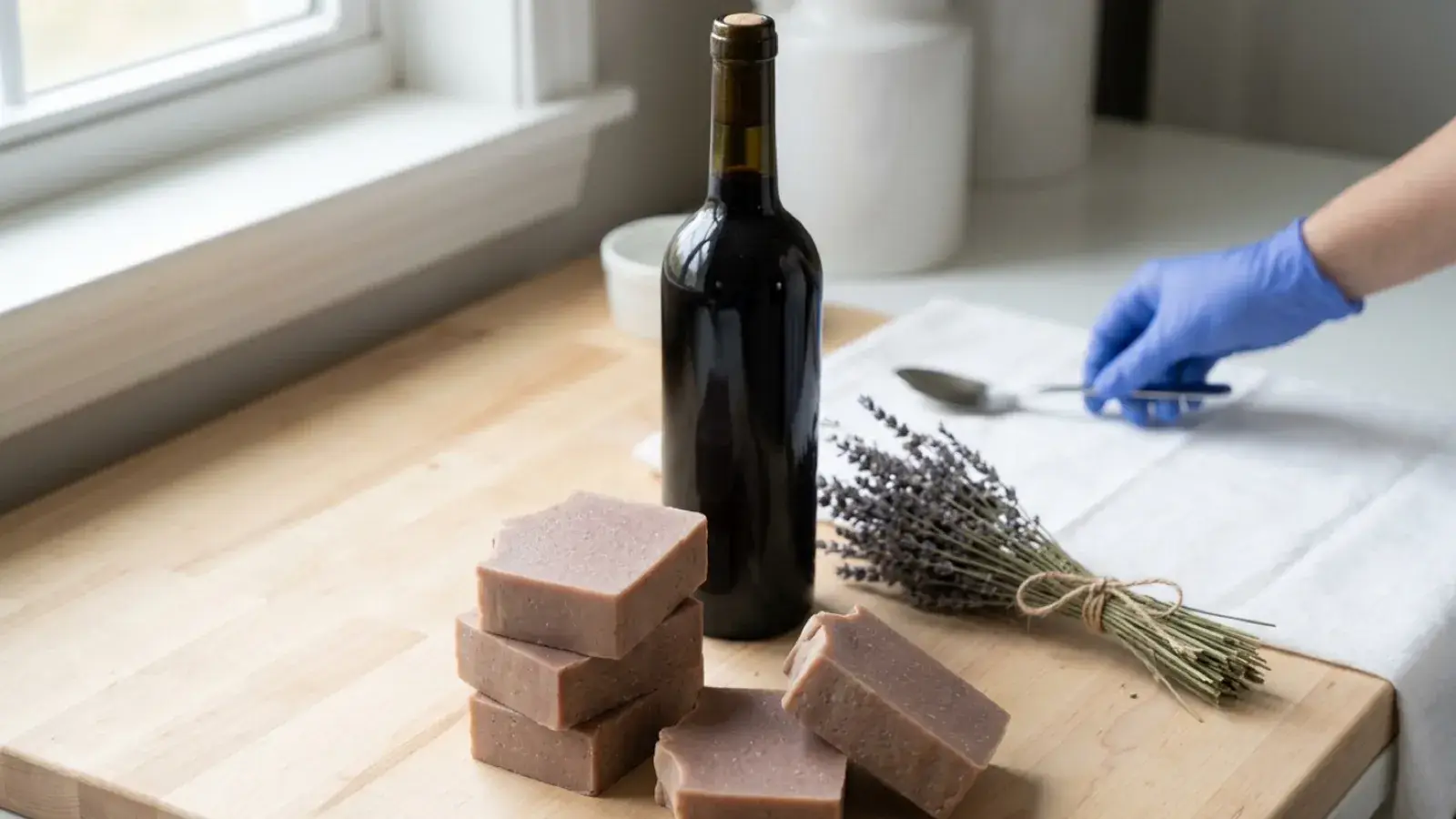
A silky cocoa butter and almond oil bar made with wine that's been reduced, cooled and frozen, scented with lavender and cedarwood.
This page has affiliate links. We earn a small commission at no cost to you. Disclosure
Formula not yet verified. These numbers haven't been re-run by a second maker. Don't make this batch until this notice is gone.
- Yield
- 10 bars
- Method
- Cold process
- Difficulty
- Intermediate
- Cure
- 6 weeks
- Superfat
- 5%
- Lye conc.
- 33%
On this page
This wine soap recipe uses a bottle of red or white wine, reduced on the stove, topped back up with water and frozen, as the whole liquid in a silky olive, almond and cocoa butter bar. It cures to a soft tan or dusty mauve with a lavender and cedarwood scent.
Most people expect red wine soap to come out red. It won’t. Wine color shifts in lye, which is why this page leans on what you can control: reducing the wine to remove alcohol and concentrate what color there is, then freezing it so its sugars don’t scorch.
What reducing does, and doesn’t, do
Simmering wine by about half removes most of its alcohol, the part that makes lye solutions foam and smell harsh. It also concentrates the wine’s pigments and sugars into a smaller weight. That concentration is useful for color but means more heat per gram, so the reduction gets topped up with water to the full liquid weight and frozen before the lye goes in.
What reducing won’t do is keep red wine red. The pigments that look red in a glass change color in strongly alkaline soap batter, so expect a muted, earthy shade. If the color matters for a gift, add a stable colorant to part of the batter.
Why this recipe works
- Olive + sweet almond, 55%. A silky, conditioning base with a slow trace, which matters because wine sugars push trace along.
- Coconut, 25%. Fluffy lather and cleansing; wine sugars add a little extra bubble on top.
- Cocoa + shea butter, 15%. Firmness and a smooth, creamy feel. Unrefined cocoa butter adds a faint chocolate note that sits well with red wine.
- Reduced, frozen wine. Simmering removes most of the alcohol, which can foam up with lye. Freezing the reduction keeps its concentrated sugars from scorching.
Ingredients
| Oil | % | Grams | Ounces |
|---|---|---|---|
| Olive oil | 40% | 400 g | 14.11 oz |
| Coconut oil (76°) | 25% | 250 g | 8.82 oz |
| Sweet almond oil | 15% | 150 g | 5.29 oz |
| Cocoa butter | 10% | 100 g | 3.53 oz |
| Shea butter | 5% | 50.0 g | 1.76 oz |
| Castor oil | 5% | 50.0 g | 1.76 oz |
| Lye solution | |||
| Sodium hydroxide (NaOH) 5% superfat | 139 g | 4.91 oz | |
| Wine, reduced and frozen Simmered by about half to drive off alcohol, cooled, weighed, topped up with water to the full liquid weight and frozen in cubes. | 283 g | 9.98 oz | |
| Additives | |||
| Lavender essential oil 3% of oil weight. | 3% | 30.0 g | 1.06 oz |
| Cedarwood (Atlas) essential oil 1% of oil weight. Grounds the lavender. | 1% | 10.0 g | 0.35 oz |
Equipment
Instructions
Step 1: Reduce the wine
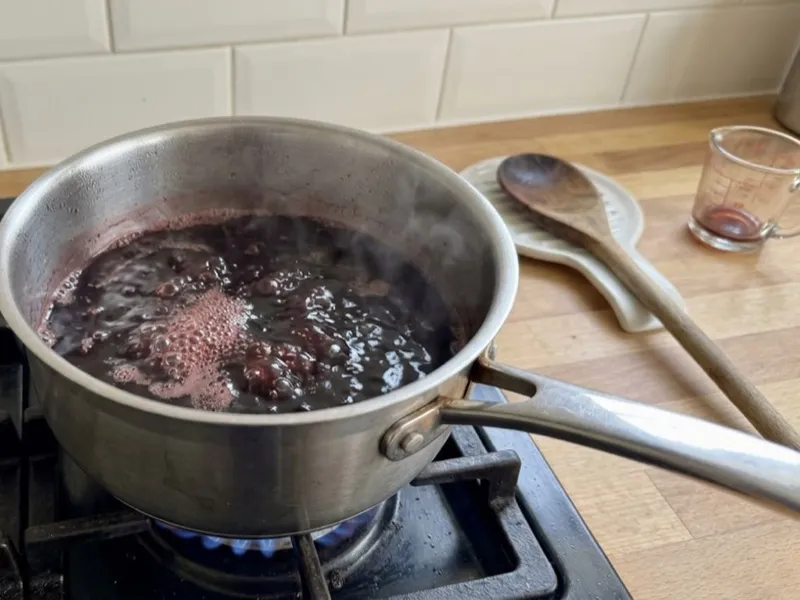
Pour about twice the liquid weight you need into a wide pot. Simmer gently for 15–20 minutes until it has reduced by roughly half and no longer smells strongly of alcohol. Keep the heat low and stir occasionally; reduced wine is syrupy and can catch on the bottom.
Step 2: Cool, weigh, top up and freeze
Let the reduction cool completely. Weigh it, then add distilled water to bring it up to the full liquid weight for your batch. Pour into ice cube trays and freeze overnight.
Step 3: Prepare the oils
Put on goggles and gloves. Melt the cocoa butter, shea butter and coconut oil, add the olive, almond and castor oils, and let the blend cool to 85–95°F (29–35°C).
Step 4: Add lye to the frozen wine
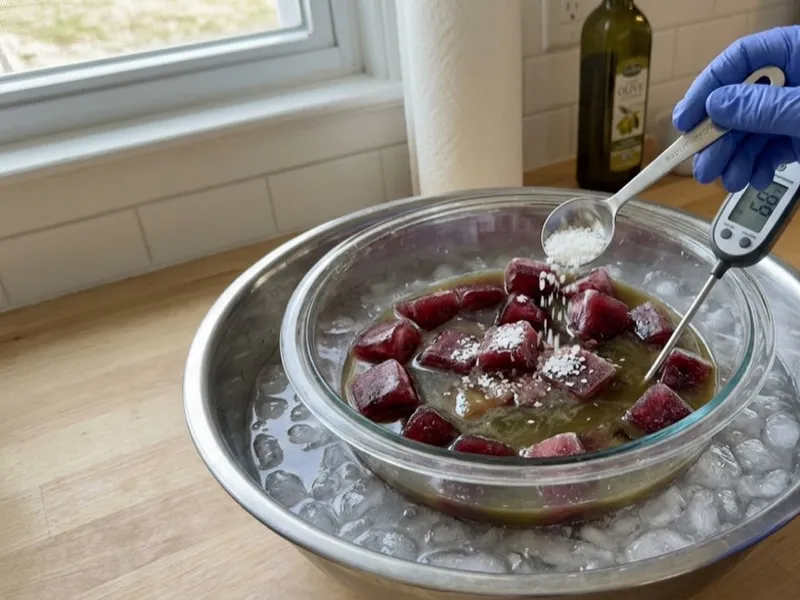
Set the frozen cubes in a bowl inside an ice bath and work outdoors or under a range hood. Sprinkle the lye over the cubes a spoonful at a time and stir. Red wine will turn a murky brown-green and smell sharp and sour; white wine turns gold to amber. Keep it under 85°F (29°C) and pause if it bubbles up.
Step 5: Blend to light trace and scent
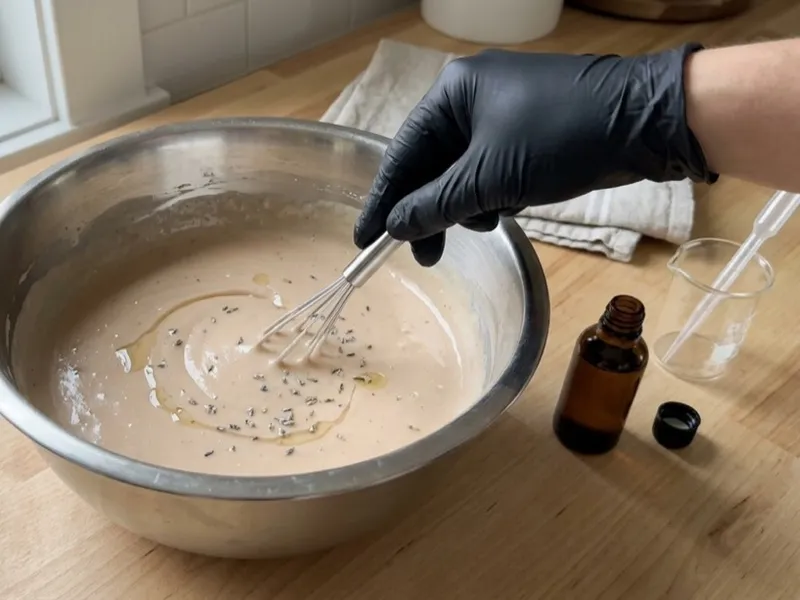
Strain the solution into the oils and blend in short bursts. Stop at light trace, then add the lavender and cedarwood and hand stir. If you want a swirl, split off a portion now and color it, before the batter thickens.
Step 6: Pour and chill
Pour into the mold and refrigerate for 24 hours. Chilling prevents the sugars from overheating the loaf and keeps the color even. An uncovered loaf at cool room temperature also works, but watch for a darker gelled center.
Step 7: Unmold, cut and cure
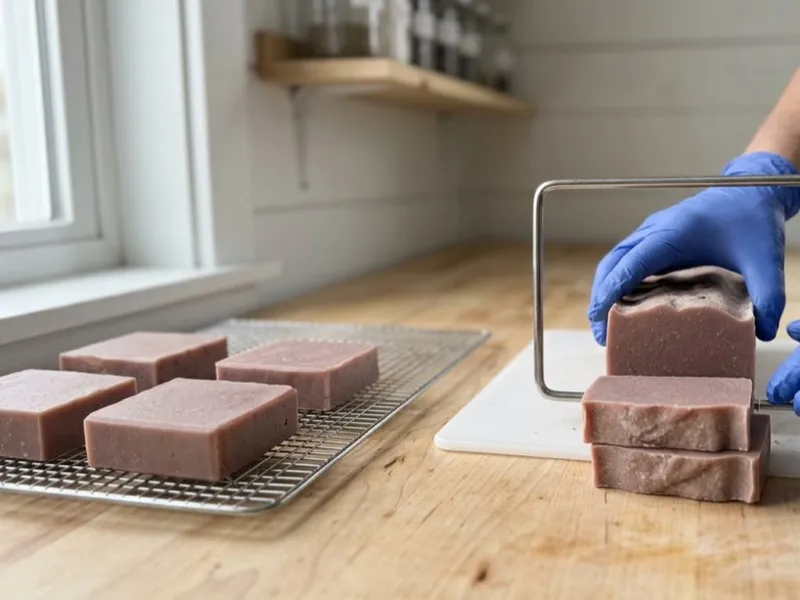
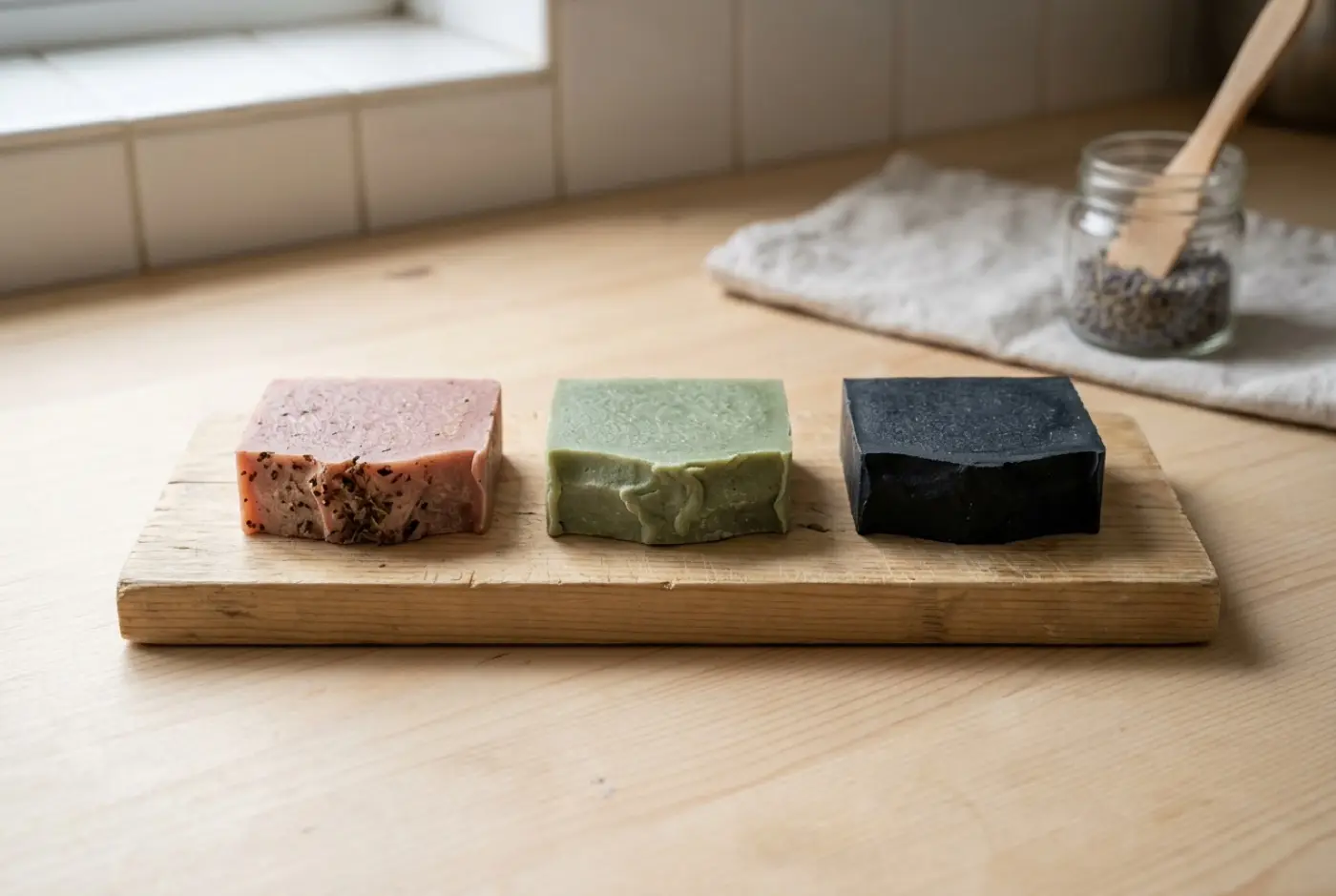
Unmold after 48 hours, cut and cure on a rack for 6 weeks, turning weekly. The color will settle over the first two weeks, usually to a soft tan or dusty mauve for red wine.
Variations
White wine and citrus
Use a dry white wine and swap the lavender and cedarwood for 3% 10x sweet orange and 1% patchouli. Expect a creamy gold bar.
Deeper color
Natural wine color fades in lye. For a reliable burgundy, stir a little rose clay or a red mica into part of the batter at light trace.
Wine and grapeseed
Replace 5% of the olive with grapeseed oil for the theme. Keep it at or under 10%, since grapeseed is prone to rancidity.
If something goes wrong
- The bar isn’t red
- Red wine pigments change in high pH. Tan, grey or mauve is normal. Use a stable colorant if you want red. Fading and morphing color
- Lye solution bubbled up
- Some alcohol remained, or the wine was not frozen solid. Reduce for longer and add lye in smaller amounts.
- Dark center ring
- Part of the loaf gelled from sugar heat. It’s cosmetic. Chill straight after pouring for an even color. Gel phase explained
FAQ
What color is red wine soap?
Rarely red. Wine pigments shift at soap’s high pH, so most red wine bars cure to tan, taupe or mauve. Reducing the wine deepens the color a little but doesn’t keep it red.
Why do you reduce the wine?
To drive off alcohol, which can make the lye solution foam, and to concentrate the color. Topping back up with water keeps the liquid amount right.
Can I use cheap wine?
Yes. The flavor nuances don’t survive lye, so there’s no need for a good bottle. Avoid sweet dessert wines, which carry much more sugar and heat.
Does wine soap smell like wine?
Not after curing. The solution smells sour while you work, but the cured bar smells of its essential oils and a little of the cocoa butter.
Comments
No comments yet. Made this recipe? Be the first to say how it went.