Natural Soap Colorants: Clays, Botanicals, Oxides and Micas Compared
Natural soap colorants include clays, plant powders, infused oils and charcoal. Here's which colors hold up in cold process, which ones brown or fade, and how much to use.
On this page
Natural soap colorants are clays, plant powders, infused oils and minerals like charcoal used to tint soap without synthetic dyes. They give soft, earthy shades: rose and terracotta from clays, yellow from turmeric or annatto, gray-black from charcoal, blues from indigo. The catch is stability. Fresh soap is strongly alkaline, and many plant colors change or fade in it.
This page covers natural options first, then the mineral colorants many makers pair them with: oxides, ultramarines and micas. Those aren’t “botanical,” but they’re the reference point for stable color, and it helps to understand both.
Why soap is hard on color
Cold process batter has a very high pH, and the finished bar stays alkaline. Many plant pigments are sensitive to pH: the same compound can be one color in a teacup and another in soap. That’s why a deep red beet juice often ends up tan in a cured bar, and why fresh green herbs go khaki.
Three other things work against color:
- Light. Many plant colors fade on a sunny shelf over weeks or months.
- Heat and gel phase. Gelled soap usually shows brighter, deeper color. Some botanical colors also shift when the soap gets hot.
- Time and oxidation. Some colors simply drift. Chlorophyll greens are known for fading.
Mineral colorants (clays, oxides, ultramarines) don’t have these problems to the same degree, which is why they’re the dependable choice.
Stability at a glance
Use this as a planning guide. “Stable” means the color you see at cut is broadly the color you’ll have after cure, kept out of direct sun. Botanical results vary with source, amount, recipe and gel, so treat those rows as tendencies, not promises.
| Colorant | Typical shade in soap | Stability in cold process | Notes |
|---|---|---|---|
| Iron oxides | Reds, yellows, browns, black | Stable | Strong; easy to overuse |
| Chromium oxide green | Muted green | Stable | Very strong pigment |
| Ultramarines | Blue, violet, pink | Stable | Can speckle if not dispersed |
| Titanium dioxide | White | Stable | Can cause glycerin rivers in some recipes |
| Micas (soap-tested) | Shimmering, any color | Usually stable if labeled for cold process | Some colors morph; check the label |
| Clays (kaolin, rose, French green, rhassoul) | Soft white, pink, green, brown | Stable | Mild shades; absorb water |
| Activated charcoal | Gray to black | Stable | Too much can give gray lather |
| Cocoa powder | Brown | Fairly stable | Gentle tan to brown |
| Turmeric | Yellow to orange | Can fade with light | Too much leaves specks and can tint lather |
| Annatto seed (infused oil) | Yellow to orange | Fairly stable | Infuse in oil for smooth color |
| Paprika | Peach to orange | Can fade | Infused oil gives smoother color |
| Madder root | Pink to red, purple tones | Variable | Results depend on amount and method |
| Alkanet root | Purple to blue-gray | Variable | Often shifts toward gray in soap |
| Indigo | Blue | Fairly stable | Disperse well to avoid specks |
| Spirulina, nettle, other greens | Green | Often fades or browns | Expect drift toward khaki |
| Beetroot, berries, most fruit and vegetable juices | Pink to red in the jar | Often browns | Usually turns tan or brown |
| Coffee (brewed or grounds) | Tan to brown, speckled | Stable | Grounds add scrub |
If you want a specific shade to stay put, choose a mineral colorant. If you’re happy with a muted, slightly changing color, botanicals are part of the charm.
How much to use
Colorants are typically measured in teaspoons because the amounts are tiny. Gram equivalents vary by powder density, so these are starting points, not rules. All amounts are per 500 g of soaping oils.
| Colorant | Starting amount per 500 g oils | Disperse in |
|---|---|---|
| Mica | 1/2 to 1 tsp | A little light oil or glycerin |
| Oxide or ultramarine | 1/8 to 1/2 tsp | Light oil or glycerin; mix thoroughly |
| Titanium dioxide | 1/2 to 1 tsp | Light oil or water, per supplier |
| Clay | 1 to 2 tsp | Distilled water or light oil |
| Activated charcoal | 1/4 to 1 tsp | Light oil |
| Cocoa powder | 1 to 2 tsp | Light oil |
| Turmeric powder | 1/4 to 1 tsp | Light oil |
| Indigo powder | 1/8 to 1/2 tsp | Light oil |
| Infused oil (annatto, madder, alkanet, paprika) | Replace part of a liquid oil in the recipe | Already in oil |
Start at the low end. You can always deepen a color next batch; a bar that’s too dark with charcoal or oxide can leave colored lather.
Two ways to add botanicals: powder or infusion
Powder in the batter. Quick and gives the strongest color, but some powders leave visible specks. Stir the powder into a tablespoon of light oil from the recipe until smooth, then add at light trace.
Oil infusion. Steep the herb in one of the liquid oils from your recipe, then strain and use that oil as part of the formula. This gives smooth color with no specks. Annatto, madder and alkanet are often used this way.
A simple warm infusion: put about 1 tablespoon of root or seed into 100 g of olive or sunflower oil, keep it warm (not hot, below about 140°F / 60°C) for an hour or two, then strain through cloth. Many makers prefer a slow cold infusion over a week or two instead. Either way, weigh the infused oil and count it in the recipe; it’s still part of your oils.
Adding colorant at trace
- Weigh or measure colorant before you start and disperse it in a small amount of oil, glycerin or water as listed above. Clumps that go straight into batter make streaks and specks.
- Split the batter if you’re using multiple colors. Pour off portions into separate containers before the batter thickens.
- Add the dispersed colorant at emulsion or light trace and stir by hand, then pulse briefly to even it out.
- Watch your timing with clay. Clay absorbs water and can thicken batter. Add it early and work steadily.
- Pour, then gel or don’t. Insulating the mold to encourage gel phase usually gives more vivid color. Some botanicals look better ungelled; test both if you’re chasing a particular shade.
Keep gloves and goggles on throughout. Colored batter is still raw soap.
Micas, oxides and the “natural” label
It’s worth being precise here. Mined mica is a mineral, but most cosmetic micas are coated with oxides, titanium dioxide or other colorants, and many are synthetic. Iron oxides used in cosmetics are typically lab-made for purity rather than dug from the ground. Ultramarines are generally made synthetically as well.
None of that makes them bad colorants; they’re among the most reliable you can use. It just means calling a mica-colored bar “all natural” may not be accurate. If you sell soap, describe colorants plainly and let customers decide. Our soap labeling requirements page covers ingredient listing.
Mica morphing. Some micas change color in high-pH soap. A purple might go gray, a pink might go tan. Suppliers usually label micas that are tested for cold process; buy those for cold process and keep the rest for melt and pour, where pH is less of an issue.
Common mistakes
- Using fresh juice or puree for color. Most fruit and vegetable colors brown in soap. Use them for the additive, not the color.
- Dumping powder straight in. Undispersed oxide, indigo or charcoal makes specks and streaks.
- Overusing charcoal or oxide. A very dark bar can leave a gray or colored lather in the dish and on the washcloth.
- Shelving bars in the sun. Botanical colors in particular fade on a sunny windowsill.
- Expecting a mica’s jar color. Check whether it’s labeled for cold process; morphing colors are common in non-tested micas.
- Forgetting that clay thickens batter. Plan simple designs or add clay as early as possible.
When color does go wrong, fading and morphing color walks through causes and fixes.
Recipes to try
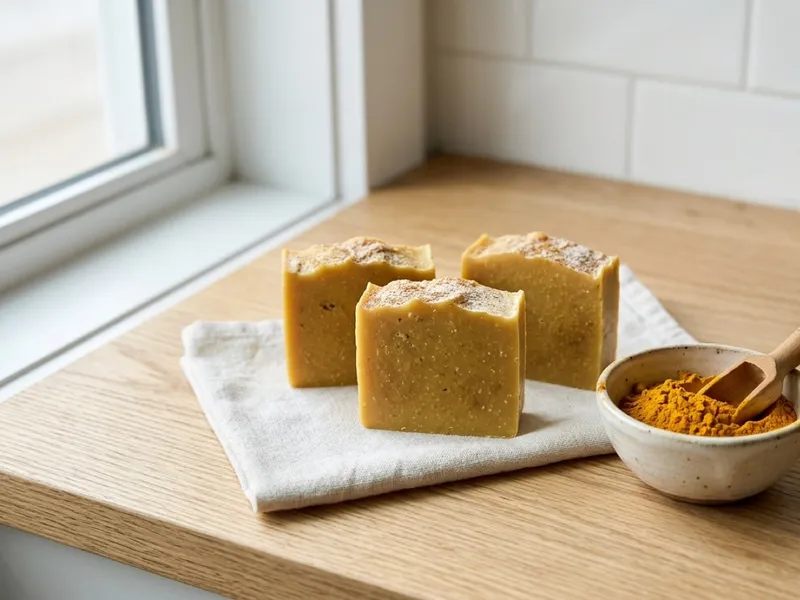
- Turmeric soap: a warm yellow-orange from a spice powder.
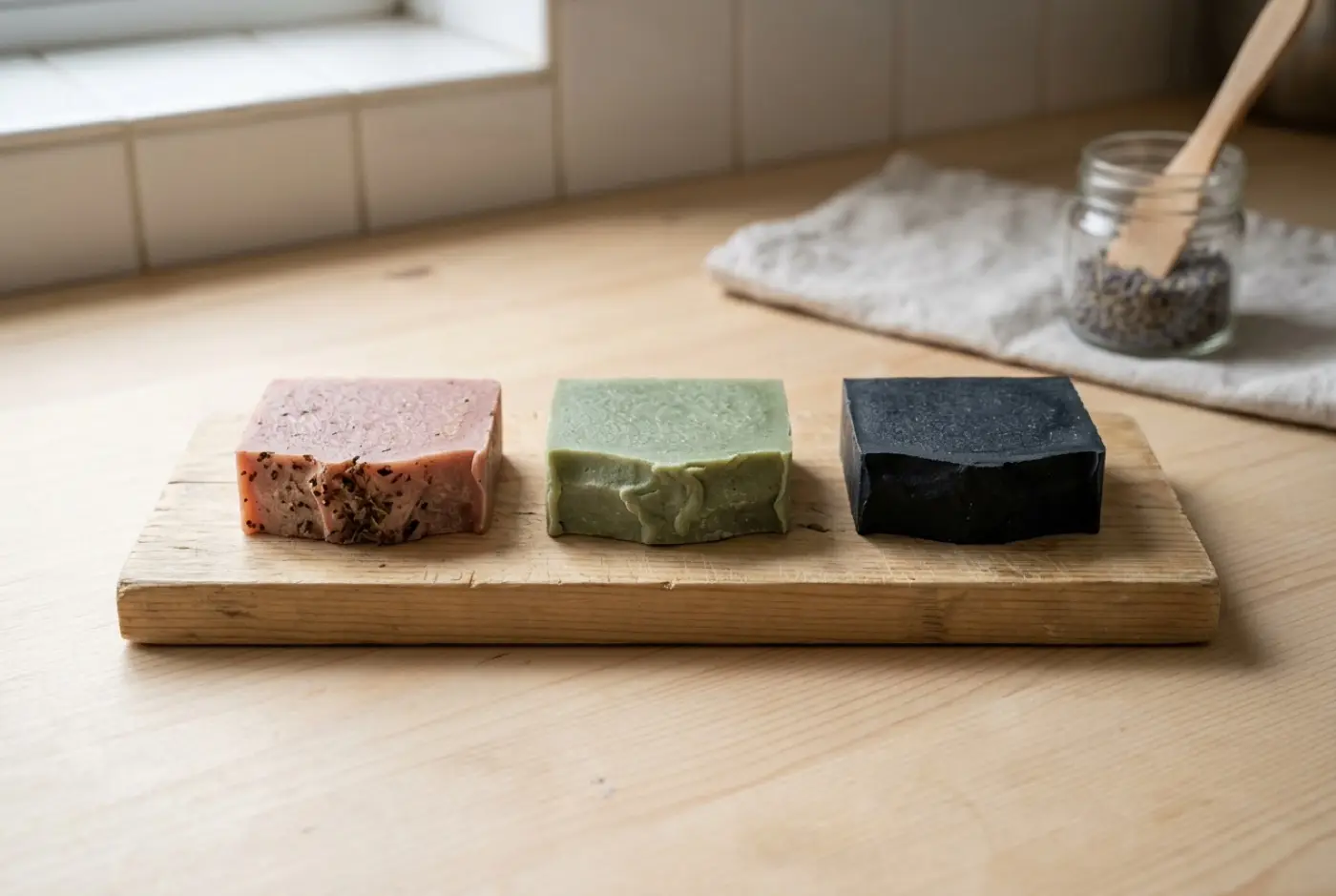
- Clay soap: rose, green and white clays side by side.
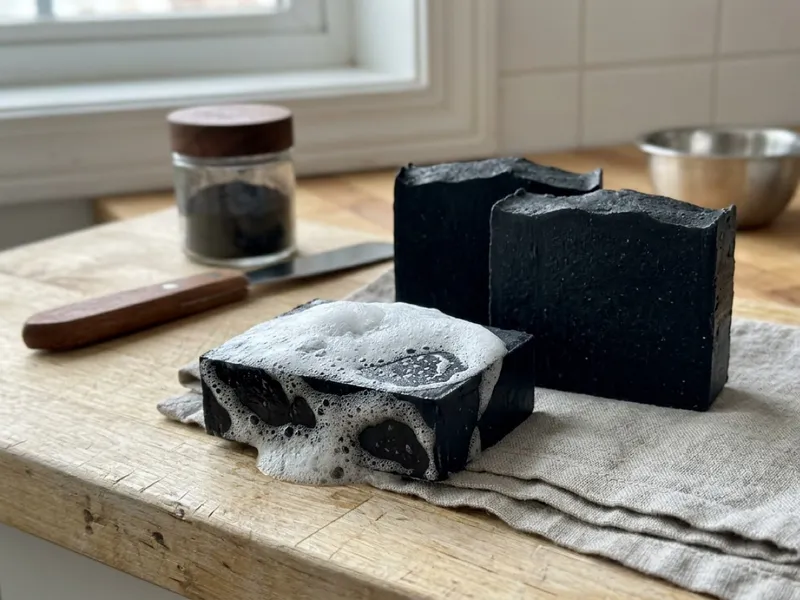
- Activated charcoal soap: deep gray to black.
- Coffee soap: brown tones with grounds for texture.
- Carrot soap and pumpkin soap: good examples of how vegetable colors behave in soap.
FAQ
What can I use to color soap naturally?
Clays, activated charcoal, cocoa powder, and plant powders or infused oils such as annatto, madder root, alkanet, indigo and turmeric are the common choices. Expect softer, earthier shades than micas or oxides.
Why did my natural soap colorant turn brown?
Many plant colors change in the high pH of fresh soap or fade with light and time. Greens from fresh herbs and pinks from fruits and vegetables often turn tan or brown. Test small batches before committing.
Are micas natural?
Mica is a mined mineral, but most cosmetic micas are coated with oxides or other colorants, and some are lab-made. Whether you call them natural is a labeling choice; just be accurate about what is in the bar.
How much colorant do I use in soap?
It varies by type. A common starting point is about 1 teaspoon of mica, 1/4 to 1/2 teaspoon of oxide or ultramarine, or 1 to 2 teaspoons of clay per 500 g of oils. Test and adjust.
Comments
No comments yet. Made this recipe? Be the first to say how it went.