Cream Soap and Whipped Soap: How Dual-Lye Soap Works (Advanced)
Cream soap is a soft, scoopable soap made with both sodium and potassium hydroxide and plenty of stearic acid. How it works, how it's made, and why it's an advanced project.
On this page
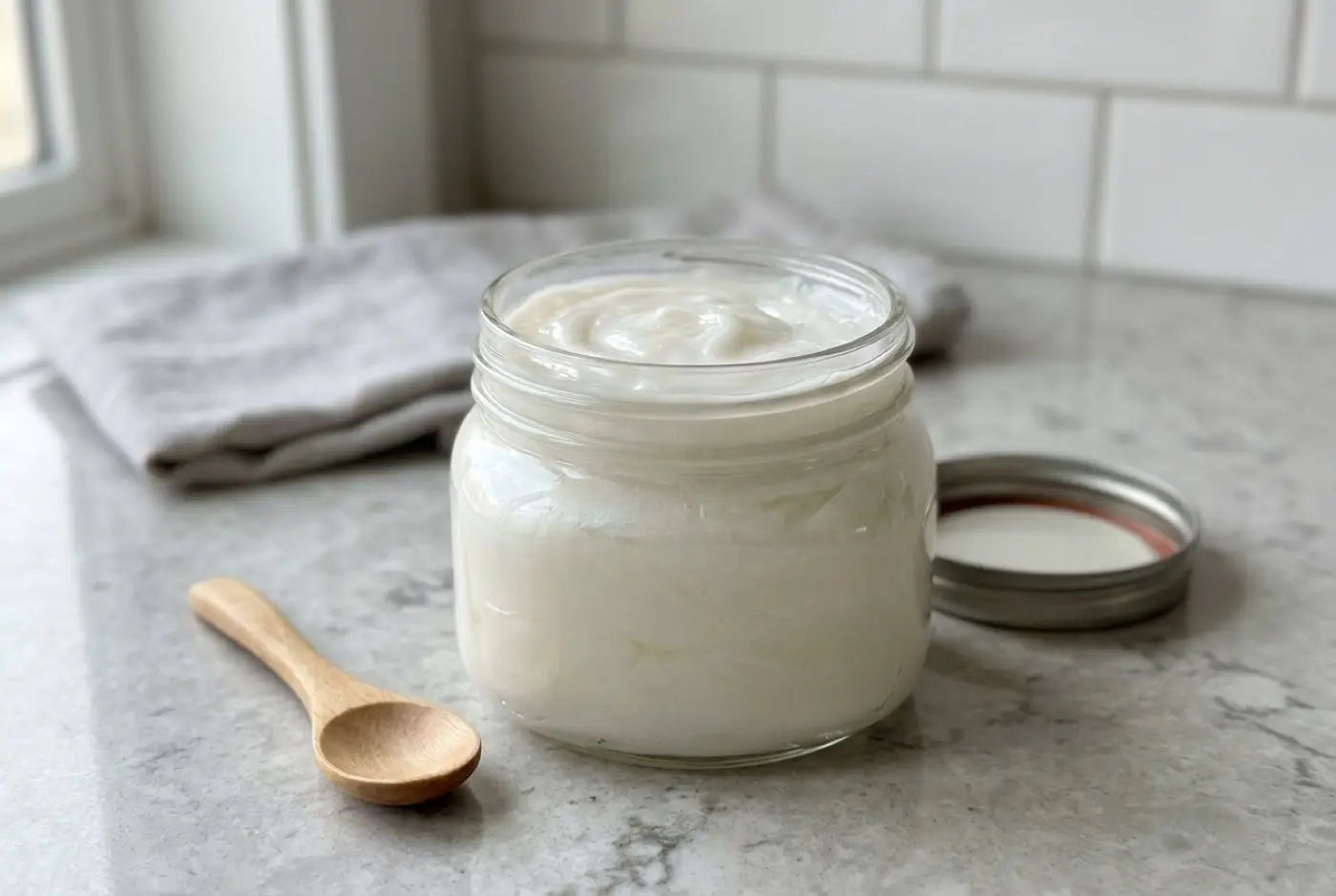
Cream soap is a soft, scoopable soap made with two lyes at once: potassium hydroxide (KOH) for softness and sodium hydroxide (NaOH) for body, usually with a lot of stearic acid for a pearly, whipped texture. It’s cooked or allowed to react fully, rested for weeks, then whipped and packed into jars. This is an advanced project: we describe how it works here, but we don’t recommend it until you’ve made both bar soap and liquid soap.
Three things called “whipped” or “cream” soap
The names overlap, which causes a lot of confusion. These are three different products:
| Whipped cold process bars | Cream soap | Whipped soap in jars | |
|---|---|---|---|
| Lye | Sodium hydroxide only | Both NaOH and KOH | Both NaOH and KOH, or a whipped cream soap |
| How it’s made | Solid oils whipped to a frosting before lye is added, then molded | Cooked or fully reacted, rested for weeks, then whipped | Cream soap whipped very light, sometimes with added glycerin |
| Finished texture | Firm, light, often floats | Soft, dense, scoopable, often pearly | Fluffy, like frosting |
| Difficulty | Intermediate | Advanced | Advanced |
This page is about the last two: true cream soap, and the whipped soaps built on it. If you want whipped bars, that’s a cold process technique: see the cold process guide.
How dual-lye soap works
Each lye makes a different kind of soap:
- Sodium soaps pack tightly and set into hard bars.
- Potassium soaps are much more soluble and stay soft or liquid.
Blend the two in one batch and you get something in between: a soap that’s too soft to be a bar but too firm to pour. Change the ratio and you move along that scale. More KOH, softer and more fluid; more NaOH, firmer and more solid. Sodium vs potassium hydroxide explains the underlying chemistry.
Why stearic acid matters
The other key ingredient is stearic acid, a saturated fatty acid found in high amounts in butters, tallow and palm, and sold on its own as flakes. Stearic-rich soap gives cream soap its body. Many traditional cream soap recipes also leave a good share of stearic acid unreacted on purpose. That leftover stearic acid is a big part of the pearly sheen and the dense, creamy feel, and it’s one reason cream soap recipes look so different from bar recipes.
Stearic acid also speeds up trace sharply, which is part of why cream soap is usually cooked or worked warm rather than poured like a cold process batter.
Why the rest matters
Fresh cream soap often looks grainy or translucent and doesn’t have its final texture yet. Over weeks of resting, it changes: many makers find it becomes smoother, more opaque and more pearlescent. That’s why traditional methods include a long rest before whipping, and why you can’t judge a batch on day one.
Pros and cons vs other methods
Best for Experienced makers who have made both bar and liquid soap and want a scoopable, creamy product.
Pros
- + Unique scoopable, whippable texture
- + Rich, creamy lather
- + A natural base for shaving soaps and whipped soap jars
- + Highly customizable once you understand it
Cons
- − Two lyes to buy, store and calculate
- − Proportions vary widely and need careful calculation
- − Weeks of resting before the soap is finished
- − Hard to diagnose when it goes wrong
Equipment and ingredients
You’ll need everything from both hot process and liquid soap:
- Both lyes: sodium hydroxide (about 99% pure) and potassium hydroxide (often about 90% pure). Store them in clearly labeled containers; they look alike.
- Stearic acid and other fats and oils as your recipe requires.
- Distilled water and, often, glycerin for whipping.
- Slow cooker or double boiler used only for soap.
- Stand mixer or hand mixer used only for soap, for whipping. A stick blender alone won’t give the same lift.
- Digital scale, stick blender, heat-safe #5 PP or stainless lye pitcher, sturdy spatula.
- Goggles, nitrile gloves, long sleeves.
- Jars with lids for packing.
Calculating two lyes
Our lye calculator works with one lye at a time. For a dual-lye recipe, you need either a calculator that supports a NaOH and KOH split, or a careful manual approach:
- Calculate the total lye the oils need as NaOH, at your chosen superfat.
- Decide what share of that lye will be potassium, and what share sodium.
- Leave the sodium share as NaOH.
- Convert the potassium share to KOH by multiplying by about 1.403, then divide by the KOH purity (usually 0.90).
The ratio between the two lyes varies widely from maker to maker and product to product, so we don’t give one here. Whatever you choose, have a second person check the numbers before you weigh anything.
The walkthrough, conceptually
There’s no single “right” way to make cream soap. Makers differ on the ratio of lyes, the amount of extra stearic acid, whether to cook it and for how long, and how long to rest it. The outline below shows the stages most methods share.
1. Design the recipe
Choose your oils (stearic acid plus other fats), the NaOH-to-KOH split, the superfat or amount of unreacted stearic acid, and the water. Run the numbers as described above.
2. Make the lye solution
Gear up. Weigh each lye separately. Add the lye to the water, never the reverse, in a heat-safe container in a ventilated spot. Some makers dissolve both lyes in the same water; others prepare them separately. KOH heats sharply and can bubble as it dissolves.
3. Combine and cook
Melt the fats; stearic acid needs considerable heat to melt. Add the lye solution, blend, and cook gently until saponification is complete, stirring as needed. The mixture thickens quickly because of the stearic acid. Treat it like hot process: hot, caustic, and liable to foam.
4. Rest
Pack the soap into a covered container and leave it to rest for several weeks. Its texture develops during this time. Keep it covered so it doesn’t dry out.
5. Whip
Whip the rested soap with a mixer until light. Many makers add glycerin, water or a mix to loosen it as they whip. Add a little at a time; it’s easy to make the soap too soft.
6. Scent and package
Fold in fragrance at your supplier’s rate. Pack into jars, pressing out air, and lid them tightly. Cream soap can dry and harden at the surface if left open.
What finished cream soap should be like
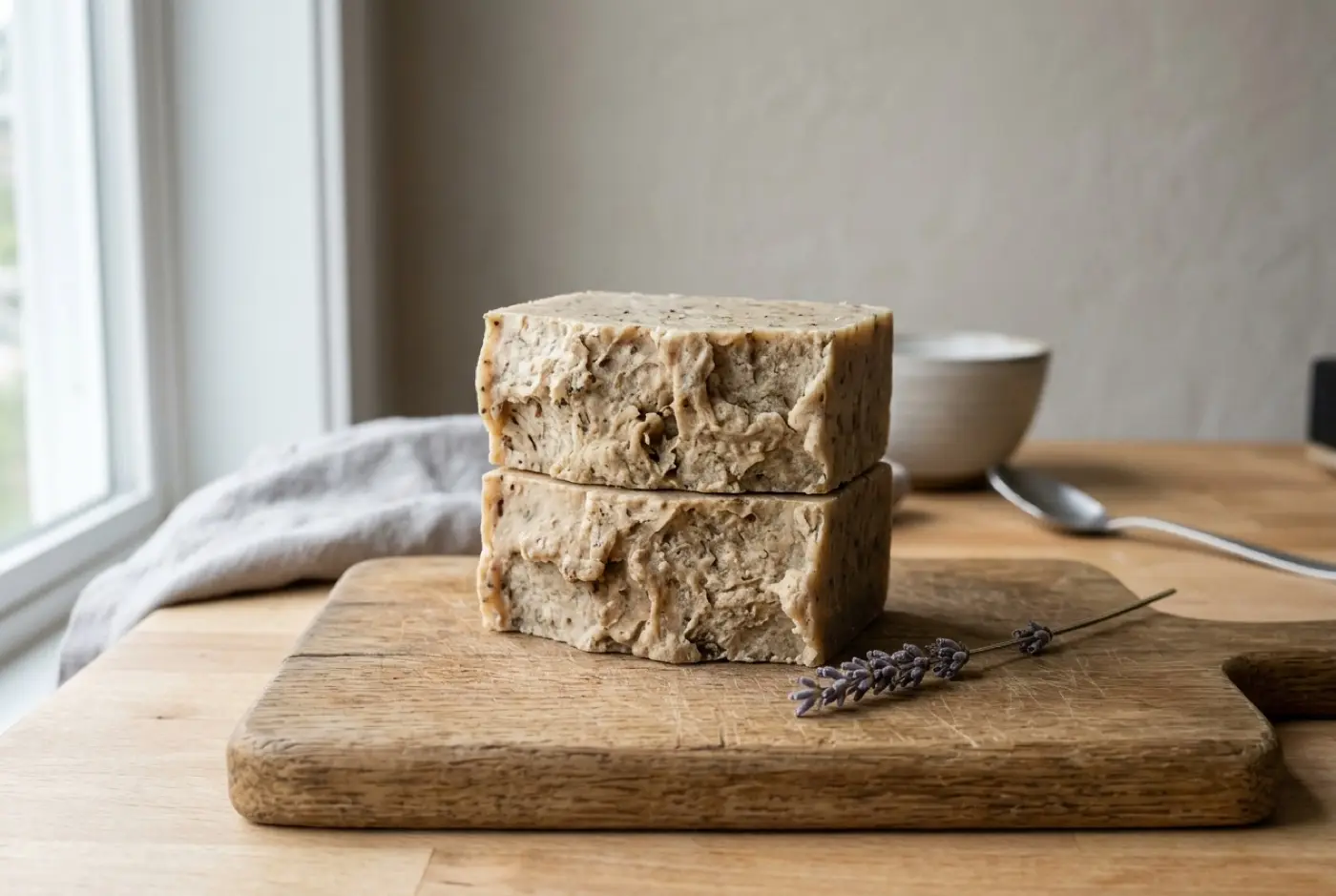
A good batch is soft enough to scoop with a finger but firm enough to hold its shape in the jar. It should look smooth and opaque, often with a pearly sheen, and feel creamy rather than grainy. It shouldn’t sting, smell sharp or rancid, or weep liquid.
| What you notice | Possible cause |
|---|---|
| Grainy or gritty texture | Too early to judge, or a lot of unreacted fatty acid that hasn’t settled into the texture; rest longer before deciding |
| Too firm to scoop | More sodium than you wanted, or the soap has dried out; check the jar was sealed |
| Runny or soupy | More potassium than you wanted, or too much liquid added while whipping |
| Liquid separating on top | Too much liquid added at whipping, or an unfinished cook |
| Stings or feels harsh | Possible lye calculation error; don’t use it, and re-check the numbers |
Using and storing it
Cream soap is used by scooping a small amount with wet hands or a brush. That’s why shaving soaps and facial cleansers in jars are common forms. Keep the jar closed between uses so the surface doesn’t dry, and keep water out of the jar itself, which can make the soap soft and slimy. If you plan to sell it, a jar that’s dipped into with wet fingers raises preservation questions; talk to your supplier and read soap labeling requirements.
Common mistakes
- Using one lye’s numbers for both. NaOH and KOH need different amounts. Every gram of KOH must be calculated with the conversion factor and purity.
- Mixing up the lyes. They look similar. Label both containers clearly and weigh one at a time.
- Judging too early. Fresh cream soap can look grainy or translucent. Wait until the rest is complete.
- Adding too much liquid while whipping. The soap turns soupy. Add a little at a time.
- Leaving jars unlidded. The surface dries and hardens.
- Using a mixer that’s also used for food. Keep separate tools for soap.
Before you try it: a practice path
We don’t publish a cream soap formula on this page because dual-lye proportions vary so much, and we’d rather point you to a tested recipe than give one we can’t stand behind for every setup. Build up to it instead:
- Make a few batches of bar soap, starting with your first batch and our three-oil beginner soap.
- Make hot process soap to get comfortable with cooking soap.
- Make a batch of liquid soap to learn how KOH behaves.
- Read sodium vs potassium hydroxide and work through its conversion example by hand.
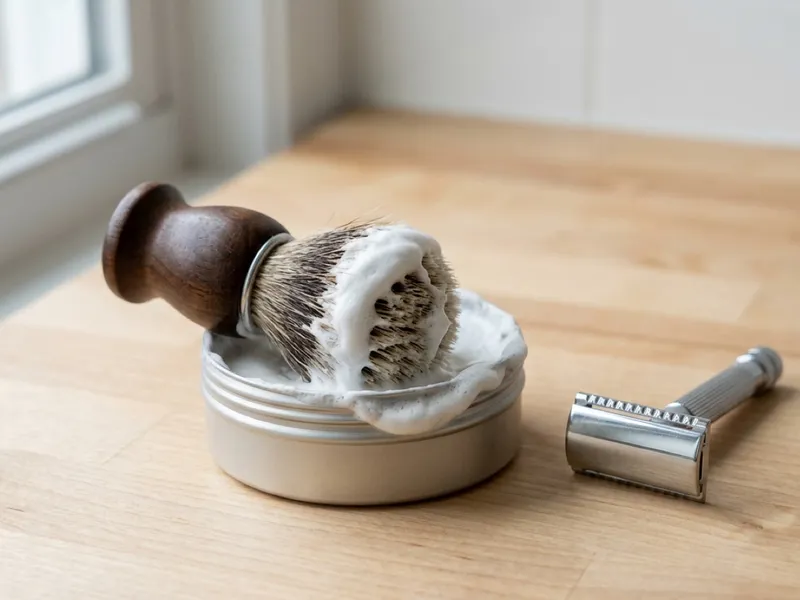
- Try a shaving soap. Shaving soaps commonly lean on stearic acid, so they’re a natural stepping stone toward cream soap.
Next steps
- Learn what superfat and leftover fatty acids do in superfat.
- Review lye for soap making for storing two lyes safely.
- Plan scent with the fragrance calculator.
FAQ
What is cream soap?
A soft, scoopable soap made with both potassium hydroxide and sodium hydroxide, usually with a high proportion of stearic acid. It's whipped into a light, creamy texture and sold in jars or tubs.
Is whipped soap the same as cream soap?
Not always. "Whipped soap" is used for both true cream soap and for cold process bars made by whipping solid oils before adding lye. The bars use only sodium hydroxide and set firm; cream soap uses both lyes and stays soft.
Can I make cream soap with my lye calculator?
Our calculator handles one lye at a time. Cream soap needs a calculator that supports a sodium and potassium split, or a careful manual split using the KOH conversion factor and purity adjustment.
Why is cream soap considered advanced?
It uses two lyes, its proportions vary widely from maker to maker, and it takes weeks of resting before you can judge it. Errors in the dual-lye calculation are easy to make and hard to spot.
Comments
No comments yet. Made this recipe? Be the first to say how it went.