How to Rebatch Failed Soap (and When Not To)
Rebatching means grating a failed soap, melting it with a little liquid and re-molding it. It fixes lumps, separation and lye errors you can measure, but it can't make a batch with an unknown mistake safe.
Is it safe to use?
A rebatched soap is safe once the original problem is corrected and a cured bar tests normally with pH strips. If you can't work out what went wrong, rebatching only hides the problem.
Not sure the batch is lye heavy? Test it first. Lye-heavy soap
Causes, ranked by likelihood
- Most likely
Too much lye from a known weighing error
If you know how much oil was missing, you can add it back during the rebatch. This is the most common reason to rebatch.
- Common
Separation, ricing or a seize
Batter that set unevenly, with lumps or small crystal pockets, can be grated and cooked until the lye spreads through and finishes reacting.
- Sometimes
A cosmetic failure
Ugly swirls, a faded color or a scent that didn't stick. Rebatching gives the soap a new look and lets you add fragrance after the heat.
Fix this batch
Grate, melt, correct, mold
- Wearing gloves and goggles, grate the soap. Fresh soap, a few days old, melts far better than cured soap.
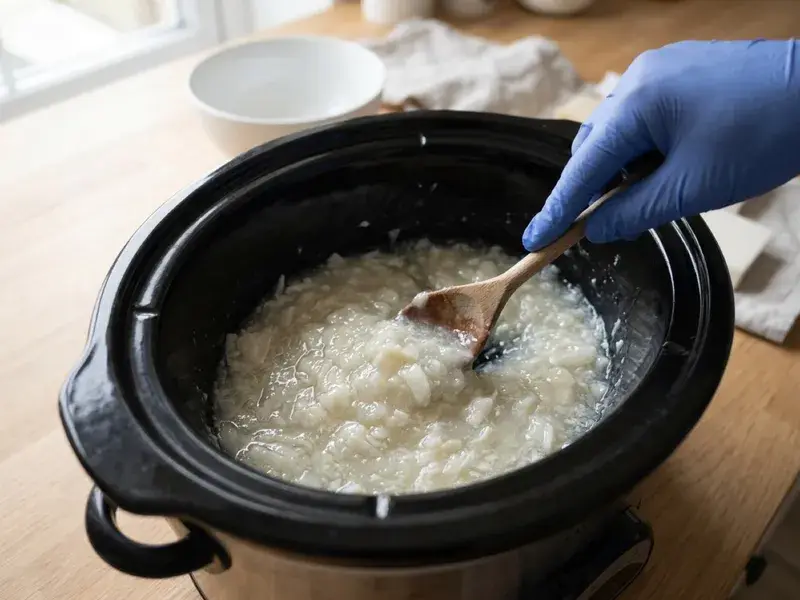
- Put it in a slow cooker or double boiler on low with a little water or milk, roughly 10–20% of the soap's weight. Stir every 15 minutes until it's a uniform, translucent mash, usually 1–2 hours.
- For a lye-heavy batch, add the extra oil you calculated and keep cooking until it's fully absorbed. Add fragrance once it's off the heat.
- Press the mash firmly into the mold, let it set for a day or two, then cut and cure. Test a cured bar with pH strips before use.
Prevent it next time
Make the rebatch go better
- Rebatch within a day or two of the failure, before the soap dries out.
- Keep a batch log, because you need the original weights to correct a lye error.
- Add liquid a little at a time. Too much leaves a soft, slow-curing bar.
- Expect a rustic texture and plan a design that suits it, such as an embed or a textured top.
When to discard instead
Rebatching isn’t a cure-all. Skip it when:
- You don’t know what went wrong. Without the real weights, you can’t calculate how much oil to add, so you can’t know the rebatch is safe.
- There’s free liquid in many bars. Large pools of lye solution are hard to reincorporate evenly.
- The oils were rancid. Old, off-smelling oils will still smell off after rebatching.
For the full method with photos, see rebatching and hand-milled soap.
The science behind it
FAQ
Can I rebatch lye-heavy soap?
Yes, if you know roughly how much oil was missing. Add that oil during the rebatch, then test with pH strips after curing. If you don't know the error, discard it.
Can I rebatch soap that didn't have enough lye?
It's possible but harder, because you'd need to add measured lye solution to hot soap. For a beginner, discarding the batch is safer.
Why is my rebatched soap lumpy?
That's normal. Grated soap rarely melts smooth. Grating finer, using fresher soap and adding a little more liquid all help.
How long does rebatched soap need to cure?
It's usable once firm, but a cure of 2–4 weeks lets the added water evaporate and gives a harder, longer-lasting bar.
Comments
No comments yet. Made this recipe? Be the first to say how it went.