Lye Heavy Soap: How to Test for It and What to Do
Lye-heavy soap has more lye than the oils can use up, almost always from a weighing or calculator mistake. The leftover lye makes bars harsh and irritating, so don't use them.
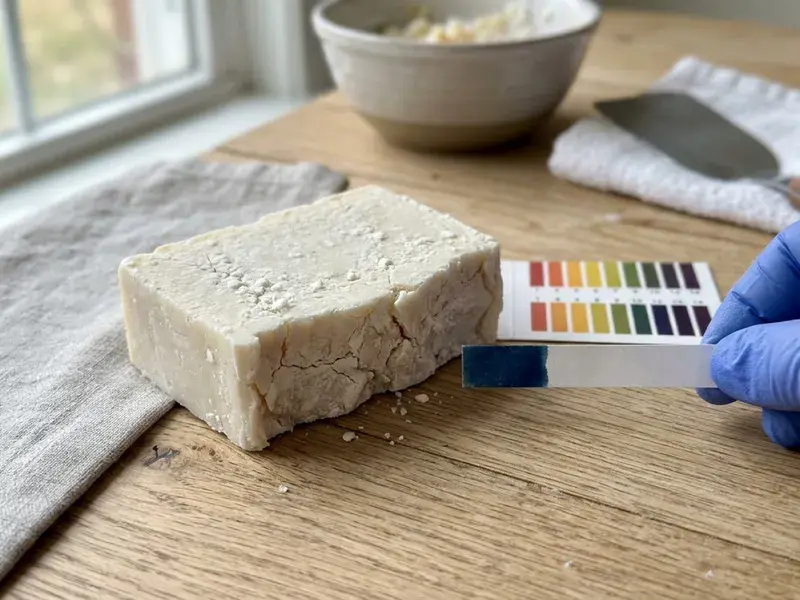
Is it safe to use?
Excess lye can irritate or burn skin, and it doesn't cure out. Don't use, gift or sell the soap. Rebatch it with enough added oil to correct the lye, or discard it.
White powder on the top only? That's usually soda ash, not excess lye. Soda ash
On this page
Causes, ranked by likelihood
- Most likely
A weighing mistake
An oil short-weighed, a scale not tared, grams read as ounces, or a container weighed in with the oil. Any of these leaves less oil for the lye than the recipe assumed.
- Common
A calculator or recipe error
Entering the wrong oil, the wrong total oil weight, or a 0% or negative superfat. A substitution made without re-running the numbers also counts, since each oil needs a different amount of lye.
- Sometimes
Lye and oil didn't fully mix
Even with the right numbers, separated or false-traced batter can leave some areas lye heavy and others oily.
Fix this batch
Correct it or discard it
- Wear gloves when handling the bars, and keep them away from children and pets.
- Re-enter the weights you actually used in a lye calculator to see how far off the batch is.
- If you know the error, grate the soap and rebatch it with enough extra oil to bring the superfat to about 5%, then test again after curing.
- If you don't know the error, or the bars have liquid or crystals, discard the batch: seal it in a bag and put it in household trash, following any local rules.
Prevent it next time
Make errors hard to make
- Run every recipe through a lye calculator, even published ones, and check the lye type is NaOH for bar soap.
- Print the recipe and tick off each weighed ingredient. Use a scale that reads to 1 g.
- Re-calculate whenever you substitute an oil or change the batch size.
- Use a superfat of around 5% so small weighing errors don't push the batch into excess lye.
Three ways to test, most reliable first
Check the numbers. If you logged the batch, a lye calculator tells you more than any test. Enter the weights you actually used and look at the superfat. Below 0% means the soap has excess lye.
pH strips. Wet a small spot on a cured bar, work up a little lather and press a strip into it. Use strips that read up to at least pH 12 or 14. Cured bar soap normally reads around 9–10. Strips aren’t precise, so treat 11 or higher as a fail.
Phenolphthalein. A drop on a freshly cut surface turns pink on any soap, because all soap is alkaline. What you’re watching for is a deep, instant magenta. A pale or slow pink is normal. It’s best used to compare a suspect bar with one you know is good.
The zap test, touching the tongue to a cured bar, is common in older books. It works, but it’s the last resort on this list, not the first.
If lye soap touches your skin or eyes: rinse with plenty of cool running water for at least 15 minutes. Don’t use vinegar. For eyes, keep rinsing and get medical help.
The science behind it
FAQ
How do I know if my soap has too much lye?
Test a cured bar with pH strips or phenolphthalein. Harsh, tight or stinging skin after washing and a crumbly texture are warning signs, but don't use skin as a test.
Will lye-heavy soap get better with cure?
No. Curing finishes saponification, but excess lye has no oil left to react with, so it stays in the bar.
What pH should handmade soap be?
Cured cold process bar soap usually tests around 9–10. A reading of 11 or higher suggests excess lye.
Is the zap test safe?
It's a traditional check, but it puts soap on your tongue. If you use it, only on fully cured soap, with the lightest touch, rinsing your mouth right away. pH strips or phenolphthalein avoid the risk entirely.
Comments
No comments yet. Made this recipe? Be the first to say how it went.