10 Soap Making Mistakes Beginners Make (and How to Fix Them)
The ten soap making mistakes beginners make most often, from measuring by volume to cutting bars too soon, with a fix for each one.
On this page
Most soap making mistakes beginners make come down to measuring, temperature or impatience, and every one of them has a simple fix. Below are the ten we see most, in the order they tend to happen during a batch: from the shopping list to the curing rack. Read them once before your first batch and you’ll skip the most common ways a batch goes wrong.
Before you start
1. Measuring by volume instead of weight
Cups and spoons don’t work for soap. A cup of coconut oil can weigh noticeably more or less depending on whether it’s solid, soft or melted, and lye beads pack differently every time you scoop them. Since the lye-to-oil ratio is the one thing that has to be right, volume measuring is the quickest route to a harsh or greasy bar.
Fix: Buy a digital scale that reads in 1 g steps and weigh everything, including the water. Set it to grams. Tare (zero) the scale with the empty container on it before each ingredient. The soap making supply list covers what to look for.
2. Trusting a recipe without checking it
Recipes online, in books and on video get copied with typos, unit mix-ups and oils quietly swapped. A recipe that lists “olive oil” in one place and “pomace” in another, or gives lye in ounces and oils in grams, can be off by enough to matter.
Fix: Run every recipe through the lye calculator before you make it, including ours. Enter the oils by weight, set the superfat to around 5%, and compare the lye number with the recipe. If they disagree by more than a gram or two, trust the calculator and find out why. How to use a lye calculator walks through it.
3. Buying the wrong lye
Some drain cleaners are sodium hydroxide mixed with other things: metal flakes, colorants, or other chemicals. Potassium hydroxide looks almost the same as sodium hydroxide and won’t make a hard bar. Either mistake ruins the batch before it starts.
Fix: Buy sodium hydroxide from a soap supplier, with a label that says 100% sodium hydroxide and nothing else. Keep it sealed in its original container, because it absorbs moisture from the air. Lye for soap making explains what to look for, and where to buy lye lists sources.
Mixing the lye
4. Pouring water into lye, or using the wrong container
Adding water to a pile of lye can make it heat in one spot and erupt. Aluminum reacts with lye and gives off flammable hydrogen gas. Thin or unmarked plastic can soften or crack from the heat. Ordinary kitchen glass can be weakened by lye over time and isn’t worth the risk.
Fix: Always add lye to water, never the reverse. Sprinkle it in slowly while stirring. Mix in a heat-safe #5 PP (polypropylene) plastic pitcher or stainless steel, near an open window or under a fan, and don’t lean over the fumes. If lye splashes on skin, rinse with running water for at least 15 minutes. Don’t use vinegar; it can make the burn worse.
5. Taking gloves off too early
Beginners tend to treat the danger as over once the lye is dissolved. It isn’t. Raw soap batter is still caustic, and so is the residue on the stick blender, the spatula and the rim of the pot.
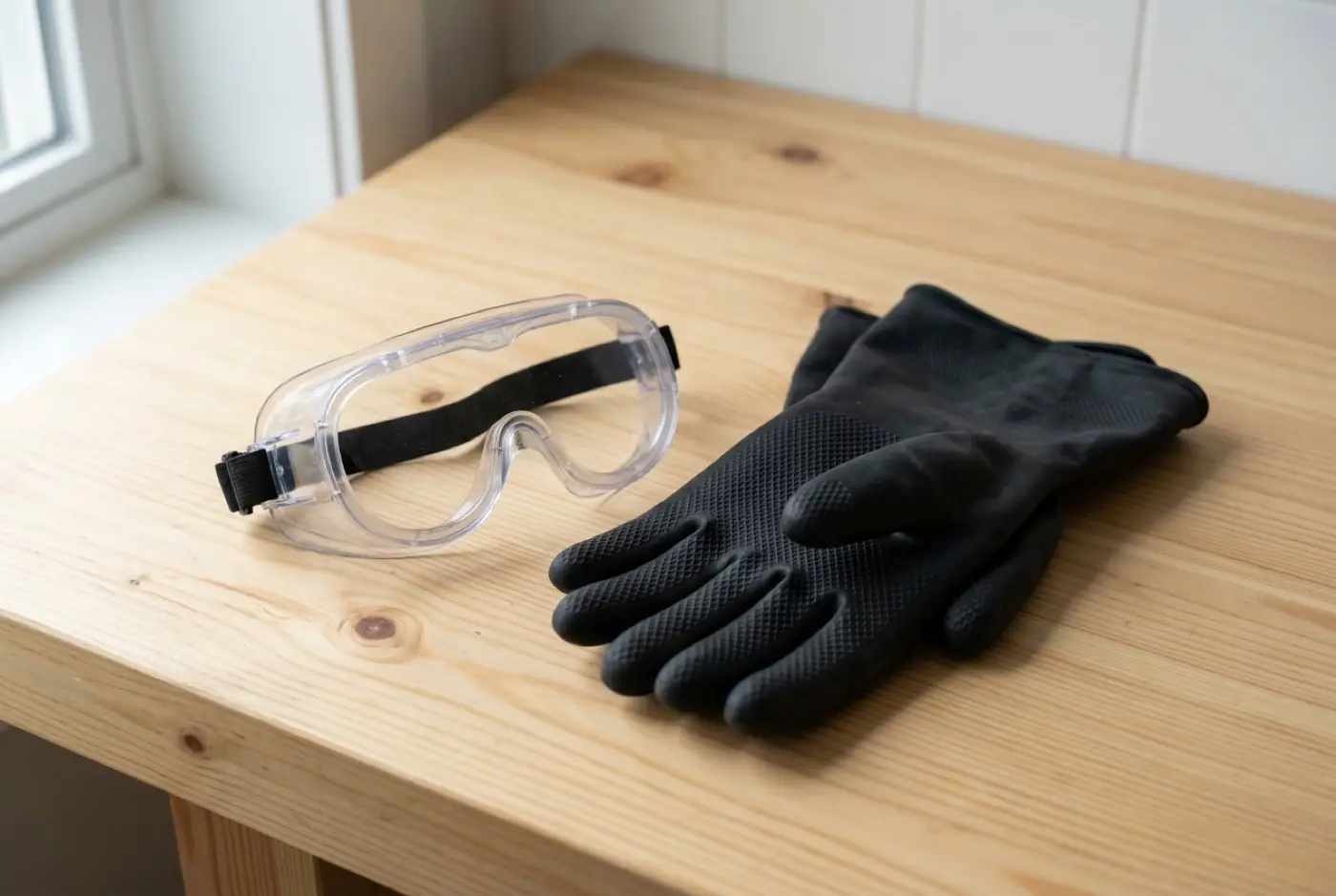
Fix: Keep goggles and gloves on until cleanup is done. Wipe batter out of pots with paper towels, leave tools to sit for a day so the residue turns into soap, then wash them. Soap making safety has the full routine.
At the pot
6. Soaping too hot
Hot lye solution poured into hot oils makes the reaction run fast. The batter thickens before you’ve finished stirring in fragrance, and in a warm loaf the soap can overheat in the mold, cracking or bulging up through the top.
Fix: Let the lye solution and oils cool before combining. For most beginner recipes, around 90–110°F (32–43°C) for both is comfortable. Keep the two within about 10°F (5–6°C) of each other. Want more working time? Try the room temperature method. If your loaf does overheat, see overheating soap.
7. Blending wrong: too little, too much, or stirring by hand
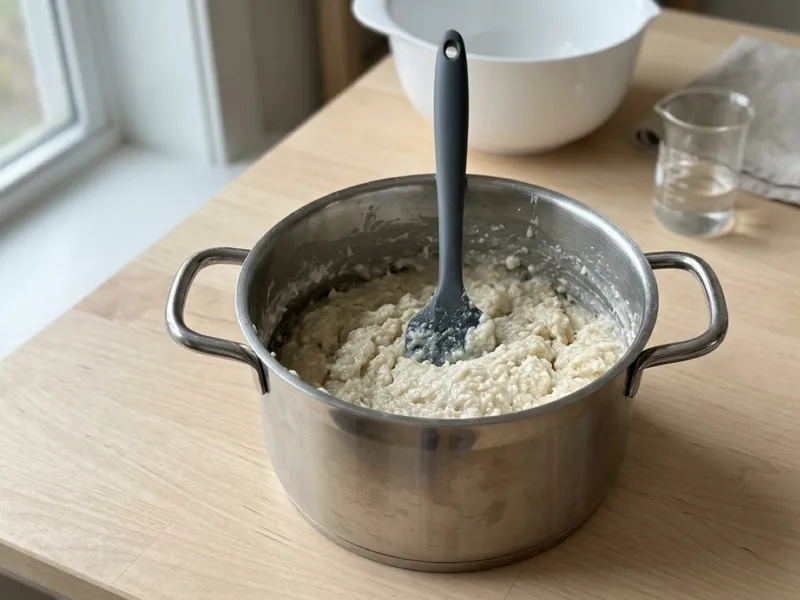
There are two opposite mistakes here. Stopping too soon, when cooling hard oils have only made the batter look thick, gives false trace, and the soap can separate in the mold. Running the stick blender nonstop takes the batter from thin to solid before you can pour. Stirring by hand alone can take a very long time to reach trace.
Fix: Stick blend in short bursts of a few seconds, then stir with the blender switched off. Check often. You want a drizzle that leaves a faint trail on the surface before sinking back in. That’s trace. Keep the blender head fully submerged so you don’t whip in air bubbles.
8. Using an untested fragrance oil in an early batch
Some fragrance oils, especially florals and spices, speed trace dramatically, turn the batter grainy, or make it seize into a solid lump in the pot. Vanilla-containing fragrances turn soap brown over the following weeks. None of this is visible on the bottle.
Fix: Make your first batch unscented. After that, use fragrances that the supplier says perform well in cold process soap, and stay within the supplier’s usage rate. Add fragrance at light trace and stir it in by hand. If a batch seizes anyway, soap seized and ricing explain what to do.
9. Swapping oils without recalculating
Out of shea butter, so you use cocoa butter? Got sunflower oil instead of olive? Every oil needs a different amount of lye, so a swap changes the whole recipe. It can also change the hardness, lather and how fast the batter traces.
Fix: Any change to the oils means a new trip through the lye calculator. Enter the new oils at their weights, check the lye and water, and only then weigh anything. Oils for soap making shows which oils behave alike.
After the pour
10. Cutting and using the bars too soon
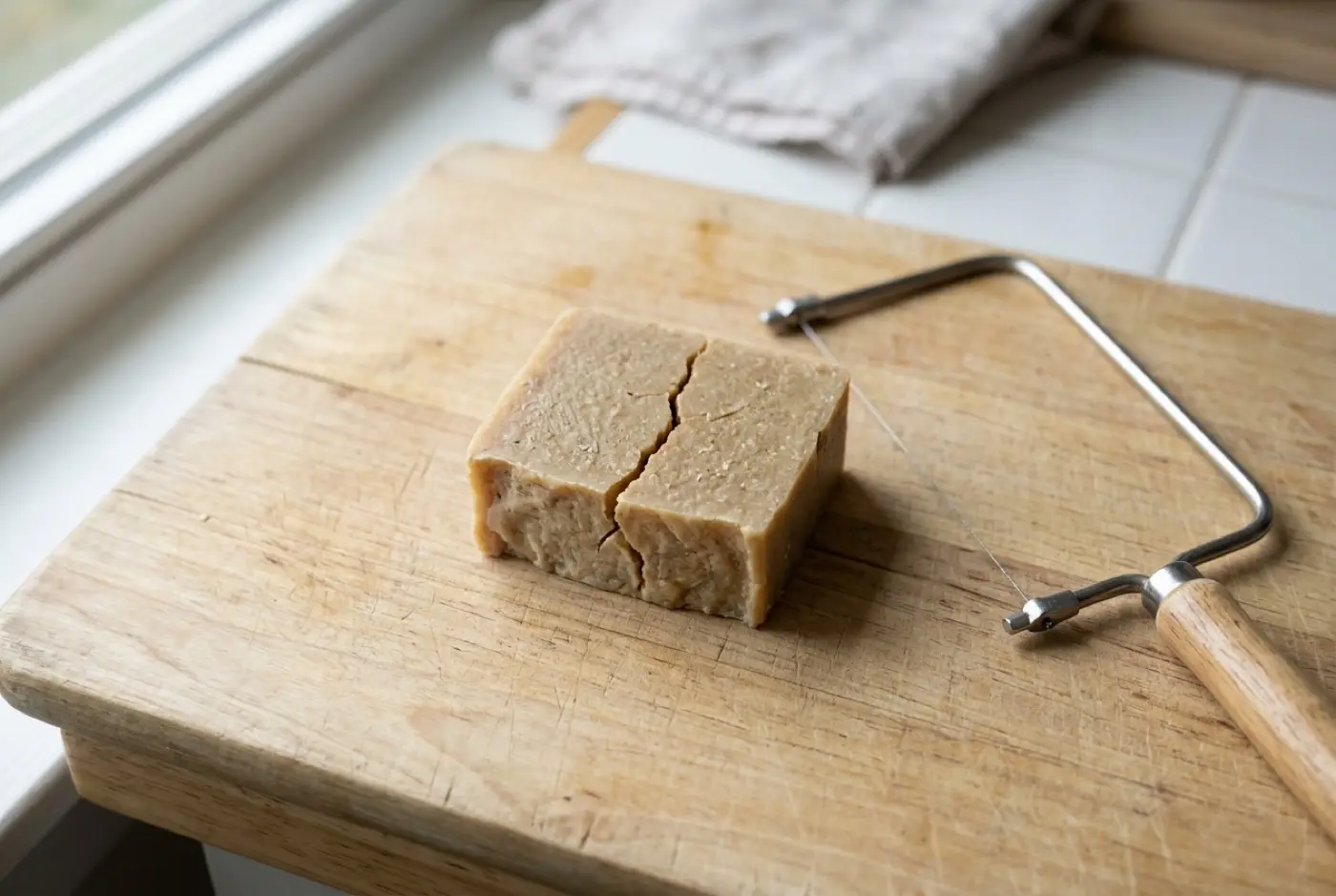
Fresh soap is soft, and new soap makers are impatient. Cutting too early drags and smears the bars. Using them in the first week or two gives a bar that melts away fast in the shower and can feel harsher than it will after a cure.
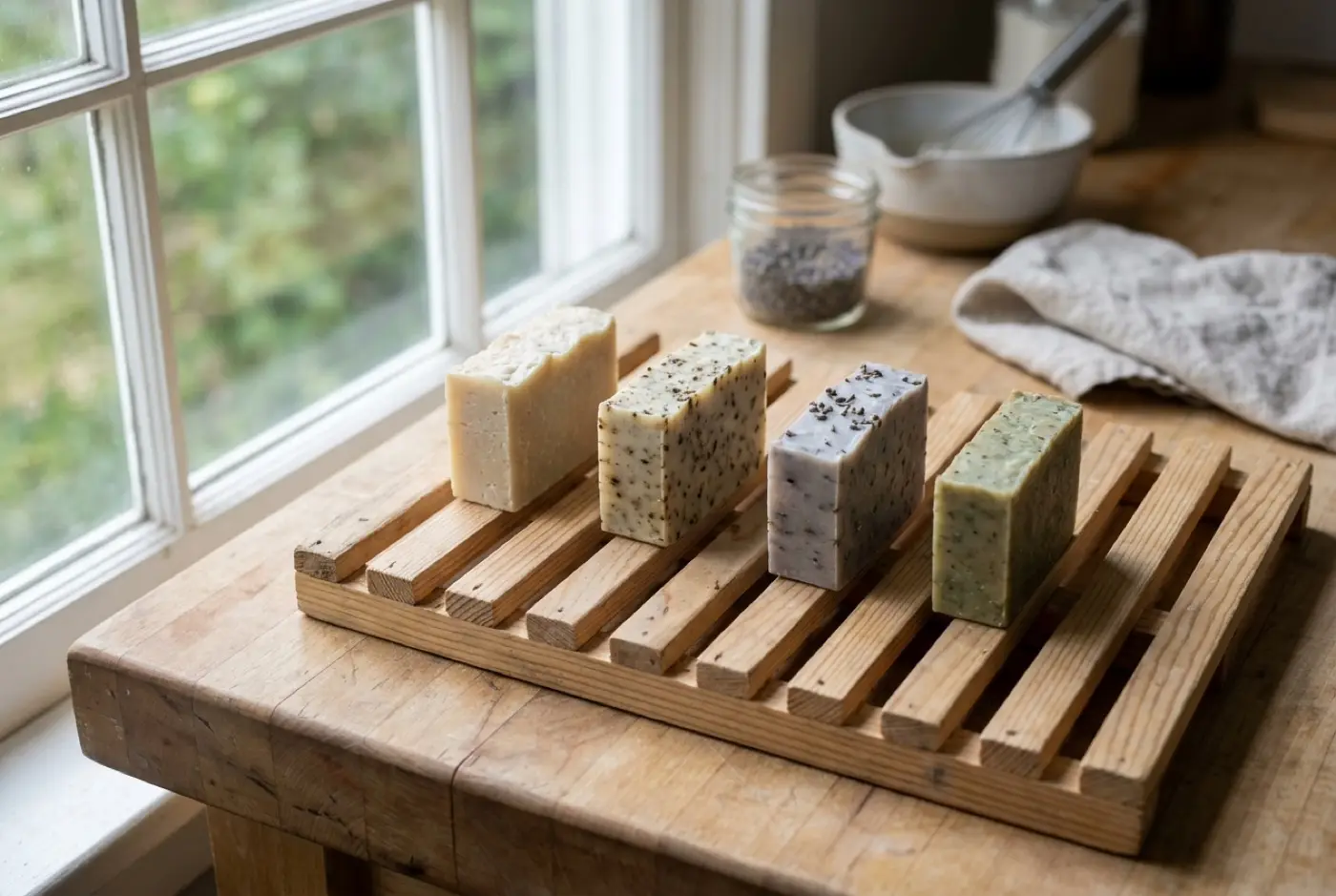
Fix: Unmold after 24–48 hours, or when the loaf is firm enough to cut cleanly. Recipes high in olive oil may need longer. Then cure the bars on a rack in a dry, airy spot, turned every so often, for four to six weeks. They get harder, milder and longer lasting. Curing soap explains what’s happening during those weeks.
Mistakes that look worse than they are
Some things alarm beginners but aren’t mistakes at all:
| What you see | What it is | Is it a problem? |
|---|---|---|
| White, powdery film on top | Soda ash | Cosmetic only; steam or plane it off |
| Darker, translucent ring in the middle of the bars | Partial gel phase | Cosmetic only |
| Small beads of liquid on fresh bars | Sweating soap, usually glycerin pulling moisture from the air | Usually harmless; dry the bars |
| Bars a little soft at first | Normal for fresh soap, especially high-olive recipes | Cure longer before judging |
The signs that are serious are pockets of liquid or white crystals inside the soap, or a bar that stings: see lye pockets and lye heavy soap. Those batches usually belong in the bin, not in the shower.
A first-batch plan that avoids all ten
Put together, the fixes make a simple plan for your first batch:
Before you begin
A forgiving recipe makes the rest easier. Our three-oil beginner soap is built for exactly this, and your first batch walks you through it step by step.
FAQ
What is the most common soap making mistake?
Measuring inaccurately, either by using cups instead of a scale or by trusting a recipe without checking it in a lye calculator. Both lead to the wrong lye-to-oil ratio.
Can I fix a batch that went wrong?
Often, yes. Soft, oily or separated batches can sometimes be rebatched. A batch that is lye heavy or has pockets of undissolved lye is usually safer to discard.
Why did my soap harden in the pot before I could pour it?
That's seizing. It's usually caused by a fragrance oil that accelerates trace, soaping too hot, or over-blending. Use a tested fragrance and soap cooler next time.
Is it normal for my first batch to look rustic?
Yes. Most first bars have small bubbles, uneven tops or soda ash. None of those make the soap unsafe, and they get rarer with practice.
Comments
No comments yet. Made this recipe? Be the first to say how it went.